
Market News
Infosys Q1 results: Revenue and net profit likely to grow in double digits on a yearly basis; Guidance in focus

4 min read | Updated on July 23, 2026, 08:52 IST


SUMMARY
Infosys will announce its Q1FY27 earnings on Thursday, July 23. The IT major is expected to report mixed quarterly performance, with net profit rising 14% to 16% year-on-year to ₹7,950–₹8,050 crore, but declining 5% to 6% sequentially.
Stock list
Ahead of the 28 July expiry, the options market is pricing in a move of roughly ±4.7% in Infosys.
IT major Infosys will announce its June quarter earnings on Thursday, July 23. According to experts, Infosys could report mixed quarterly earnings with net profit rising on a yearly basis but could decline compared to last quarter.
Infosys net profit may range between ₹7,950 and ₹8,050 crore, up 14 to 16% YoY but could decline 5 to 6% compared to the previous quarter. The company reported a net profit of ₹8,501 crore in the previous quarter and ₹6,921 crore in the same quarter last year. Net profit could see mixed growth, aided by a ramp-up in new deal wins and a recovery in key verticals.
As per experts, Infosys Q1FY27 revenue could increase by 3 to 5% on a sequential basis to ₹47,800 to ₹48,800 crore. The company registered revenues of ₹46,402 crore in the previous quarter and ₹42,279 crore in the June quarter of FY26. On a yearly basis, revenue could increase by 13 to 15%.
Infosys’ EBIT margin is expected to improve marginally by 30 to 40 bps in the range of 21.1% to 21.3% aided by rupee depreciation, cost optimisation and absence of wage hikes, while total contract value (TCV) is likely to be around $2.8 to $3.1 billion during the quarter.
Investors will closely track the management commentary on FY27 guidance, new deal wins and progress in AI adoption during the quarter. New deal wins and discretionary spending will also be watched closely.
Ahead of the Q1FY27 result announcement, Infosys shares closed 2% lower at ₹1,052 on July 22. Infosys stock is down over 34% so far this year amid market volatility and broader fear over AI-driven disruption.
Technical Outlook
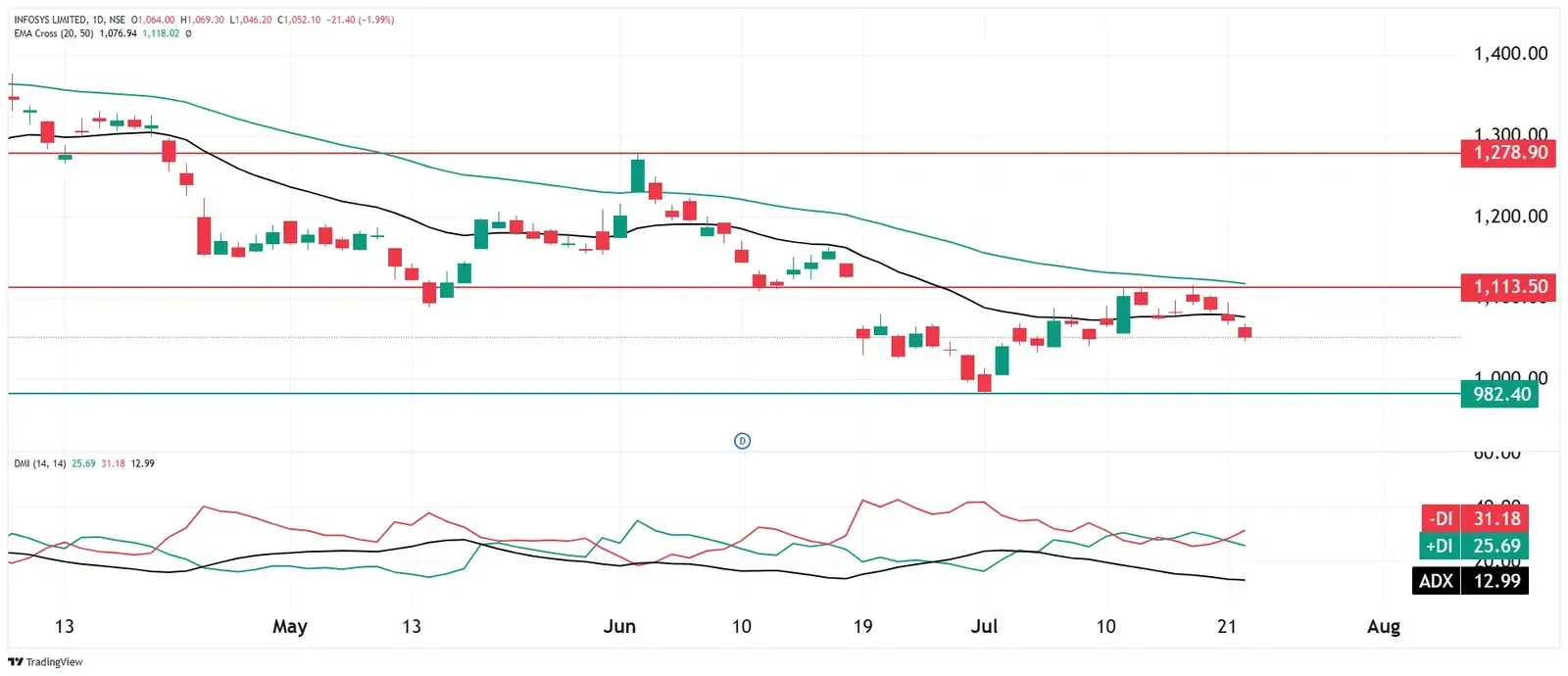
Infosys remains in a weak short-term trend, trading below both the 20-day EMA and the 50-day EMA. The recent recovery was rejected near the ₹1,110–₹1,115 resistance zone, indicating continued supply at higher levels.
The DMI also remains mildly bearish, while the low ADX reading of 13 suggests limited trend strength. Immediate support is placed around ₹1,030–₹1,000, followed by the crucial ₹982 level. A sustained close above ₹1,115 is required to improve the outlook, with the next major resistance near ₹1,279.
Options outlook
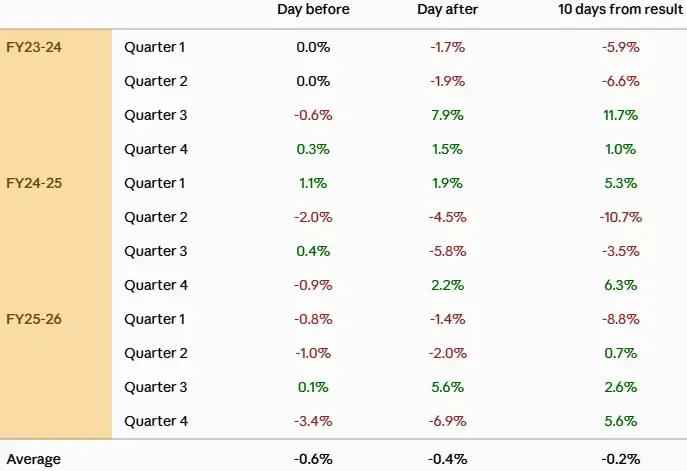
Options positioning for Infosys’ 28 July expiry highlights a strong call build-up at 1,100 strike, suggesting resistance around this zone. The at-the-money strike stands at 1,050, with a combined straddle premium of about ₹49.85, implying an expected move of roughly ±4.7% into expiry. To put this into perspective, let’s look at how Infosys has historically reacted to its quarterly earnings over the past two years.
Options strategy and approach
Ahead of the 28 July expiry, the options market is pricing in a move of roughly ±4.7% in Infosys, giving traders a clear range to plan their strategies.
If you expect a sharp move beyond this implied range, a long straddle could be a suitable approach—buying both the at-the-money call and put to benefit from a decisive breakout in either direction.
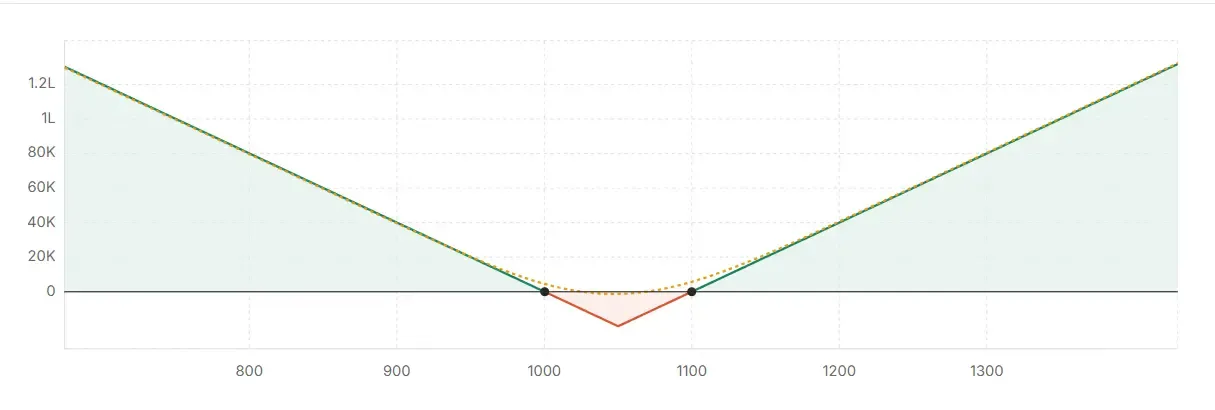
On the other hand, if you expect the stock to remain within this band, a short straddle may work better, as it allows traders to capitalise on time decay and a drop in volatility, provided the price action stays contained into expiry.
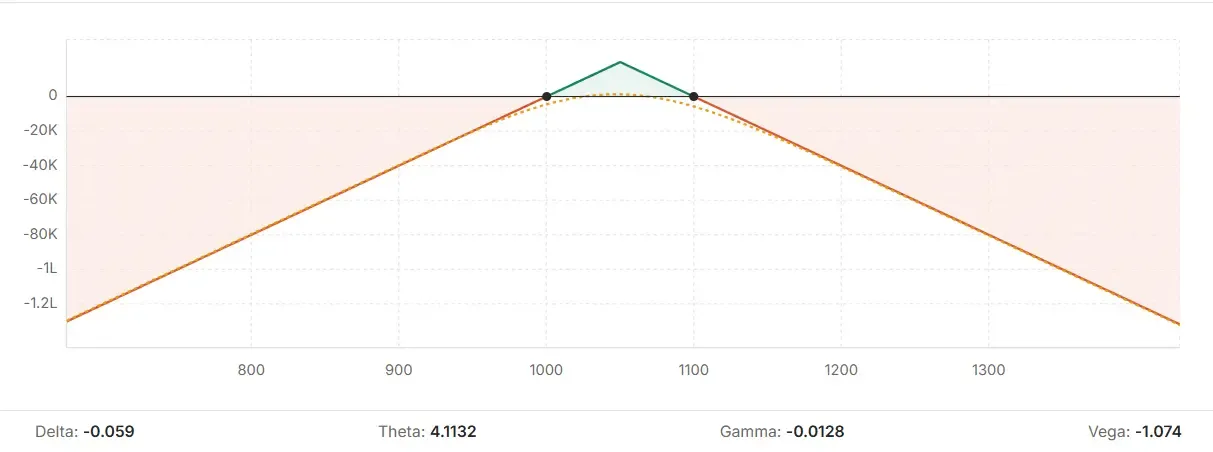
For a directional view, spreads offer a more defined risk setup. A bull put spread involves selling a higher strike put and buying a lower strike put, aiming to profit if the stock stays above a certain level or moves higher. A bear call spread, in contrast, involves selling a lower strike call and buying a higher strike call, suited for a mildly bearish outlook.
Disclaimer:
Derivatives trading must be done only by traders who fully understand the risks associated with them and strictly apply risk mechanisms like stop-losses. We do not recommend any particular stock, securities, or trading strategies. The securities quoted are exemplary and not recommendatory. The stock names mentioned in this article are purely to show how to do an analysis.
About The Author
Next Story

