Market News
Gold and silver prices ahead of Budget 2026: Precious metals end up to 13% lower during the week on profit-booking, stronger US dollar

4 min read | Updated on February 01, 2026, 07:14 IST


SUMMARY
Speculative trading and aggressive profit-booking led to a sharp fall in both domestic and international markets on Friday. Additionally, US President Trump and Senate Democrats have reportedly reached a tentative deal to avoid a US government shutdown.
In Delhi markets, silver prices dropped by ₹20,000 per kg (5%) to ₹3,84,500 per kg on Friday.
Gold and silver saw their most volatile week in recent months, amid rapid changes in global dynamics, major fluctuations in markets and currencies.
On the Multi Commodity Exchange (MCX), silver futures for March expiry ended 12.7% lower at ₹2,91,925 per kg on Friday, as compared to last Friday’s closing price of ₹3,34,699 per kg.
Gold futures for April delivery also closed lower, falling by 8.2% on Friday to end at ₹1,52,345 per 10 gram on the MCX against last week’s closing price of ₹1,66,076 per 10 gram.
Finance Minister Nirmala Sitharaman is set to present the Union Budget 2026 tomorrow, February 1, and is expected to make key announcements that can impact bullion prices in the coming weeks. All eyes are now on Budget 2026 to see if FM Sitharaman announces any change in the customs duty on gold and silver, and if there will be any other major announcements regarding the precious metals.
Gold and silver’s rise and fall during the week
The precious metals rose sharply during the week until Thursday, January 29, when silver futures on the MCX touched a lifetime high of ₹4,09,800 per kg, while gold rose to a new record high of ₹1,80,779 per 10 gram.
The record rally was because of rising geopolitical tensions in Iran, falling currencies and fluctuations in the market.
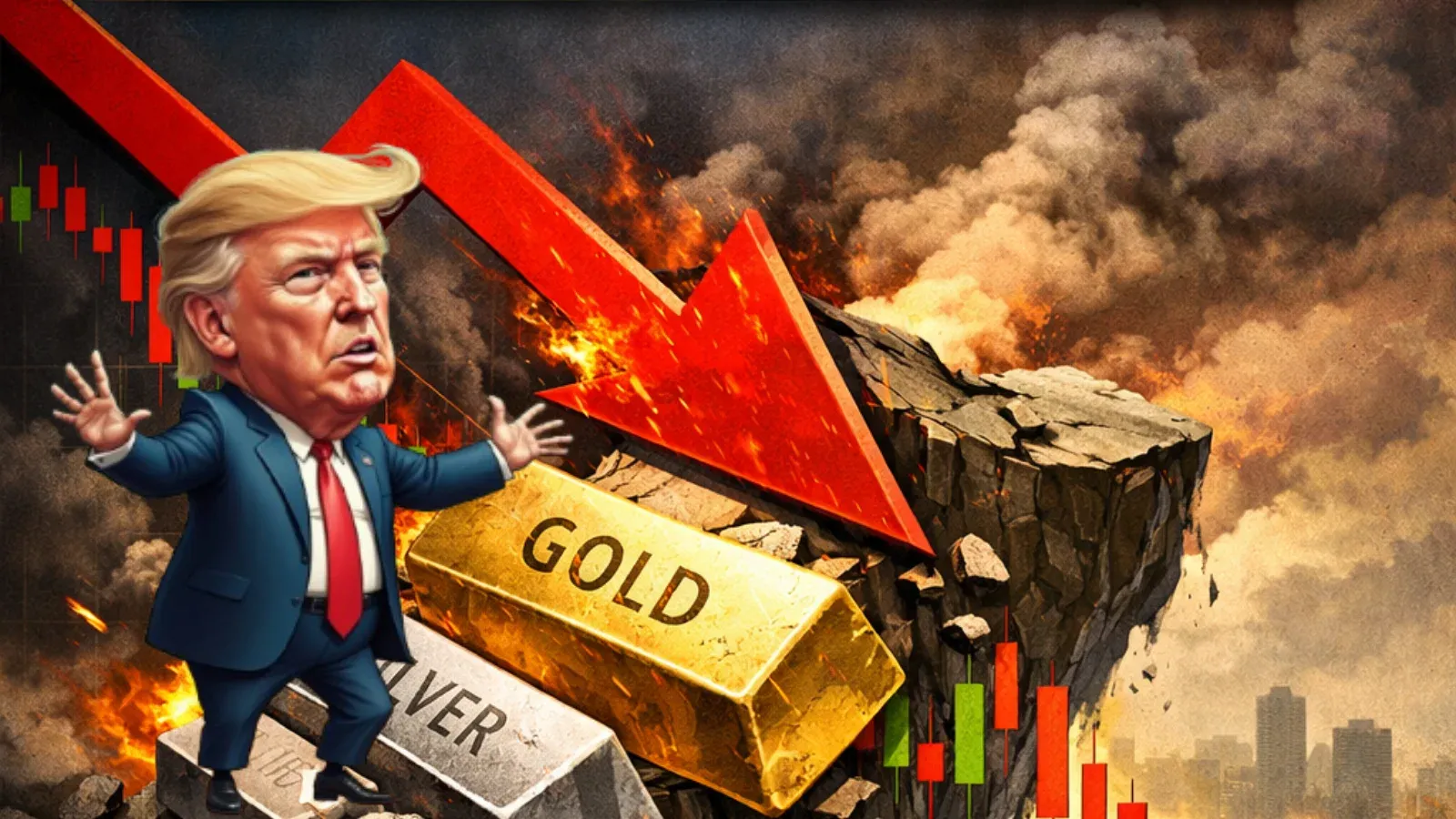
Then, on Friday, gold and silver prices crashed sharply due to profit-booking after Thursday’s bull run and speculative trading, as markets reacted to US President Donald Trump’s nomination of Kevin Warsh as the next US Federal Reserve Chair.
The nomination of Warsh strengthened the US dollar and added further pressure on bullion prices.
After the Warsh's nomination, gold and silver fell by up to 27% on the MCX on Friday.
As gold and silver are safe-haven assets, they rise during uncertain situations and vice versa. This means a weak dollar supports bullion prices, while a stronger dollar puts downward pressure on the metals.
Local and international markets
In the overseas markets, spot silver fell 31.4% to settle at $78.53 an ounce on Friday, marking its worst day since March 1980, as per a CNBC report. Meanwhile, spot gold fell 11.4% to settle at $4,745.10 per ounce.
In Delhi markets, silver prices dropped by ₹20,000 per kg (5%) to ₹3,84,500 per kg on Friday. Gold prices also fell from the record highs, falling by ₹14,000, or 7.65%, to ₹1,69,000 per 10 gram.
Speculative trading and aggressive profit-booking led to a sharp fall in both domestic and international markets. Additionally, US President Trump and Senate Democrats have reportedly reached a tentative deal to avoid a US government shutdown.
The combination of stretched technical conditions, institutional profit-taking, and a recovery in the US dollar that is likely to continue adds pressure on bullion in the short term, PTI reported, quoting a commodity analyst.
“There were no support prices established at higher levels due to this parabolic rise, so the correction has been steep,” another expert said, as per the PTI report.
Despite the corrections, gold and silver prices are likely to remain elevated due to central bank gold buying, silver’s widening supply-demand deficit, heightened geopolitical tensions and market volatility.
The growing share of gold in reserves aligns with a broader international pattern where many emerging markets have increased gold holdings amid geopolitical uncertainty and shifts in the global interest-rate cycle, the Survey said.
Related News
About The Author
Next Story