
Business News
Why Lebanon 'de-confliction cell' is first real test of US-Iran peace progress

5 min read | Updated on June 22, 2026, 13:34 IST


SUMMARY
The newly created Lebanon de-confliction cell, established after the first round of US-Iran talks in Switzerland, is emerging as the first major test of the peace process between Washington and Tehran.
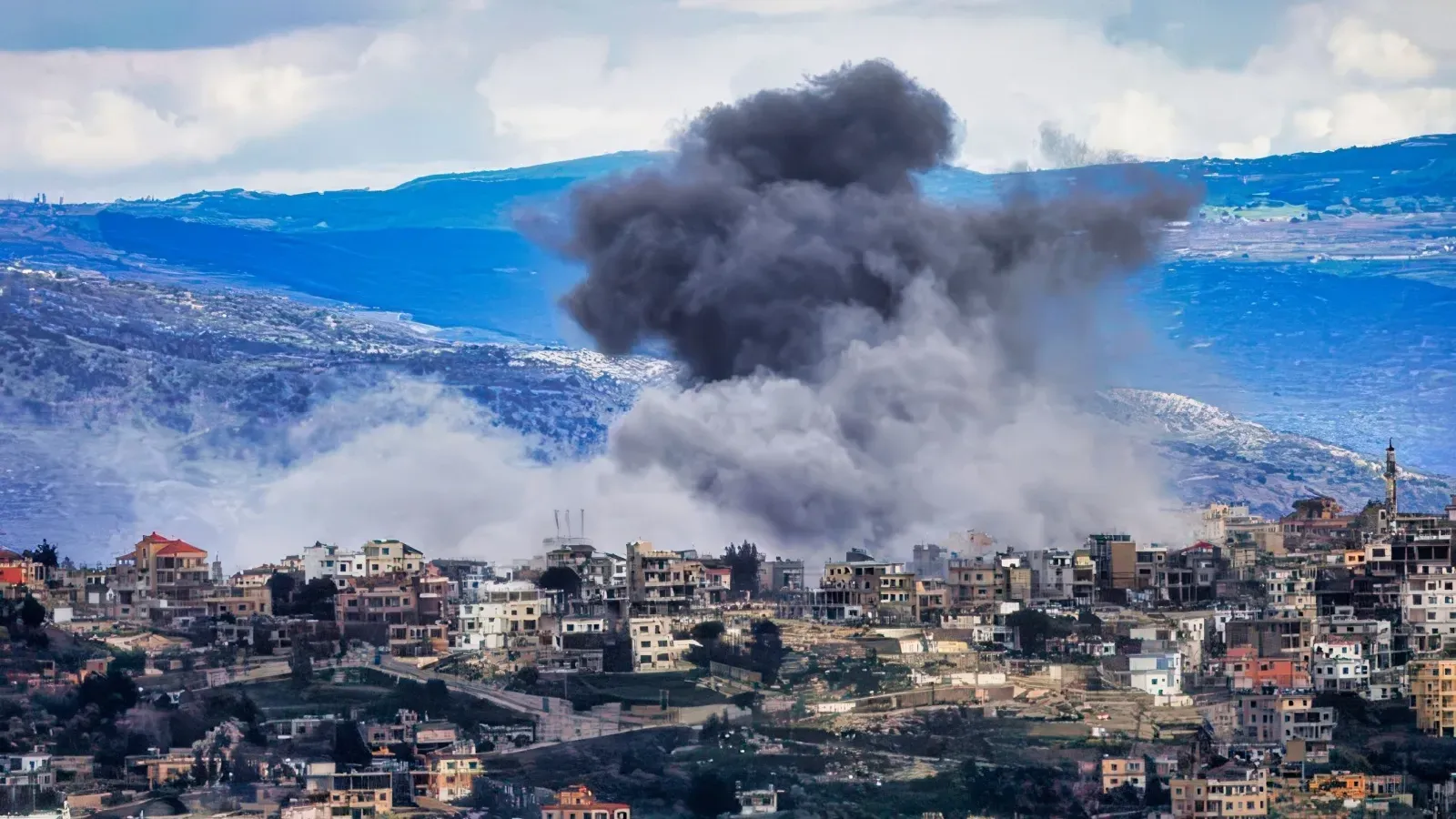
Airstrike in a village South Lebanon during the Lebanon-Israel war. Image: Shutterstock
The agreement by the United States and Iran to set up a Lebanon “de-confliction cell” after their first round of peace talks in Switzerland is emerging as the earliest and most difficult test of whether the US-Iran peace process can survive on the ground.
The mechanism, announced by mediators Pakistan and Qatar after talks at the Burgenstock resort, is meant to ensure compliance with the memorandum of understanding’s key commitment to halt military operations in Lebanon.
In their joint statement after the Lake Lucerne summit, Pakistan and Qatar said the parties had agreed on “the creation of a de-confliction cell, between the parties, the Lebanese Republic and facilitated by the Mediators, to ensure the adherence of the termination of military operations in Lebanon as per the MoU”.
“Technical talks will continue for the remainder of the week at the Burgenstock resort on all issues,” they added.
Iranian Foreign Minister Abbas Araghchi underlined the importance of the mechanism in a post on X, calling it the “1st real test” of the progress made in Switzerland.
Araghchi said the mediation had delivered “major progress to end Lebanon War” and listed a series of breakthroughs for Tehran, including waivers for Iranian oil and petrochemical exports, the lifting of a blockade, the release of some frozen assets and the launch of a major reconstruction and development plan for Iran.
Lebanon ceasefire at the core
While the memorandum covers a wide range of issues, the first clause of the 14-point framework puts an end to hostilities in Lebanon at the heart of the deal.
Under that clause, the United States, Iran and their allies are to “declare the immediate and permanent termination of military operations on all fronts, including in Lebanon”, undertake not to initiate war or military operations against each other, and ensure Lebanon’s territorial integrity and sovereignty.
US President Donald Trump also said on his Truth Social platform last week that Washington expected “a complete Ceasefire on all fronts, including Lebanon, Hezbollah, and Israel” as part of the deal.
That is precisely where the peace process has run into its first major obstacle.
Israel rejects constraints on military ops
Israeli leaders have made clear they do not accept the idea that the memorandum can constrain Israeli military action in southern Lebanon.
Defence Minister Israel Katz said on X that Israel had “no intention of withdrawing from the Beaufort”, which he described as an integral part of a security zone in Lebanon and essential for the defence of Galilee settlements and Israeli forces.
“Israel will not withdraw from the security zone in Lebanon,” he said.
Far-right National Security Minister Itamar Ben Gvir went even further, vowing that Israel must “not withdraw from a single inch” of territory its forces had captured, a stance that directly collides with the memorandum’s first commitment.
Speaking at the 2026 JNS International Policy Summit in Jerusalem, Prime Minister Benjamin Netanyahu said Israel was fighting Hezbollah rather than Lebanon itself and made clear that any lasting peace, in Israel’s view, depends on dismantling the Iran-backed group.
“We do everything in our power to protect our people. We don't have a war with Lebanon. We have a war with Hezbollah, who terrorizes Lebanon and seeks our destruction,” Netanyahu said.
“And when that proxy of Iran is no longer a threat, when it's dismantled, when it's disarmed, yes, we'll have peace with Lebanon. And I look forward to signing it,” he added.
Netanyahu has repeatedly said Israel will not leave southern Lebanon for now.
“We will restore security to the north,” he said in remarks last week after the text of the US-Iran agreement was published. “This requires maintaining the security zone in southern Lebanon, and it requires that we not leave it as long as Israel’s security needs demand it.”
Can the de-confliction cell prevent escalation?
The dispute over Lebanon threatens to become the most immediate fault line in a peace process that had already been shaken by continued fighting between Israeli forces and Hezbollah in southern Lebanon.
On paper, the de-confliction cell is supposed to serve as a channel among the parties, Lebanon and the mediators to prevent escalation and enforce the ceasefire obligations contained in the MoU.
But in practice, its success depends on whether the US can pressure Israel to curb operations against Hezbollah, and whether Hezbollah in turn refrains from firing at Israel.
Both Trump and Vice President JD Vance have shown increasing frustration with Israeli attacks in Lebanon and criticism of the US-Iran deal.
Vance said this week that if he were in the Israeli cabinet, he would think twice before attacking “the only powerful ally” Israel had left in the world.
That warning, however, also underlines the limits of current diplomacy.
The US may have signed a framework with Iran and extracted tentative commitments, but it does not directly control Hezbollah or the Israeli government.
If either side continues cross-border attacks, the first and most visible pillar of the US-Iran understanding could collapse before negotiators make progress on the more technical parts of the deal.
That is why Araghchi called it the “first real test”.
Related News
About The Author
Next Story

