Business News
Where is Iran’s enriched uranium? Was it moved from Fordo? Mystery surrounds fate of 400kg stockpile
.png)
4 min read | Updated on June 23, 2025, 15:16 IST


SUMMARY
While US President Donald Trump claimed the sites were “completely obliterated,” some suggest Iran may have moved the enriched uranium before the strikes.
Despite US intelligence assessments suggesting Iran has not decided to pursue a bomb, both Trump and Israeli officials believe Iran could assemble one quickly if the opportunity arises.
The fate of Iran’s nuclear ambitions may hinge on one urgent question: where is its uranium?
President Donald Trump claimed that Iran’s key nuclear enrichment facilities have been “completely and totally obliterated” in the US airstrikes, which included 30,000-pound bunker busters deployed by B-2 stealth bombers.
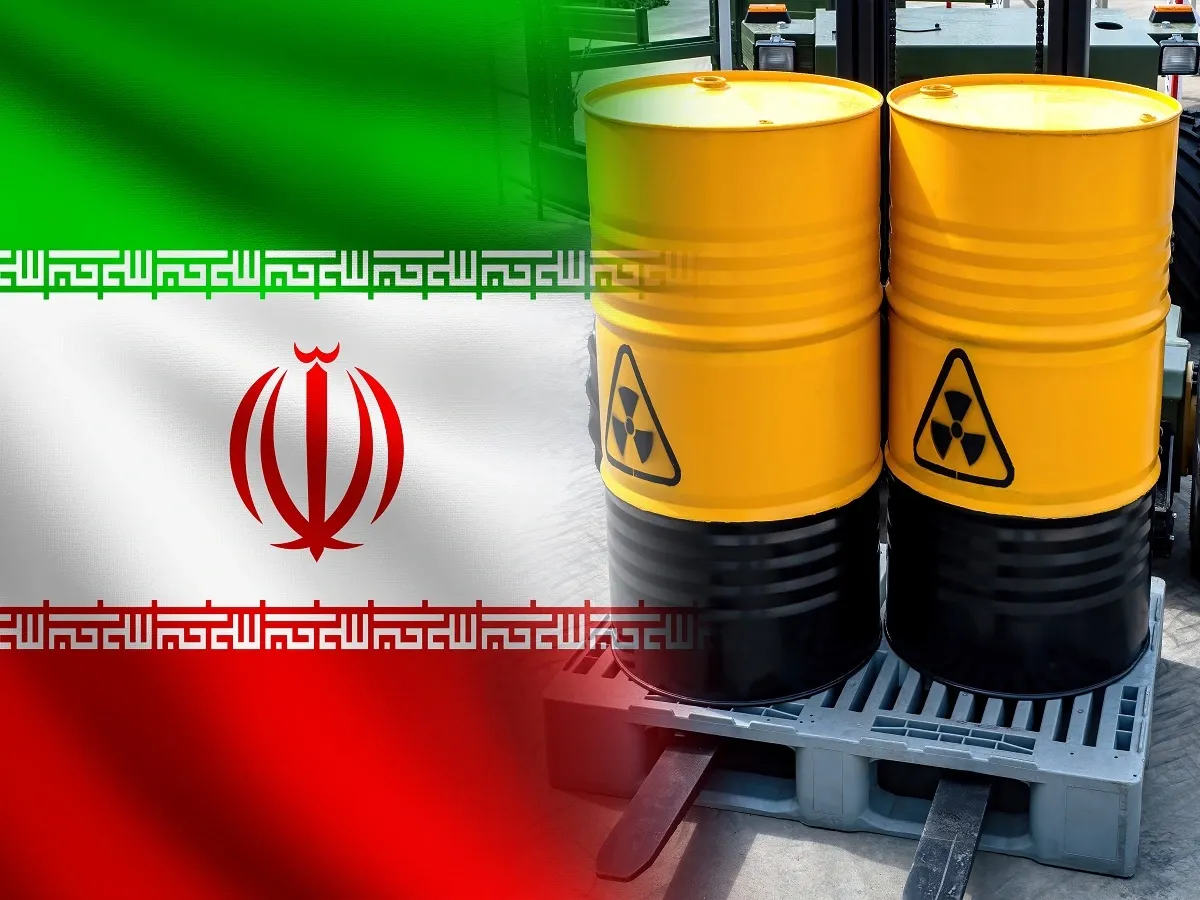
But the true status of Iran’s 408kg stockpile of uranium enriched to 60% purity, just shy of weapons-grade, remains a mystery.
Iranian officials have not offered a full assessment of the damage, but an unnamed regime insider told the BBC that “the materials had already been taken out.”
Western and Israeli analysts, meanwhile, are divided.
“It comes down to the material and where it is,” The Financial Times quoted Richard Nephew, a former US nuclear negotiator, as saying. “On the basis of what we’ve seen at this point, we don’t know where the material is. We don’t have any real confidence that we’ve got the ability to get it any time soon.”
Nephew warned that without access to Iran’s current stockpile, any assumption of long-term disruption is premature.
“You would be foolish if you said the programme was delayed by anything more than a few months,” he said.
Was Fordo emptied?
Satellite images show visible damage at the Fordo enrichment site, a heavily fortified underground facility near Qom, reported the Associated Press. The before-and-after photos show portions of the mountainside disrupted, likely by the US's precision-guided bunker busters, according to the report.
Yet Chinese military analysts, speaking to state media, cast doubt on the effectiveness of the strikes.
Fordo's nuclear facility lies nearly 100 meters underground, making it extremely difficult to destroy completely with just one or two strikes, even using bunker-buster bombs, Li Zixin, an assistant research fellow at the China Institute of International Studies, told state-run Global Times.
Zhang Junshe, a military affairs expert, said the first wave of US strikes may not have been sufficient to destroy Iran's underground nuclear facilities.
Zhang said the US uses B-2 bombers armed with 30,000-pound GBU-57 bunker busters, which are believed to be able to penetrate only about 65 meters.
In theory, two bombs used in sequence might be needed, but this tactic has never been publicly tested, so the success of the initial strike remains uncertain, he added.
From civilian use to possible weaponisation?
Tehran insists its programme is for peaceful, civilian use. But Israel, which started the current conflict with preemptive strikes on Iran’s nuclear infrastructure, argues otherwise.
Despite US intelligence assessments suggesting Iran has not decided to pursue a bomb, both Trump and Israeli officials believe Iran could assemble one quickly if the opportunity arises.
Sima Shine, a former Iranian desk head at Israel’s Mossad intelligence agency, believes Iran took precautions.
“They have enough enriched uranium somewhere, and they took some advanced centrifuges somewhere, in order to enable them to someday go to a nuclear device,” FT quoted Shine as saying. “The programme is not destroyed completely, no matter what the Americans say.”
Iranian Supreme Leader adviser Ali Shamkhani wrote on X: “Even if nuclear sites are destroyed, [the] game isn’t over; the enriched materials, indigenous knowledge, political will remain.”
Before the strikes, Iran had already sharply curtailed cooperation with the International Atomic Energy Agency (IAEA), and its inspectors are no longer visiting the affected sites.
The agency confirmed last week that inspections at Fordo, Natanz, and Isfahan, all hit by US strikes, have ceased since the bombing campaign began.
Israeli officials say the strikes are just the beginning. They believe that if negotiations with Iran resume, any agreement must include the transfer of highly enriched uranium out of the country.
Yet some experts warn that the strikes may only push Iran deeper underground, both figuratively and literally.
US Secretary of State Marco Rubio conceded on Sunday that it could be days before intelligence confirms whether the uranium stockpile was moved.
“I doubt they moved it,” Rubio said, citing Israel’s near-total surveillance. “The minute a truck starts driving somewhere, the Israelis have seen it, and they’ve targeted it and taken it out.”
With more than 8,400kg of uranium, including a crucial 400kg enriched to 60%, Iran could potentially produce multiple nuclear bombs if it chooses. But experts say actual weaponisation could still take months or more.
Related News
By signing up you agree to Upstox’s Terms & Conditions

About The Author
Next Story