
Business News
What’s happening in Strait of Hormuz? Is Iran laying mines to choke global oil supply?
.png)
4 min read | Updated on March 12, 2026, 14:30 IST


SUMMARY
The Strait of Hormuz—through which around one-fifth of global crude oil supplies normally pass—has already seen severe disruption since the war began following strikes on Iran on February 28.
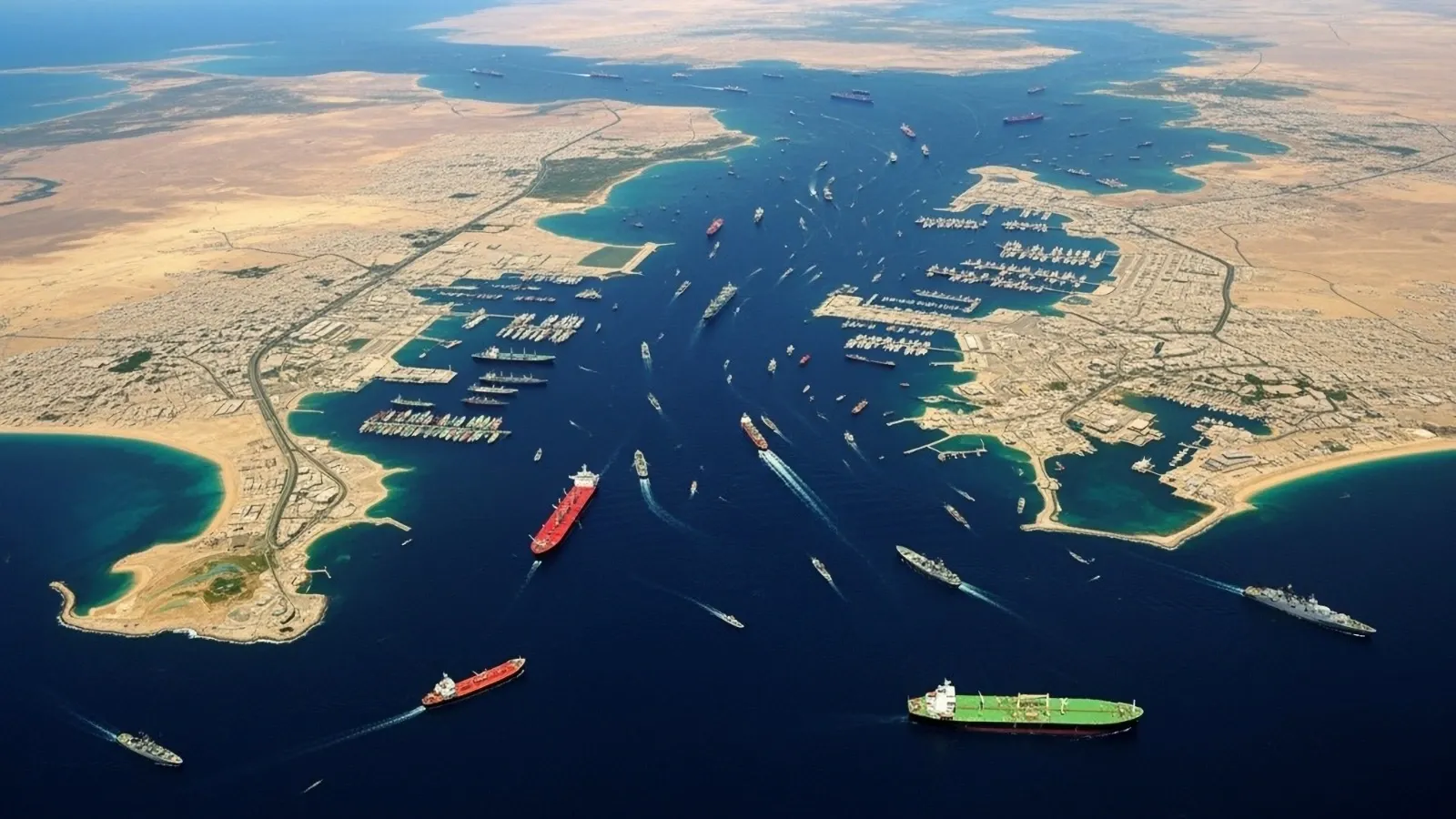
About one-fifth of the world’s oil and LNG supplies pass through Strait of Hormuz. Image: Shutterstock
Tensions are rapidly escalating around the Strait of Hormuz as Iran threatens to block oil shipments and attacks on commercial vessels mount during the widening war between Iran and the United States and Israel.
Iran’s powerful Islamic Revolutionary Guard Corps, or IRGC, said Wednesday it would not allow “a litre of oil” to pass through the waterway, warning that vessels linked to the United States, Israel or their allies would be treated as legitimate targets.
“You will not be able to artificially lower the price of oil. Expect oil at $200 per barrel,” a spokesperson for the IRGC’s Khatam al-Anbiya Headquarters said in a statement, blaming Washington and its allies for regional instability.
The threats come amid an escalating conflict that began after a February 28 attack by the United States and Israel on Iran.
Why the Strait matters
The Strait of Hormuz is one of the world’s most important energy corridors, linking the oil-rich Persian Gulf to the Arabian Sea and the Indian Ocean.
About one-fifth of the world’s crude oil passes through the narrow channel, making any disruption immediately felt in global energy markets.
With shipping traffic effectively halted amid the fighting, the price of Brent crude surged above $100 per barrel Thursday, roughly 38% higher than before the conflict began.
Attacks on shipping
Commercial vessels transiting the area have increasingly come under fire.
Three ships were struck by projectiles Wednesday in separate incidents around the strait.
One of them, the Thai-flagged cargo ship Mayuree Naree, was bound for the Indian port of Kandla when it was attacked about 11 nautical miles north of Oman.
A fire broke out on board, and the Royal Thai Navy said all 23 crew members were rescued.
Iranian authorities said the ship had ignored warnings before the attack.
A Japanese-flagged container ship sustained minor damage off the coast of the United Arab Emirates and another cargo ship was hit about 50 nautical miles northwest of Dubai, according to the United Kingdom Maritime Trade Operations monitoring agency.
Since the war began, there have been at least 13 suspected Iranian attacks on vessels operating in and around the Gulf.
India condemned the strike on the Thailand-flagged vessel heading to its western coast.
“We deplore the fact that commercial shipping is being made a target of military attacks in the ongoing conflict in West Asia,” the Ministry of External Affairs said in a statement.
Fears of naval mines
Iran may also be preparing to escalate further by mining the strait.
A CNN report suggests that Iran has begun laying mines in the Strait of Hormuz.
However, the effort so far appears limited to a few dozen devices.
But Iran still retains upward of 80% to 90% of its small boats and mine layers so its forces could feasibly lay hundreds of mines in the waterway, according to the report.
The IRGC and Iran’s regular navy are believed capable of creating a layered threat in the strait, using mines, missile batteries along the coast and explosive-laden boats to disrupt shipping.
US military response
The United States has already begun striking Iranian vessels it says were involved in mine-laying operations.
In a post on his Truth Social platform, US President Donald Trump warned that if Iran had placed mines in the strait, they must be removed immediately or face severe military consequences.
“If Iran has put out any mines in the Hormuz Strait, and we have no reports of them doing so, we want them removed, IMMEDIATELY! If for any reason mines were placed, and they are not removed forthwith, the Military consequences to Iran will be at a level never seen before,” Trump wrote.
“If, on the other hand, they remove what may have been placed, it will be a giant step in the right direction!” he added.
Hours later, Trump said US forces had destroyed several mine-laying boats in the area.
"I am pleased to report that within the last few hours, we have hit, and completely destroyed, 10 inactive mine laying boats and/or ships, with more to follow!” the US president said.
The United States Central Command later confirmed the military had targeted multiple Iranian naval vessels, including 16 minelayers, near the strait.
Secretary of Defense Pete Hegseth posted on X that at Trump’s direction, US Central Command “has been eliminating inactive mine-laying vessels in the Strait of Hormuz—wiping them out with ruthless precision. We will not allow terrorists to hold the Strait of Hormuz hostage.”
Related News


About The Author
Next Story

