
Business News
US strikes Iran for third night; Trump floats 20% Hormuz fee, Tehran says 'we will be fair'
.png)
3 min read | Updated on July 14, 2026, 09:58 IST


SUMMARY
The United States carried out a fresh round of airstrikes across Iran late Monday, marking the third consecutive night of attacks as tensions escalated in West Asia.
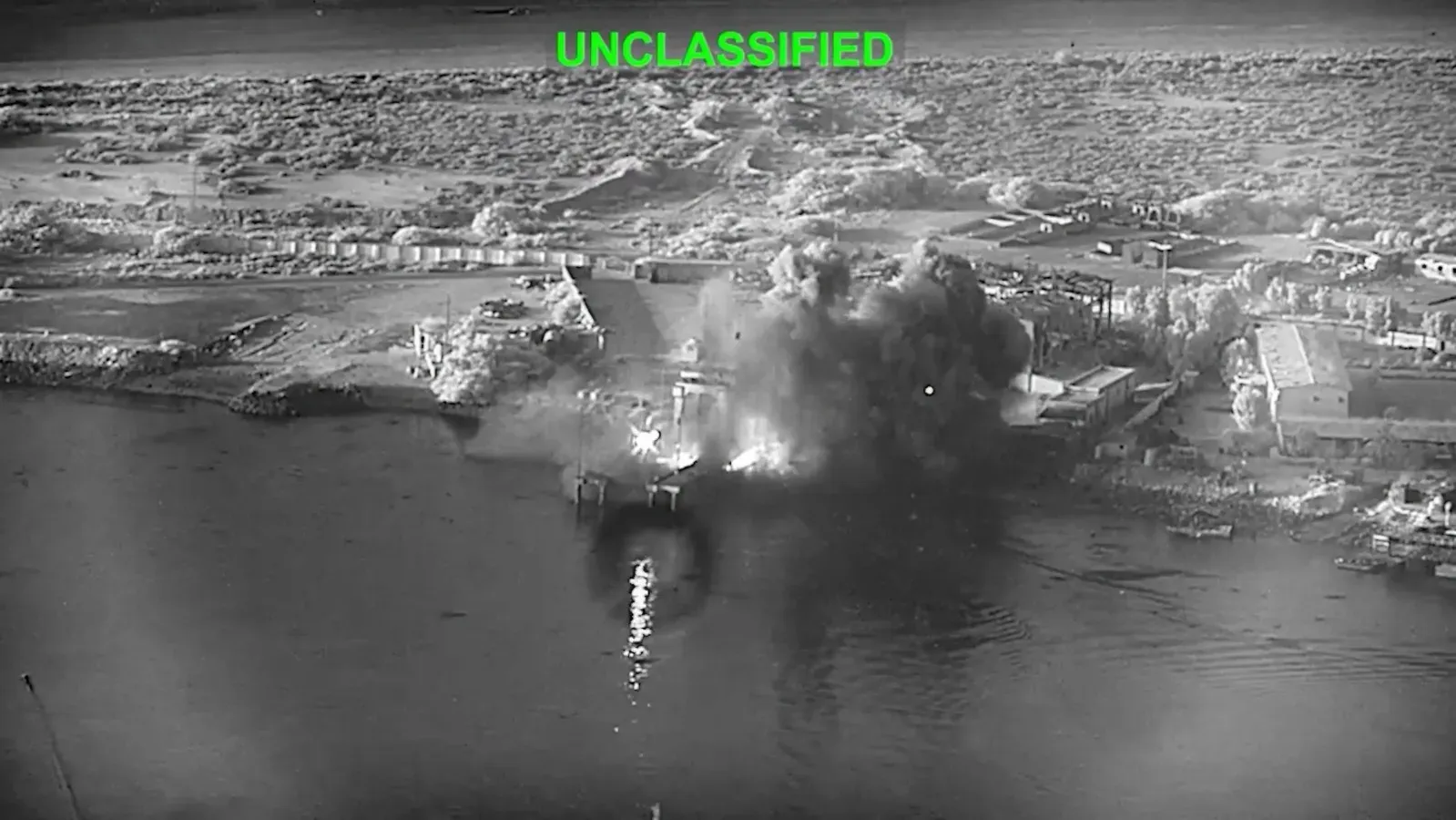
This image from video released by US Central Command, shows an explosion at Bandar Abbas Naval Base, Iran, as three Corsair unmanned surface vessels, also called one-way attack surface drones, fired by the US military, hit the port July 12, 2026.
The United States launched a fresh wave of strikes across Iran late Monday, marking the third consecutive night of attacks, as Iran responded with missile and drone strikes toward Bahrain and attacks on shipping in the Strait of Hormuz.
The US Central Command (CENTCOM) said it completed a five-hour operation ending at 10:15 p.m. Eastern time, targeting military sites at Bushehr, Chabahar, Jask, Konarak, Abu Musa and Bandar Abbas.
CENTCOM said the strikes hit Iranian coastal defense systems, missile and drone sites, and maritime capabilities using precision-guided munitions.
"These strikes will continue imposing a heavy cost on Iranian forces and degrade their ability to attack innocent civilians and commercial shipping in the Strait of Hormuz," the US military said.
Shortly after the military announced the operation, President Donald Trump told reporters at Oval Office, “We're hitting them very hard. And it'll continue, and we'll see what happens.”
"We're knocking out all of their offensive capability and we're controlling the straits. We're putting the blockade back.”
Video circulating online appeared to show flames rising from a site in Iran's southeastern Sistan and Baluchestan province.
The person recording the video said a gas station in the Mohamadi area had been hit.
CNN reported it had geolocated the footage to Saravan County near the Pakistan border.
Iran, meanwhile, launched multiple waves of missile and drone attacks toward Bahrain, according to Bahraini authorities and Iran's Islamic Revolutionary Guard Corps, or IRGC.
Bahrain's Interior Ministry urged residents to seek shelter after air raid sirens sounded shortly before dawn local time, the second such alert within hours.
The IRGC said it had targeted weapons-support warehouses, a satellite communications center and a building housing US forces at Bahrain's Juffair naval base.
The IRGC also said it had "struck and disabled" two "rogue supertankers" after accusing them of switching off navigation systems and attempting to transit what it described as a mined route through the Strait of Hormuz.
The statement followed reports that two United Arab Emirates tankers were struck by Iranian missiles in the southern part of the strategic waterway.
The latest attacks have intensified concerns over global energy supplies.
Brent crude briefly climbed above $84 a barrel in early Tuesday trading as investors weighed the risk of prolonged disruption in the strait.
Trump also announced a major shift in US policy on the strategic waterway, declaring on his Truth Social platform that the Strait of Hormuz would remain open under American protection while proposing a 20% fee on cargo transiting the route to cover security costs.
Iranian Foreign Minister Abbas Araghchi responded on X that Iran had "always been the GUARDIAN of the Strait" and said compensation for providing maritime security was appropriate.
“20% is of course too much. We will be fair,” Araghchi said.
US policy has, for decades, supported free navigation through the strait without transit fees under international maritime norms. Any attempt by either Washington or Tehran to impose charges would mark a major departure from that position and could trigger further diplomatic and economic tensions.
The renewed hostilities also raise fresh questions about the viability of an interim peace arrangement reached last month that had envisioned reopening the waterway after the United States lifted a blockade imposed earlier this year.
Earlier Monday, Trump said the agreement had been "built to test" Iran and suggested Tehran had failed to uphold its commitments.
"When you're dealing with sleazebags, agreements don't mean much," he said in an interview with conservative radio host Hugh Hewitt.
About The Author
Next Story

