
Business News
US, Saudi Arabia sign landmark civil nuclear deal; why it matters and what's next?

3 min read | Updated on July 23, 2026, 09:35 IST


SUMMARY
The agreement is expected to face scrutiny because of concerns that nuclear technology could eventually be used for military purposes.
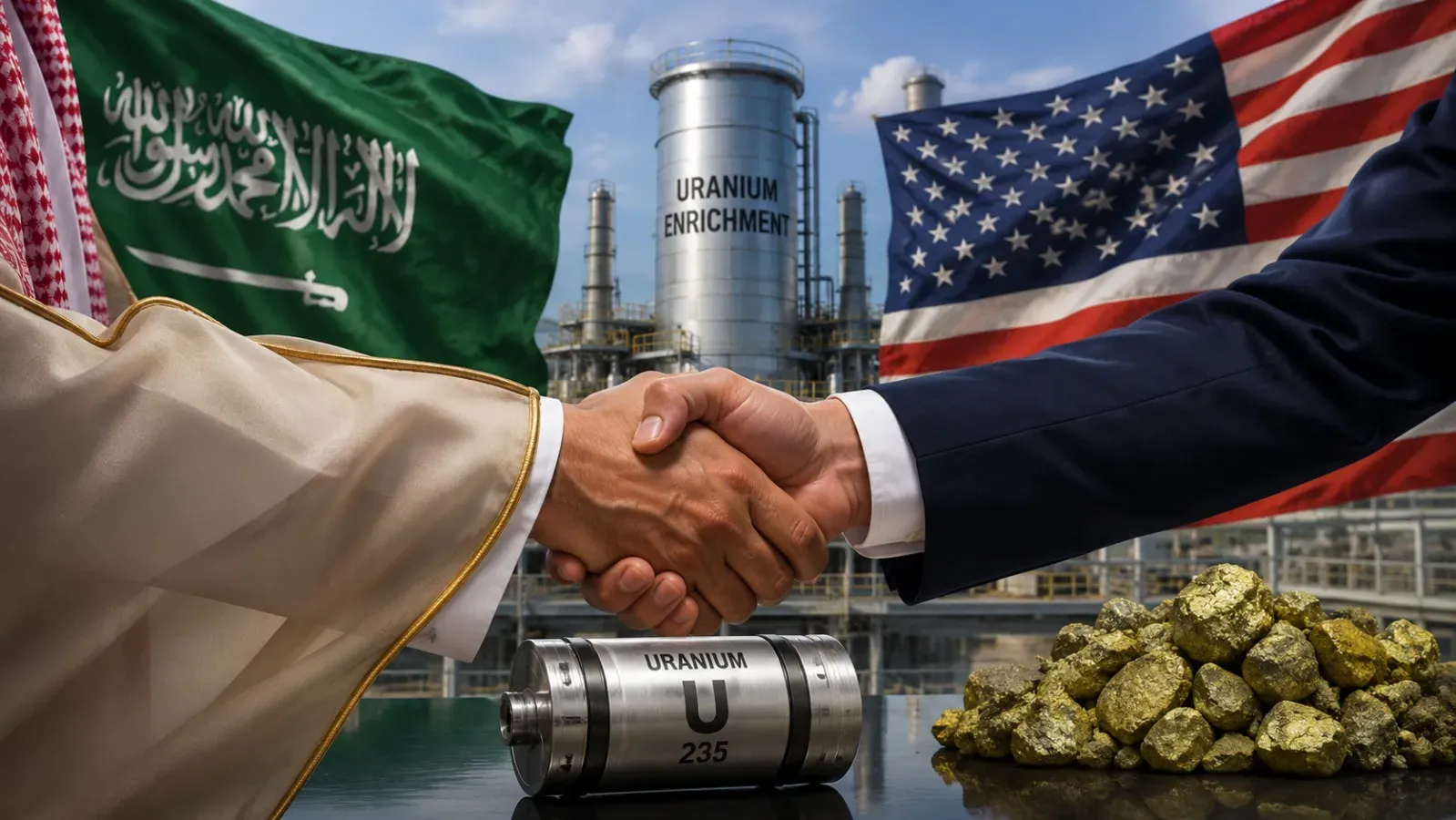
The deal establishes the legal framework for bilateral nuclear cooperation and could eventually allow Saudi Arabia to enrich fuel for civilian reactors. Image: AI generated/Representational
The United States and Saudi Arabia have signed a long-awaited civilian nuclear cooperation agreement that opens the door for American companies to participate in the kingdom's nuclear energy program.
US Energy Secretary Chris Wright and Saudi Energy Minister Prince Abdulaziz bin Salman signed the agreement Wednesday, known as a "123 agreement" under the US Atomic Energy Act.
The deal, along with a bilateral safeguards agreement that establishes the legal framework for nuclear cooperation, could lead to the kingdom enriching its own fuel for civilian reactors.
The US Department of Energy said the agreements would support a decades-long, multi-billion-dollar partnership, expand opportunities for U.S. companies in Saudi Arabia's planned nuclear energy sector and reinforce nuclear safety, security and nonproliferation standards.
"These agreements reflect our two nations' shared commitment to strengthening U.S.-Saudi commercial relations," Wright said in a statement, adding that they uphold "the highest standards of nuclear safety and nonproliferation."
Saudi Arabia's Energy Ministry said the pact would facilitate the exchange of expertise, knowledge and technology for peaceful nuclear energy while expanding cooperation in energy and advanced technologies.
The agreement marks a milestone in years of negotiations over Saudi Arabia's ambitions to develop civilian nuclear power as the kingdom seeks to diversify its energy mix and reduce reliance on oil for domestic electricity generation.
The deal, however, is expected to draw scrutiny in Washington and across West Asia because of concerns that nuclear technology could eventually be used to produce weapons-grade material.
According to US officials cited by American media, any uranium enrichment activity would first require a joint US-Saudi assessment of its commercial viability.
Any enrichment facility would be built by the United States without transferring sensitive enrichment technology to Saudi Arabia.
The agreement also bars Saudi Arabia from developing or acquiring its own uranium enrichment technology from other countries for 10 years, according to reports.
Unlike the United Arab Emirates, which signed a so-called "gold standard" nuclear cooperation agreement with Washington in 2009, Saudi Arabia is not required under the new arrangement to adopt the International Atomic Energy Agency's Additional Protocol.
The two countries negotiated a separate bilateral safeguards agreement, which will require approval by the IAEA's Board of Governors.
The agreement is also likely to be watched closely by regional powers.
Israel, widely believed to possess undeclared nuclear weapons, has long expressed concerns about Saudi Arabia obtaining nuclear technology.
Iran, Saudi Arabia's regional rival, continues to maintain that its nuclear program is for peaceful purposes despite international concerns over its growing stockpile of enriched uranium.
Saudi Crown Prince Mohammed bin Salman has previously said the kingdom would seek a nuclear weapon if Iran were to develop one.
Under US law, the agreement must now be submitted to Congress for a mandatory review period.
Lawmakers can block the deal by passing resolutions of disapproval in both the House of Representatives and the Senate.
About The Author
Next Story

