
Business News
Gold demand falls 29% in July-Sep quarter as prices soar, spending rises 3%: Report

4 min read | Updated on November 03, 2026, 12:44 IST

SUMMARY
The World Gold Council expects festive and wedding demand to support purchases in the December quarter.
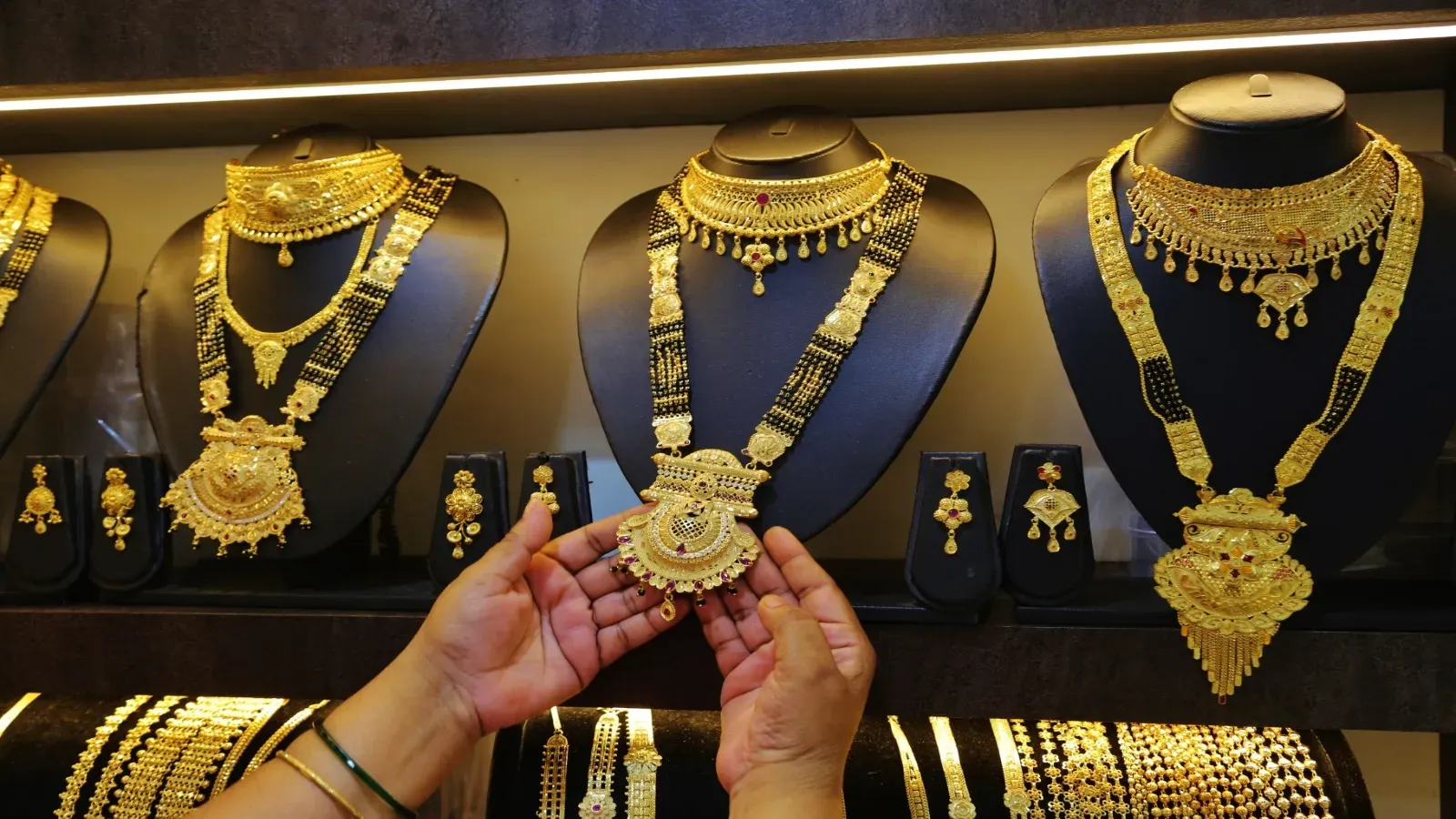
Domestic gold prices averaged ₹1,48,891 per 10 grams in the July-September quarter. Image: Shutterstock
India's gold demand declined 29% year-on-year to 162.5 tonnes in the September quarter as elevated domestic prices continued to weigh on affordability, even as the value of purchases rose 3% to ₹2.42 lakh crore, according to the World Gold Council (WGC).
"The divergence between volume and value persisted during the quarter," the WGC said in its latest ‘Gold Demand Trends: India Focus’ report.
The report noted that consumers and investors continued to allocate substantial sums to gold even as higher prices resulted in lower quantities purchased.
Domestic gold prices averaged ₹1,48,891 per 10 grams in the July-September quarter, up 45% from a year earlier amid depreciating rupee and the higher import duty.
In May, the government, in a bid to conserve foreign exchange, raised import duties on gold and silver to 15% amid a widening import bill triggered by the West Asia crisis.
The basic customs duty on gold and silver has been increased to 10% from 5%.
The finance ministry also increased the social welfare surcharge (SWS) and the agriculture infrastructure and development cess (AIDC), raising the overall customs duty on gold to 15%.
The hike followed Prime Minister Narendra Modi's appeal earlier this week for households to postpone gold purchases and cut discretionary foreign exchange spending.
India is the world's second-largest gold consumer after China, and imports most of its bullion requirements to meet demand from the jewellery sector.
Jewellery demand
The domestic gold market, however, gained ground from the preceding quarter, with total demand rising 24% sequentially to 162.5 tonnes, led by a seasonal pick-up in jewellery purchases.
Jewellery demand rose 33% quarter-on-quarter to 99.9 tonnes, supported by seasonal buying and a pullback in gold prices late in the quarter, which encouraged some deferred purchases.
However, it remained 20% below the year-ago level as elevated gold prices continued to weigh on affordability.
“The decline also reflected a shift in the festive calendar, with festivals that supported demand in Q3 last year occurring in the October–December quarter this year,” the report said.
Despite lower volumes, jewellery demand value rose 16% year-on-year to ₹1.49 lakh crore.
The trend was even more pronounced in the first nine months of 2026, when overall gold demand fell 12% to 443.9 tonnes, while its value increased 38% to ₹6.67 lakh crore.
The WGC said the increase in jewellery demand value was "entirely price-led".
“Consumers spent more despite buying less gold,” it said.
Demand for bars and coins rose 9% sequentially to 55 tonnes but fell 40% year-on-year against a particularly strong base.
Gold ETF demand, meanwhile, strengthened to 5.3 tonnes from 3.6 tonnes in the preceding quarter.
“Festive and wedding demand should provide seasonal support in Q4,” the WGC said in its outlook.
“However, still-elevated price levels and weakness in the rural economy following a poor monsoon are likely to temper demand. Investment demand should remain positive, although sensitive to price momentum,” it added.
A consumer survey conducted jointly by the WGC and Kantar found that the proportion of respondents expecting to increase gold jewellery purchases over the following three months rose to 29% from 20% in the previous survey.
However, buying, according to the survey, is becoming more concentrated around culturally important occasions.
Weddings accounted for 25% of respondents’ expected next jewellery purchases, up from 22% in wave 1, while festivals and auspicious occasions increased from 16% to 21%
Consumers are also adjusting what they buy and how they fund purchases.
As many as 77% of respondents considering changing or maintaining their buying behaviour said they would trade down on purity or carat.
“Consideration of exchanging old jewellery to fund new purchases rose from 70% to 76%, while interest in EMI and regular gold-savings schemes remained broadly stable,” it said.
About The Author
Next Story

