Business News
Trump’s 10% tariffs ruled 'invalid' by US court; Who will get money back & what's next?

3 min read | Updated on May 08, 2026, 09:23 IST


SUMMARY
A US federal trade court has ruled that Donald Trump lacked the legal authority to impose blanket 10% import tariffs under Section 122 of the Trade Act of 1974.
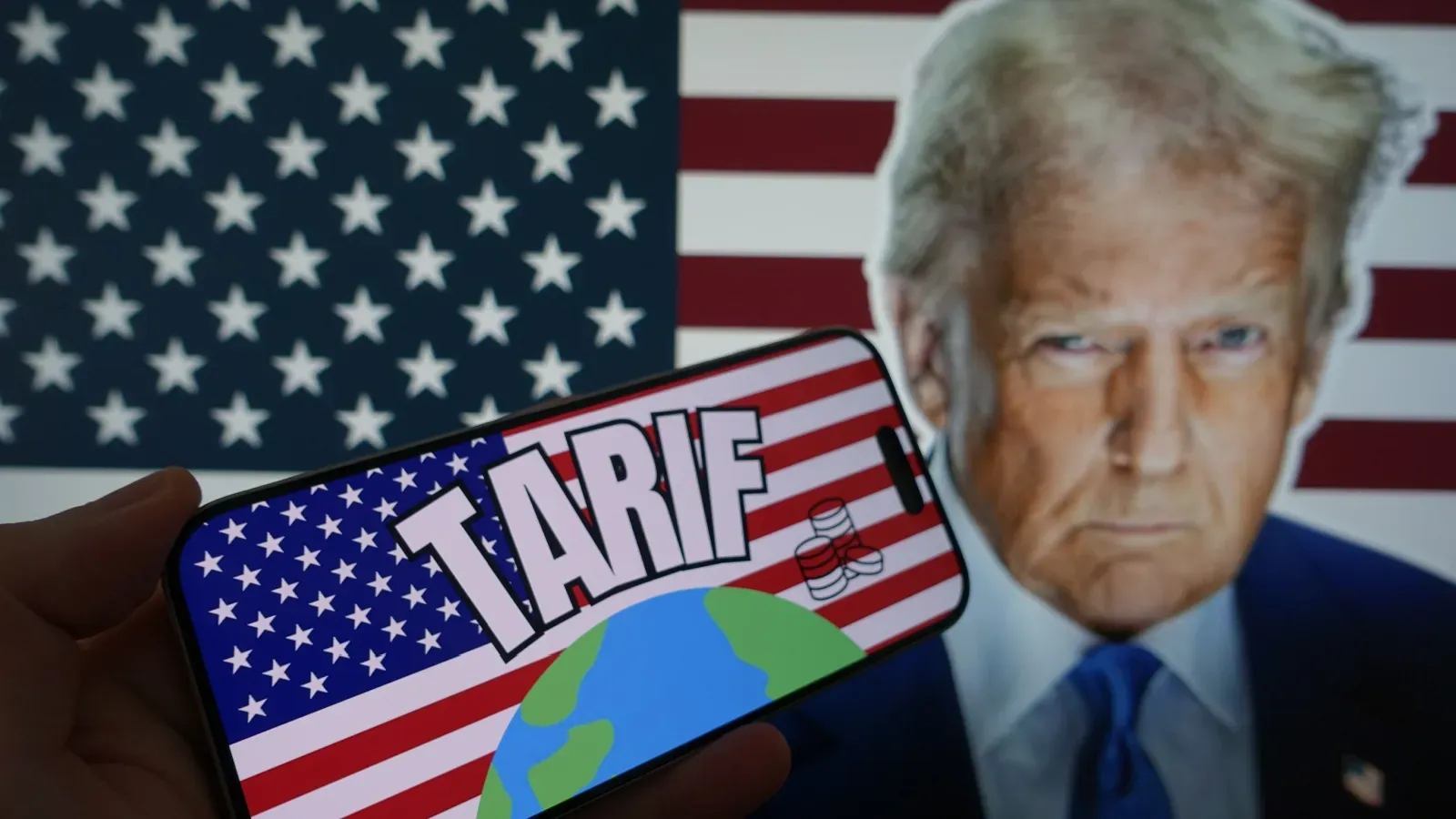
The Trump administration had imposed the temporary 10% tariffs on foreign-made goods under Section 122. Image: Shutterstock
A US federal court has ruled President Donald Trump’s across-the-board 10% tariffs illegal, dealing another blow to his trade agenda and raising fresh uncertainty over the administration’s ability to impose sweeping import duties without congressional approval.
In a 2-1 decision on Thursday, the US Court of International Trade said the Trump administration lacked the legal basis to impose the tariffs under Section 122 of the Trade Act of 1974, calling the levies “invalid” and “unauthorized by law.”
The ruling comes months after the US Supreme Court struck down the administration’s reciprocal tariff regime imposed under emergency powers legislation, saying Trump had exceeded presidential authority by unilaterally imposing sweeping duties.
Who gets refund
The administration had imposed the temporary 10% tariffs on foreign-made goods under Section 122, a provision that allows the president to impose tariffs of up to 15% if certain criteria are met. The measure was due to expire on July 24.
However, the court ruling noted that the presidential proclamation imposing tariffs identifies no “large and serious United States balance-of-payments deficits’ as Congress understood that phrase.”
The latest decision specifically blocks the collection of tariffs from the plaintiffs in the case — the state of Washington, spice company Burlap & Barrel, and toy maker Basic Fun! — and directs the administration to refund previously collected duties.
Jeffrey Schwab, senior counsel and director of litigation at the Liberty Justice Center, which represented the two companies, said the law was intended for extraordinary monetary crises rather than trade imbalances.
“The United States has a trade deficit, not a balance-of-payments deficit, and does not have international payments problems. The President cannot impose these tariffs under Section 122,” Schwab said.
Businesses that challenged the tariffs welcomed the ruling, saying the duties had disrupted supply chains and increased costs.
“This ruling is a major victory for small businesses like ours that depend on fair and predictable trade policy,” said Ethan Frisch and Ori Zohar, co-founders of Burlap & Barrel.
Jay Foreman, chief executive of Basic Fun!, said the decision would provide “needed clarity and stability for companies navigating global supply chains.”
The Trump administration is expected to appeal the ruling.
Trump said his administration would pursue alternative routes to maintain tariffs.
“Nothing surprises me with the courts,” Trump told reporters. “We always do it a different way.”
The administration has continued pursuing other trade actions to impose tariffs.
On March 11, the Office of the United States Trade Representative initiated a Section 301 investigation into industrial policies and practices of 16 economies, including India and China.
A day later, the USTR launched another probe covering around 60 economies, including India and China, to examine whether their policies related to forced labour-linked imports discriminate against or restrict US commerce.
About The Author
Next Story