
Business News
RBI can ‘look through’ temporary supply shocks, but will tighten policy if..: Governor Malhotra
.png)
3 min read | Updated on May 19, 2026, 14:25 IST


SUMMARY
Malhotra said India’s inflation-targeting framework, with a 4% target and a flexible tolerance band, has helped maintain price stability while allowing room to absorb temporary volatility.
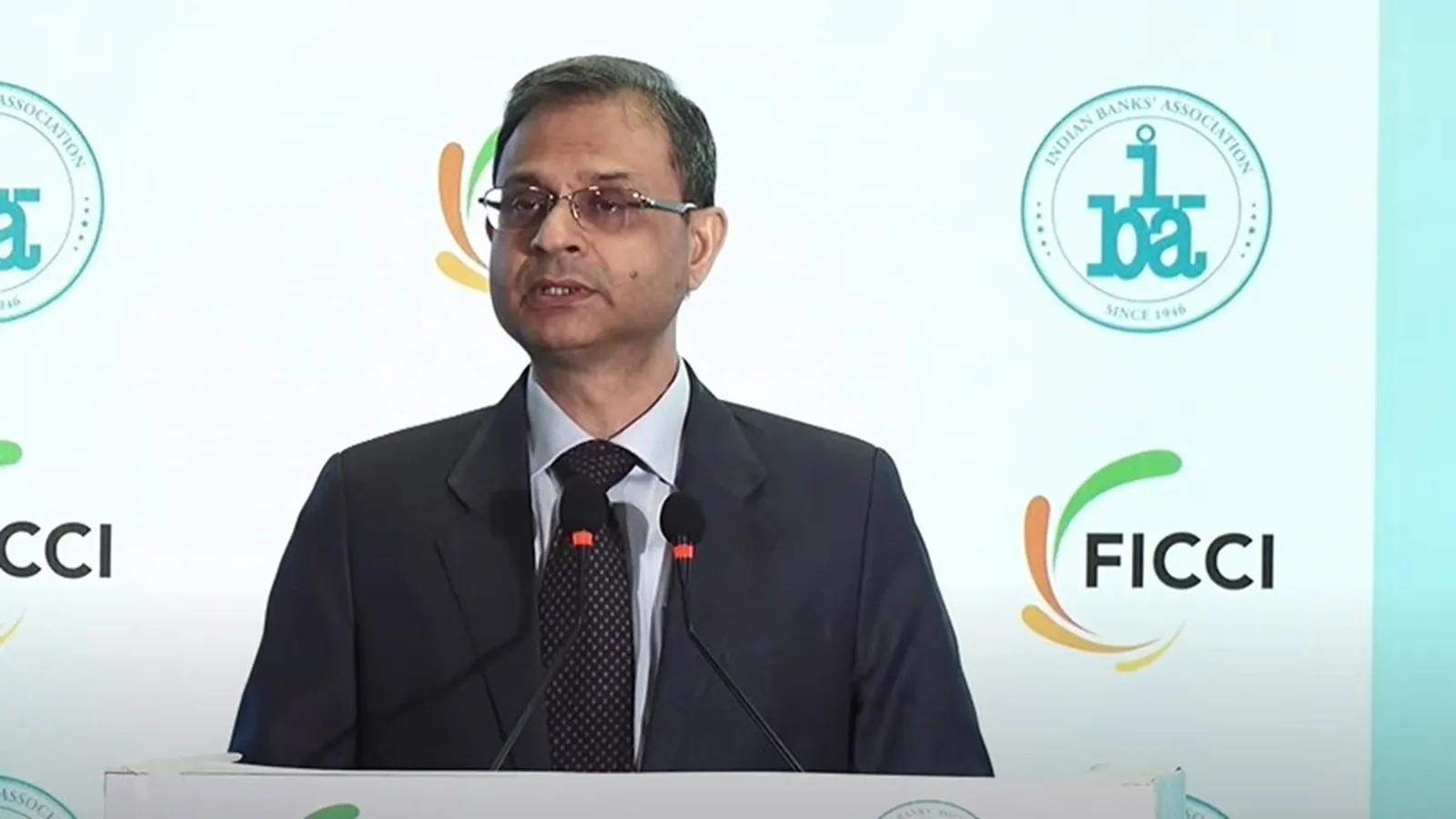
The RBI has maintained a neutral policy stance since June 2025 amid ongoing uncertainty linked to energy prices and global supply disruptions.
Reserve Bank Governor Sanjay Malhotra has said monetary policy can look through temporary supply-driven inflation shocks, but the central bank will tighten policy if sustained increase in prices lead to generalisation of inflation pressures.
Speaking at a panel discussion organised by the International Monetary Fund and the Swiss National Bank on May 12, Malhotra said uncertainty is the “defining characteristic” of monetary policymaking and central banks must remain agile and data-dependent in responding to evolving risks.
“Whether to look through or not depends on the duration of inflation and whether it is generalised in the economy,” he said, according to the transcript released by the Reserve Bank of India on Monday.
Malhotra said India is particularly exposed to supply shocks because food items account for around 40% of the consumer price index basket and agriculture remains heavily dependent on monsoon conditions.
He said in the event of a temporary supply shock, sharp monetary tightening could unnecessarily hurt growth, while delaying action for too long could allow inflation expectations to become entrenched.
“In a supply shock, we generally try to look through the first-round impact, if we believe that it is transitory and will dissipate quickly,” he said.
However, if higher prices spill over into wages, transport and production costs and trigger broader inflationary pressures, tighter monetary policy becomes necessary, he added.
Malhotra said central banks worldwide have increasingly adopted a meeting-by-meeting approach since the pandemic and the Russia-Ukraine War, relying more on high-frequency data to assess rapidly changing conditions.
He also stressed that monetary policy alone cannot resolve supply-side bottlenecks and requires coordination with fiscal and structural measures.
Referring to India’s inflation-targeting framework, Malhotra said it has helped anchor price stability while allowing flexibility to deal with temporary shocks.
He noted that average inflation has declined by about two percentage points since the framework was introduced.
India’s monetary policy aims to keep inflation at 4 per cent, with a tolerance band of 2 percentage points on either side.
Malhotra said this relatively wide band and a target horizon of three quarters provide sufficient policy space to absorb temporary volatility without frequent changes in interest rates.
On the current energy shock, he said the Monetary Policy Committee in its April 2026 resolution had acknowledged that the economy is facing a supply shock and that it would be prudent to “wait and watch” the evolving growth and inflation outlook.
The RBI has maintained a neutral policy stance since June 2025, giving it the flexibility to respond as warranted by incoming data, he said.
“The future of price stability-focused frameworks lies in enhancing their agility and credibility rather than in abandoning them,” Malhotra said.
About The Author
Next Story

