Business News
Maruti e Vitara offers ₹3.99 per km battery plan: How BaaS model works and its benefits

4 min read | Updated on February 19, 2026, 09:31 IST


SUMMARY
Maruti Suzuki e Vitara launched at an introductory price of ₹10.99 lakh under the Battery-as-a-Service (BaaS) model. This is the first electric SUV by Maruti Suzuki. Here is a quick breakdown of the BaaS model and how it works.
Stock list
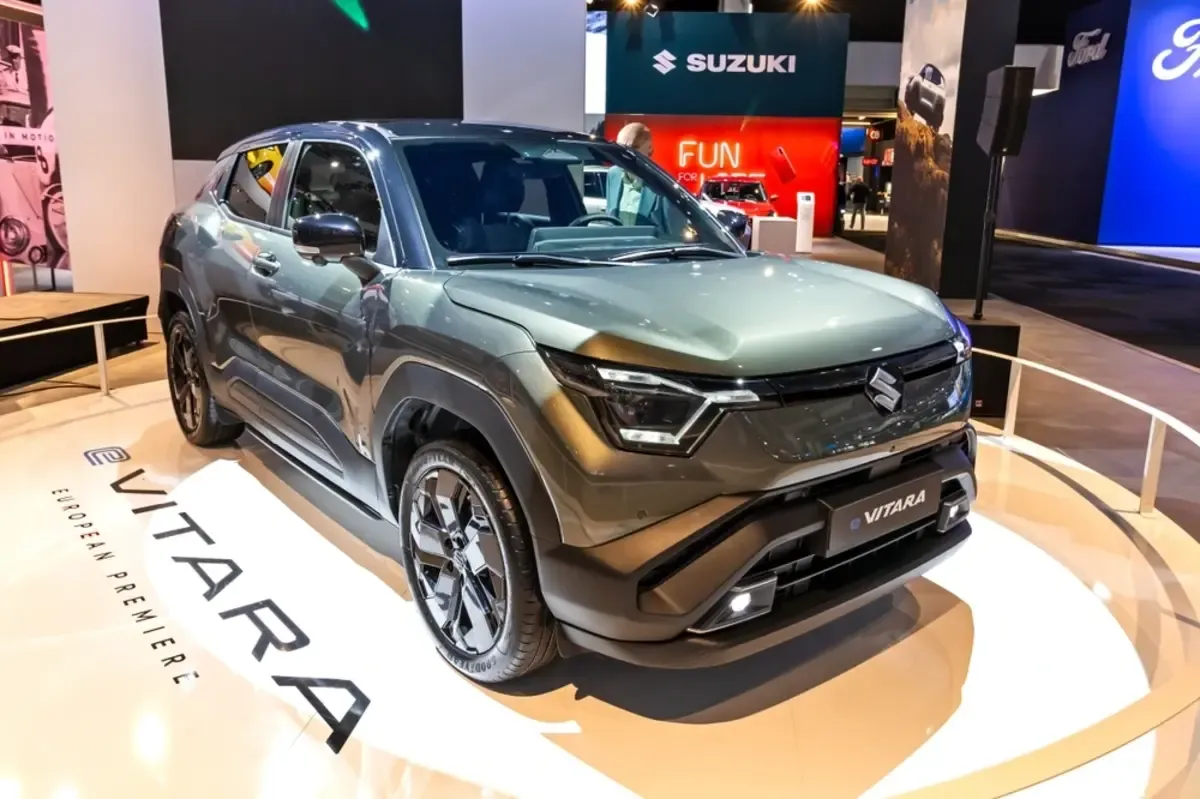
Experts believe BaaS model is more profitable for low to average-mileage users. | Image: Shutterstock
Maruti Suzuki has finally launched its first electric SUV, e Vitara, at an introductory price of ₹10.99 lakh (ex-showroom). e Vitara will be offered in three variants: Delta, Zeta and Alpha, and two battery pack options of 49 kWh and 61 kWh.
The base model Delta will only come with a 49 kWh battery pack, offering a range of 440 km. Meanwhile, the Zeta and Alpha variants get the larger 61 kWh battery pack, which gives the car a maximum range of 543 km.
Meanwhile, the company has set up over 2,000 charging points across 1,100 cities to ease range anxiety among buyers. Maruti Suzuki also offers an 8-year/1,60,000 km battery warranty and 60% assured buyback after 3 years.
With the electric vehicle launch, Maruti Suzuki will compete with the EV models of other listed automakers like Tata Motors PV, which has a prominent electric vehicle (EV) lineup, including Curvv, Punch, Nexon, Tiago and others. Mahindra & Mahindra (M&M) also has multiple EV models like BE 6, XEV 9e, and XUV400 EV
The introductory price of e Vitara of ₹10.99 lakh has caught the attention of many buyers, as the price is 3 to 7 lakh lower compared to rival EV models like Curvv, Nexon, BE6 and others. However, this introductory price of ₹10.99 lakh comes under the Battery-as-a-Service (BaaS) model.
Battery-as-a-Service (BaaS) is an EV ownership model that separates the purchase of the electric vehicle and its battery pack. Under the BaaS model, buyers pay separately for using the battery under a lease or a subscription-based plan. This model significantly reduces the upfront purchase cost of the vehicle by upto 30 to 40% as the battery is the most expensive component of EVs.
In the case of Maruti Suzuki e Vitara, the battery usage will be charged separately at ₹3.99 per kilometre.
India’s electric vehicles market is rapidly expanding, driven by incentives from the central and state governments, growing charging infrastructure, and high petrol prices. However, one of the major hurdles in EV ownership is the high initial cost, as EV car prices are still much higher than those of an equivalent petrol or diesel car.
Maruti Suzuki seems to have addressed this problem through the BaaS model, which reduces the upfront ownership cost and undercuts the e Vitara prices by upto 40% compared to its rival electric vehicles.
MG Windsor EV, which was launched in 2024, introduced the BaaS model. The company currently sales between 3,000 and 5,000 units every month.
How does Battery-as-a-Service (BaaS) model work?
Suppose an electric SUV costs ₹15 lakh with a battery pack included. But, under the BaaS model, the same vehicle will cost ₹11 lakh without the battery pack and a separate contract is made for the battery usage. In the above scenario, the battery pack cost is ₹4 lakh. Meanwhile, a separate contract is made for the battery usage at ₹3.99 per kilometre
Suppose a user drives 50 km per day (roughly 1,500 km per month), then the user will pay ₹5,985 per month for the battery usage, excluding electricity charging costs. In the above scenario, it will take around 5.5 years for the users to equal the full cost of the vehicle.
Experts believe the BeeS model is more profitable for low to average-mileage users. Suppose someone drives only 10,000 km per year, then the subscription cost comes around ₹39,900 for a year, and it would take over 10 years to recover the battery pack cost, which is ₹4 lakh.
BeeS model may not be suitable for high-mileage users, who drive over 100,000 km per year, as it will cost nearly 4 lakh per year. Hence, it makes more sense to take full ownership by paying upfront.
Benefits of the BaaS model
- EV buyers under the BaaS model do not have to worry about battery degradation or defects, as in case of any problem, the manufacturer replaces it.
- Automakers offer a buyback offer for the vehicle after a certain period. It gives the customer additional benefits at the time of sale. In the case of Maruti Suzuki e Vitara has a 60% assured buyback after 3 years.
- Lower upfront cost encourages more buyers to switch to electric vehicles.
What did investment firm Nomura say on the e Vitara launch?
Investment firm Nomura said e Vitara is competitively priced to boost EV penetration in the domestic markets. The analyst at Nomura expects 12,000/24,000 unit domestic volumes for the eVitara and its Toyota variant, combined over FY26 and FY27. However, the firm has cautioned that this aggressive pricing strategy may lead to lower profitability margins for the company in the near term.
About The Author
Next Story