Business News
Is gold recycling, not demand cuts, answer to India’s forex challenge? Here's what industry said

4 min read | Updated on May 12, 2026, 12:00 IST


SUMMARY
India’s jewellery industry has urged the government to prioritise gold mobilisation and recycling instead of discouraging gold purchases, warning that reducing demand could hurt 35 million livelihoods tied to the sector.
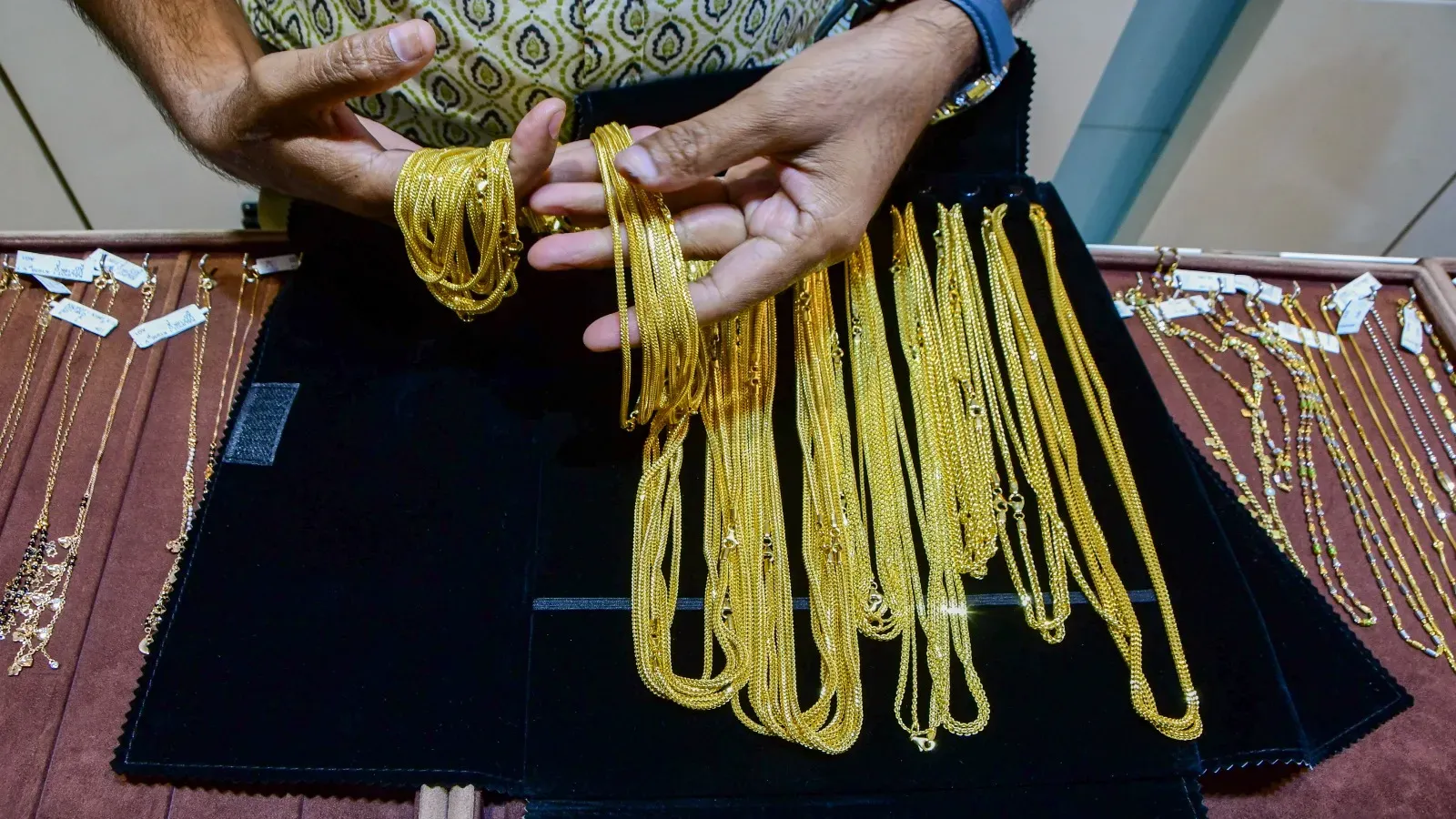
A jewellery shop employee displays gold chains at a store in Kalbadevi after Prime Minister Narendra Modi urged Indians to stop buying gold for a year, in Mumbai, Monday, May 11, 2026. (PTI Photo)
India's jewellery industry has urged the government to focus on mobilising and recycling the country's vast idle gold holdings rather than discouraging purchases, warning that curbing demand could hurt millions of jobs while doing little to address pressure on foreign exchange reserves.
The appeal came a day after Prime Minister Narendra Modi asked Indians to postpone gold purchases to help conserve foreign exchange amid global supply disruptions triggered by the conflict in West Asia.
In a letter to Commerce Minister Piyush Goyal, the All India Jewellers & Goldsmith Federation (AIJGF) said reducing consumer demand without a structural alternative risked devastating the jewellery ecosystem, which it said supports about 35 million livelihoods.
"While the intention of protecting India's foreign exchange reserves is understandable, the solution should not be demand destruction," AIJGF President Pankaj Arora said. "The solution should be domestic gold mobilisation, recycling and productive circulation of India's idle gold stocks."
India is the world's second-largest consumer of gold after China, and imports most of its needs.
Arora said gold in India is not merely a discretionary purchase but a traditional savings instrument, especially in rural areas and during weddings.
"For millions of Indian families, jewellery is not speculation, it is savings in wearable form," he said.
The federation said a sudden public appeal to avoid buying gold could reduce customer footfalls, slow manufacturing orders and squeeze incomes of small jewellers, karigars and artisans.
"This is not merely a gold trade issue. This is a livelihood issue," it said.
India's gold imports rose more than 24% to an all-time high of USD 71.98 billion in 2025-26 from USD 58 billion in the previous fiscal, according to commerce ministry data.
In volume terms, however, imports fell 4.76% to 721.03 tonnes from 757.09 tonnes.
According to the commerce ministry, the increase in the import bill was largely driven by prices climbing to USD 99,825.38 per kilogram in FY26 from USD 76,617.48 per kilogram in FY25.
The increase has added to pressure on India's trade deficit and current account, prompting policymakers to look for ways to reduce non-essential imports.
The federation said a better approach would be to create a dedicated bullion bank, preferably within the Gujarat International Finance Tec-City International Financial Services Centre or the India International Bullion Exchange, to mobilise, standardise and lend domestically held gold.
The federation also called for allowing gold ETFs to lend up to 20-30% of their physical holdings through a regulated bullion bank framework, and suggested a revamp of the government's gold monetisation scheme, which it said had failed to achieve scale since its 2015 launch due to structural weaknesses.
The AIJGF estimated that an effective bullion banking framework could reduce annual gold imports by 200 to 300 metric tons over time.
"Suppressing jewellery demand can hurt employment, but mobilising domestic gold can save foreign exchange without destroying livelihoods," AIJGF said, urging the government to hold an inter-ministerial consultation on the issue.
The All India Gem and Jewellery Domestic Council (GJC) echoed similar concerns, saying the sector and related industries such as retail, logistics and financial services could come under stress if consumers defer purchases.
GJC Chairman Rajesh Rokde said India already has thousands of tonnes of idle household gold and a transparent, regulated Gold Monetisation Scheme could unlock this value.
"The solution may not lie only in reducing demand, but also in unlocking the immense value of existing gold through a transparent and regulated Gold Monetisation Scheme," he said.
Rokde added that the impact would extend beyond jewellers to sectors such as banking and financial services, retail, e-commerce, jewellery design and logistics.
GJC vice chairman Avinash Gupta stated that gold has always been emotionally and culturally connected to Indian households.
"But today, the nation also faces the challenge of balancing gold demand with economic stability. Respecting the Prime Minister's vision for national interest, the industry believes that a robust and regulated Gold Monetisation Scheme can become a long-term solution for India," he said.
About The Author
Next Story