Business News
India, US trade talks begin today amid tariff shake-up; what’s changed?
.png)
4 min read | Updated on April 20, 2026, 12:05 IST


SUMMARY
India and the United States will begin a fresh round of negotiations in Washington from April 20-22 for the first phase of their proposed bilateral trade agreement.
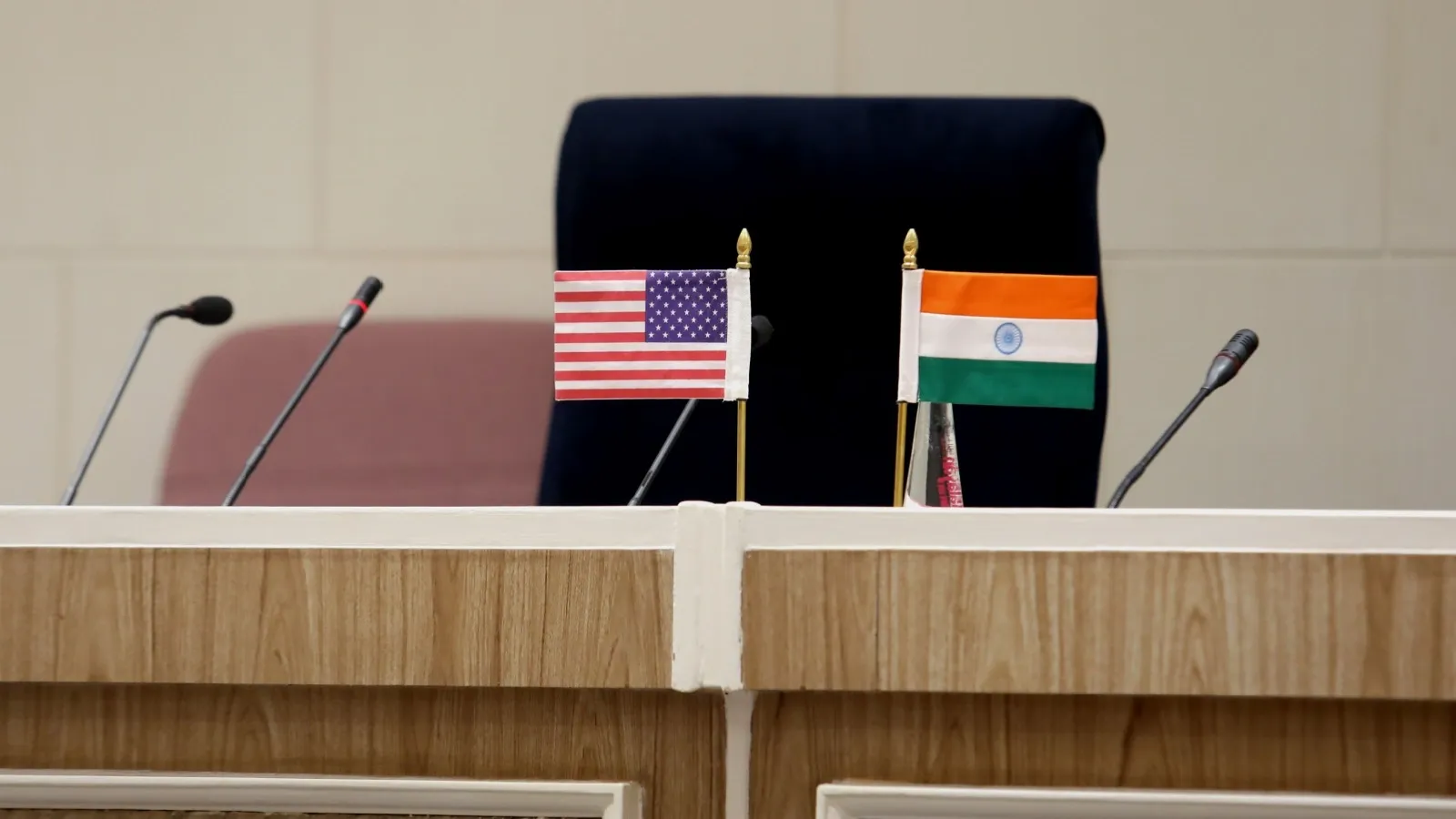
The talks, led by India’s chief negotiator Darpan Jain, are expected to revisit and recalibrate the pact after the US shifted to a flat 10% tariff regime.
A fresh round of negotiations between India and the United States for the proposed first phase of the bilateral trade agreement (BTA) will start in Washington today.
The meeting, scheduled from April 20 to 22, will be led by India’s chief negotiator Darpan Jain, additional secretary in the Department of Commerce.
"The meeting will happen from April 20-22 in Washington DC. India's chief negotiator Darpan Jain (additional secretary in the department of commerce) is leading the team. Officers from customs and external affairs ministry are also part of the Indian team," the official said.
The talks assume significance as both sides may revisit the framework of the proposed agreement following a recent US Supreme Court ruling that struck down sweeping reciprocal tariffs imposed earlier by President Donald Trump.
The United States later imposed a uniform 10% tariff on imports from all countries for 150 days starting February 24, impacting the comparative advantage India had during earlier negotiations.
Now, with all US trading partners facing a uniform 10% tariff, the pact requires recalibration.
"So the agreement will have to be recalibrated, redrafted," a government source has said, adding, "that amount of change will take place from their side".
“In our case, since the agreement has not been signed, we have the flexibility to revise provisions as required,” the source said.
Earlier, the US had agreed to reduce tariffs on Indian goods to 18% from 50%, including the removal of a 25% duty linked to India’s purchase of Russian oil and a commitment to cut the remaining tariffs to 18% under the pact.
However, the Supreme Court’s ruling on February 20 against tariffs imposed under the 1977 International Emergency Economic Powers Act (IEEPA) prompted the Trump administration to opt for a flat 10% tariff regime.
The changed circumstances had led to the postponement of a meeting between the chief negotiators in February, which is now being held this week.
Prime Minister Narendra Modi last week said he had spoken with US President Donald Trump and reviewed “substantial progress” in bilateral ties.
“Received a call from my friend President Donald Trump. We reviewed the substantial progress achieved in our bilateral cooperation in various sectors. We are committed to further strengthening our Comprehensive Global Strategic Partnership in all areas,” Modi said in a post on X.
He added that both leaders also discussed the situation in West Asia and stressed the importance of keeping the Strait of Hormuz open and secure.
The two leaders have spoken three times this year, including calls on February 2 and March 24 focusing on trade negotiations and regional developments.
US Ambassador to India Sergio Gor indicated that several “big-ticket” announcements related to energy and other sectors could be expected in the coming weeks.
“We have some big-ticket items that will be announced over the next few days or weeks, and the relationship is on a firm footing,” Gor said, without elaborating.
The upcoming talks also come against the backdrop of multiple investigations initiated by the Office of the United States Trade Representative (USTR) under Section 301 of the Trade Act of 1974.
On March 11, the USTR launched a probe into industrial policies and practices of 16 economies, including India, while another investigation initiated on March 12 is examining policies related to forced labour-linked imports across around 60 economies.
India has rejected the allegations in both probes, calling them unsubstantiated and lacking adequate justification. In its submission, New Delhi argued that the initiation notices fail to identify any specific policy or practice that could be deemed unreasonable or discriminatory.
“India submits that the present investigation does not satisfy the requirements for initiation under Sections 301 and 302 of the Trade Act of 1974 and calls upon the USTR to terminate the investigation,” it said.
India also maintained that trade-related concerns should be addressed through ongoing bilateral negotiations rather than unilateral measures, and reiterated its willingness to engage constructively with the US.
About The Author
Next Story