
Business News
India's March exports hit 5-month low; China overtakes US as top trade partner in FY26
.png)
3 min read | Updated on April 16, 2026, 12:09 IST


SUMMARY
India’s merchandise exports fell 7.44% year-on-year in March to $38.92 billion, marking the sharpest decline in five months, mainly due to disruptions in trade with West Asia.
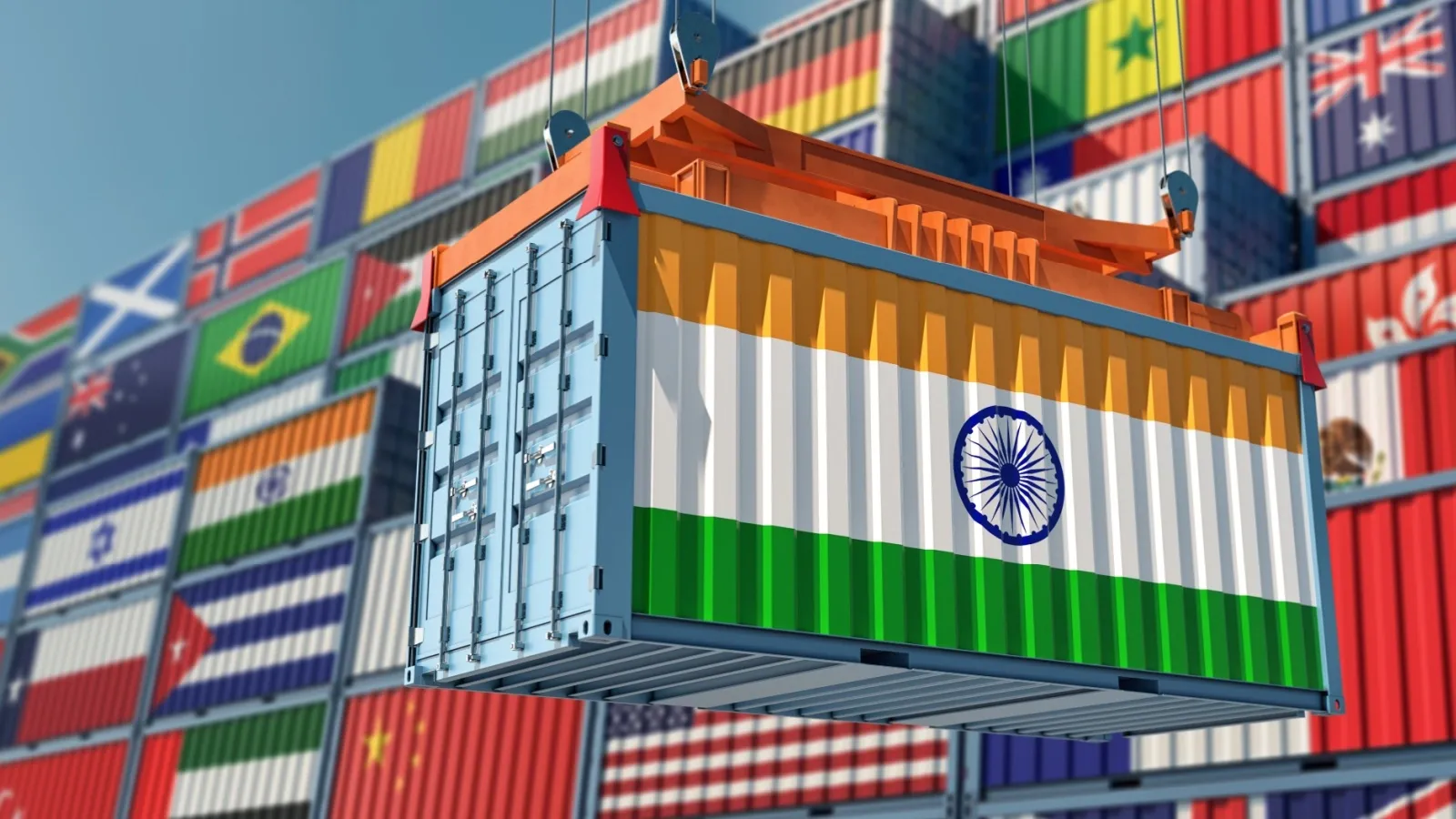
India’s trade deficit, however, narrowed to a nine-month low of $20.67 billion in March on account of lower imports. Image: Shutterstock
India’s merchandise exports fell at their fastest pace in five months in March, weighed down by the trade uncertainty and geopolitical tensions that curtailed shipments to West Asia, government data showed on Wednesday.
Exports declined 7.44% year-on-year to $38.92 billion in March, with outbound shipments to the Middle East plunging nearly 58%, dragging overall trade performance.
India’s trade deficit, however, narrowed to a nine-month low of $20.67 billion in March on account of lower imports.
Imports dropped 6.51% to $59.59 billion, led by a steep decline in crude oil and gold purchases.
“Our exports to the Middle East in March dipped by $3.5 billion and it has impacted overall exports,” Commerce Secretary Rajesh Agrawal told reporters.
Shipments to the region fell to about $2.5 billion from a typical monthly level of around $6 billion.
Agrawal said that April could also be a tough month for exports due to the conflict, which is hampering ship movements in international waters.
The decline follows disruptions in maritime traffic through the Strait of Hormuz, after a joint US-Israel military strikes in Iran triggered a war in the region.
"We hope the challenges that we face today will not sustain for long, and we may have smoother trades across the world in months to come," the secretary said.
The main five sectors that have recorded a dip in shipments include gems and jewellery, engineering goods, electronic items, petroleum products and rice.
Agarwal expressed hope that whatever India was not able to send or sell to the Middle East because of these logistical challenges, exporters will be able to diversify to other markets.
"Because of this, recalibration of supply chains does take place in such kind of crisis. It's not only an India-Middle East logistics challenge, it's a world-Middle East logistics challenge that we are anticipating," he added.
Imports from Gulf nations also contracted sharply, falling 51.64% in March, while crude oil imports dropped 35.91% to $12.18 billion and gold imports fell 31.63% to $3.06 billion.
Despite the monthly dip, India’s overall trade performance in the 2025-26 fiscal year remained resilient.
Merchandise exports rose 0.93% to a record $441.78 billion, while imports increased 7.45% to $775 billion.
The trade deficit ballooned to $333.2 billion, largely due to higher gold and silver imports.
Meanwhile, China overtook the United States to become India’s largest trading partner in 2025-26, with bilateral trade reaching $151.1 billion.
India’s trade deficit with China widened to a record $112.16 billion, as imports rose 16% to $131.63 billion, outpacing a 36.66% rise in exports to $19.47 billion.
On the other hand, exports to the US rose marginally by 0.92% to $87.3 billion, while imports jumped 15.95% to $52.9 billion, narrowing India’s trade surplus with Washington to $34.4 billion from $40.89 billion a year earlier.
A number of major markets, including the Netherlands, the United Kingdom, Singapore, Bangladesh, Saudi Arabia and Australia, recorded negative export growth for India in 2025-26.
However, shipments to the United Arab Emirates, Germany, Hong Kong, Italy and Brazil posted gains.
On the import side, purchases from Russia, Iraq and Indonesia declined, while imports from the UAE, Saudi Arabia, Switzerland and Japan increased.
The ongoing Middle East conflict has also pushed up input costs globally by disrupting supplies of oil and gas, leading to higher prices for commodities such as steel, plastics and rubber.
About The Author
Next Story

