Business News
India’s EV sales: Over 13 lakh electric 2-wheeler, 3W sold in FY2024-25
.png)
2 min read | Updated on April 02, 2025, 11:29 IST


SUMMARY
India's electric vehicle (EV) market saw significant growth in FY 2024-25, with over 13 lakh electric two-wheelers (e-2W) and three-wheelers (e-3W) sold.
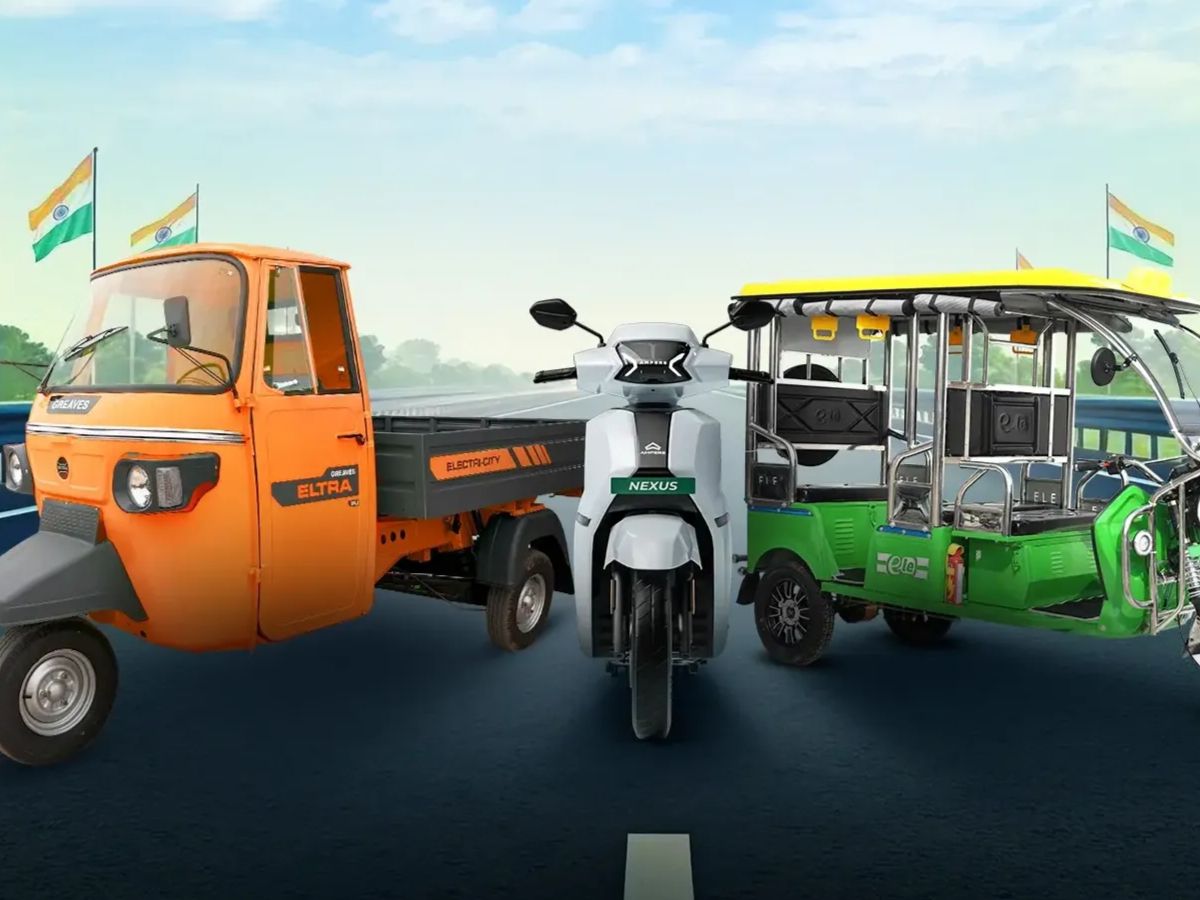
In the Financial Year 2024-25, a total of 11,49,334 electric two-wheelers (e-2W) were sold.
Over 13 lakh electric two-wheelers (e-2W) and three-wheelers (e-3W) were sold in India in the financial year 2024-25, according to data released by the heavy industries ministry.
The figures include 11,49,334 e-2W units, up 21% from 9,48,561 units in FY24, and 1,59,235 e-3W (L5) units, a 57% increase from 1,01,581 units sold in the previous fiscal.
Overall, India's e-mobility sector is poised for significant growth, driven by supportive policies, the ministry said.
“In the Financial Year 2024-25, a total of 11,49,334 electric two-wheelers (e-2W) were sold, reflecting a 21% increase compared to 9,48,561 units sold in FY 2023-24. Similarly, the sales of electric three-wheelers e-3W (L5) reached 1,59,235 units in FY 2024-25, marking a 57% growth over the 1,01,581 units sold in the previous financial year,” an official readout said.
The Ministry of Heavy Industries (MHI) credited this milestone to the ‘PM Electric Drive Revolution in Innovative Vehicle Enhancement (PM E-DRIVE) Scheme,’ launched on September 29, 2024.
With an outlay of ₹10,900 crore, the scheme aims to boost green mobility and the EV manufacturing ecosystem over two years, ending March 31, 2026.
It subsumes the earlier Electric Mobility Promotion Scheme (EMPS) 2024, which ran from April 1 to September 30, 2024.
Union Minister for Heavy Industries & Steel, H D Kumaraswamy, hailed the achievement, saying, "Under the visionary leadership of Hon'ble Prime Minister Shri Narendra Modi avaru, India is driving the global transition to sustainable mobility. The achievement of over 1 million EVs sales is a testament to the success of MHI’s flagship schemes, including FAME, EMPS, and PM E-DRIVE. This milestone reaffirms our commitment to building a cleaner, greener, and self-reliant India.”
According to the ministry, the scheme has saved 8,55,723 litres of fuel per day, totaling 15,77,33,334 litres in FY25. This has led to a daily CO2 reduction of 12,48,100 kg, amounting to 23,01,73,978 kg for the year.
“Through the promotion of electric vehicles (EVs) and supporting infrastructure, the scheme is expected to catalyse significant investment in the EV sector and its supply chain. Furthermore, it will generate substantial employment opportunities across the value chain, including jobs in manufacturing and charging infrastructure setup," the release added.
About The Author
Next Story