
Business News
India plans 100 new ships in 5 years to cut $75 billion foreign freight bill: Sonowal
.png)
3 min read | Updated on August 26, 2026, 09:36 IST


SUMMARY
The National Shipping Board (NSB) has proposed a five-point roadmap covering fiscal reforms, assured cargo support, competitive financing, regulatory streamlining and ease of doing business.
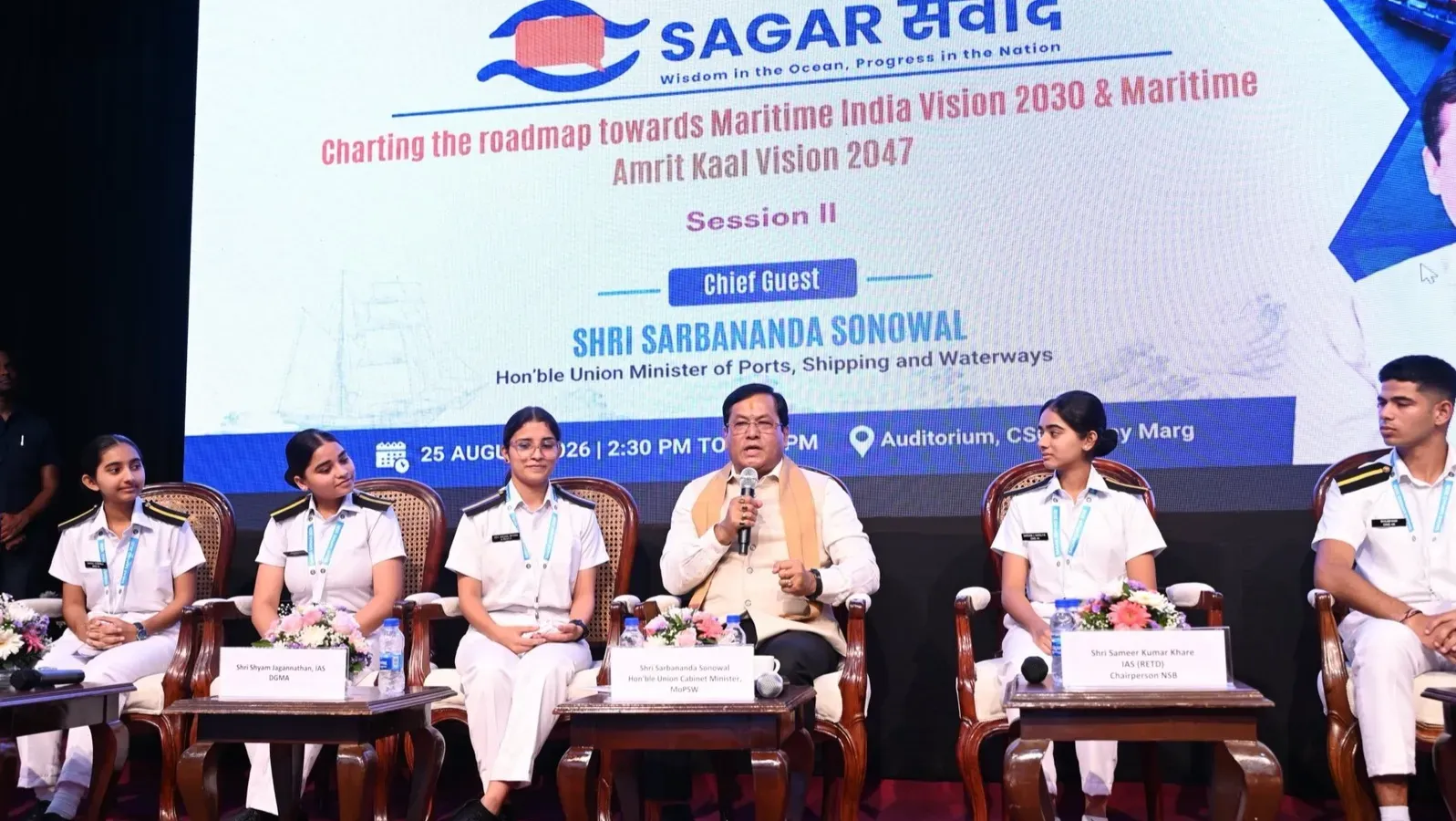
Sarbananda Sonowal, Minister of Ports, Shipping & Waterways, at the inaugural Sagar Samvad - 2026 organised by the National Shipping Board (NSB) in New Delhi.
India plans to add 100 ships to its merchant fleet over the next five years as it seeks to reduce its dependence on foreign shipping lines and cut a $75 billion annual freight bill, Union Minister Sarbananda Sonowal said on Tuesday.
Speaking at the inaugural 'Sagar Samvad' organised by the National Shipping Board (NSB) here, Sonowal backed a five-point roadmap proposed by the board to make Indian-flagged shipping more competitive.
The roadmap includes fiscal reforms, assured cargo support, access to competitive financing, regulatory streamlining and improving ease of doing business.
"India pays close to $75 billion every year in freight to foreign shipping lines, to move cargo as critical as our crude oil, our gas, our coal and our urea," Minister of State for Ports, Shipping and Waterways Shantanu Thakur said at the event.
Thakur said India needs to "command our own waterline" to secure its trade routes and support the country's development ambitions.
Sonowal said the proposed addition of 100 vessels would help build an "Atmanirbhar Shipping Bharat" and ensure Indian shipowners participate in the country's expanding maritime economy.
The NSB panel said operating under the Indian flag remains 16-20% costlier than operating under a foreign flag.
It attributed the cost disadvantage to taxes on ship imports and maintenance services, tax deducted from seafarers' wages, taxes on freight and higher domestic capital costs.
The panel also pointed to the requirement under the Right of First Refusal mechanism for Indian shipowners to match foreign freight rates to secure cargo.
It said addressing these cost disadvantages could enable India to add 100 ships to its fleet within five years, helping it move towards the Maritime Amrit Kaal Vision 2047 target of becoming one of the world's top five ship-owning nations.
The inaugural Sagar Samvad, themed "Charting the Roadmap Towards Maritime India Vision 2030 and Maritime Amrit Kaal Vision 2047", brought together senior government officials, shipowners, financiers, maritime experts and trainee officers.
Sonowal also launched the NSB's first official website and received its annual report for 2025-26 and reports of its subcommittees from NSB Chairperson Sameer Kumar Khare.
"The National Shipping Board (NSB) is older than the ministry it advises, a statutory body constituted in 1958 with one job: make sure India's shipping policy is written only after listening to the people who sail it, own it and pay for it," Sonowal said.
He said the board's mandate had been renewed and strengthened under the re-enacted Merchant Shipping Act, 2025, and the new National Shipping Board Rules.
Sonowal also highlighted the government's ₹10,000-crore Container Manufacturing Assistance Scheme, saying global shipping major Maersk has placed orders for containers manufactured in India.
"We are quadrupling our port capacity to 10,000 million tonnes a year by 2047. NSB's task is to ensure Indian shipowners stand inside that growth, not watching it sail past on someone else's deck," he said.
About The Author
Next Story

