Business News
How Budget 2026 gives India’s electronics components manufacturing a big lift

5 min read | Updated on February 04, 2026, 14:07 IST


SUMMARY
The Union Budget 2026 shows a strong intent and clear direction to transform India’s electronics sector from assembly to deep-value creation. With a massive ₹40,000 crore outlay for electronic components manufacturing, the government is prioritising the most critical need of the hour — securing the upstream supply chain.
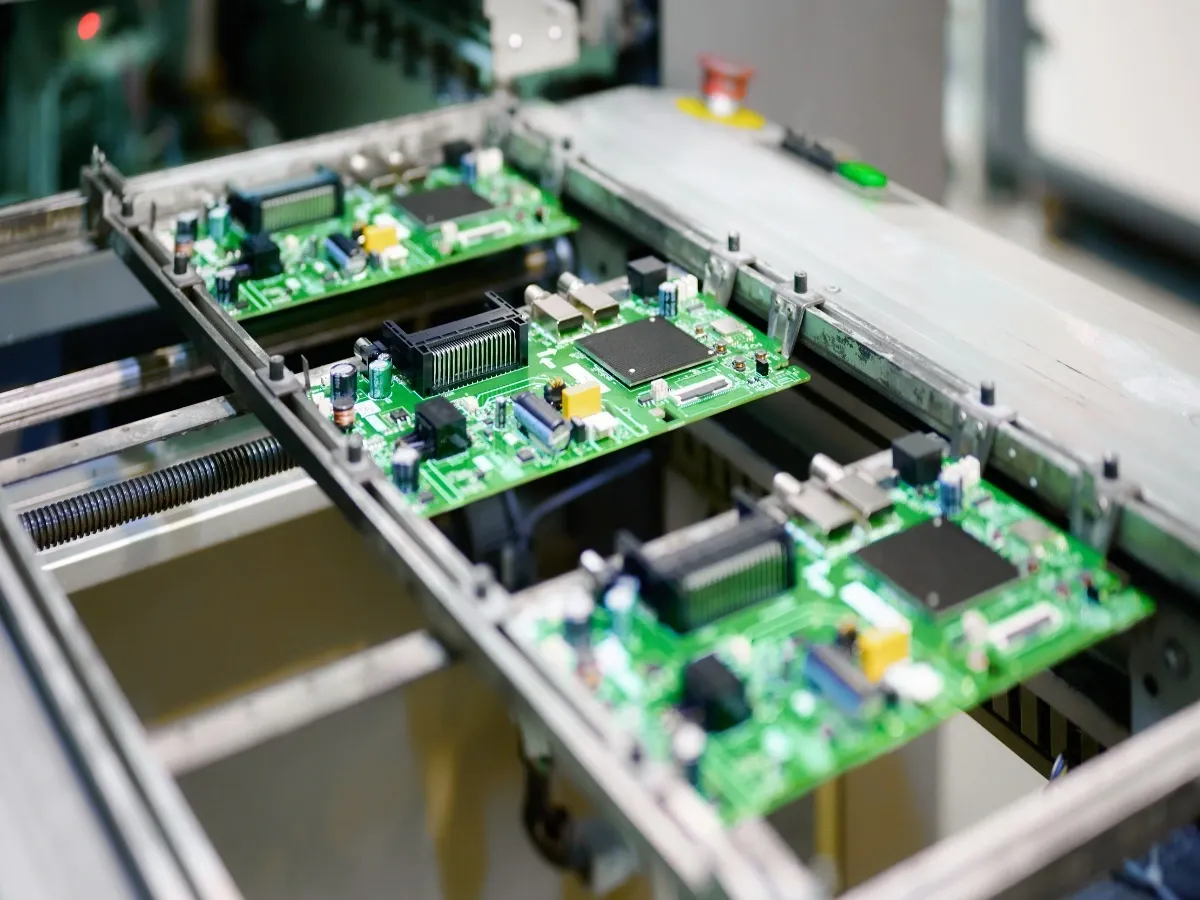
The Budget shifts the focus from assembly-led growth to deeper supply chain ownership.
For a country to truly grow, manufacturing has to be front and centre. All major economies cracked this early. Look at the US, China, Germany, Japan — they all built their dominance with a strong focus on manufacturing early on. India is following a similar playbook. And, the intent becomes very clear from the headline numbers in the Union Budget 2026. If you read the fine print carefully, you’ll see a clear manufacturing story emerging. A story of India’s ambition to make domestic manufacturing cheaper, easier and attractive.
In this story, we’ll zoom in on India’s electronics components manufacturing sector. We’ll talk about how Budget 2026 is strengthening India’s electronics sector from mere assembly to owning the supply chain. So, let’s move beyond the macro numbers to bring you the micro-perspectives.
Over the past few years, the Indian government has followed a well-defined roadmap to position India as a global hub for electronics manufacturing. From initial focus on electronics assembly to now creating a domestic ecosystem for key components, the government rolled out a series of policy initiatives, such as:
-
Modified Special Incentive Package Scheme (MSIPS)
-
Scheme for Promotion of Manufacturing of Electronic Components and Semiconductors (SPECS)
-
Production Linked Incentive (PLI)
-
India Semiconductor Mission (ISM)
-
Electronics Component Manufacturing Scheme (ECMS)
Government data shows a sharp rise in electronics output and exports over the past decade.
According to official data:
-
The value of electronics manufacturing in India grew nearly 6x, from ₹1.9 lakh crore in FY14-15 to ₹11.3 lakh crore in FY24-25.
-
Electronics exports from India grew nearly 8x, from ₹38,000 crore in FY14-15 to ₹3.27 lakh crore in FY24-25.
-
Mobile phone manufacturing alone jumped nearly 28x in production value, from ₹18,000 crore in FY14-15 to ₹5.45 lakh crore in FY24-25.
-
Mobile phone exports from India alone surged nearly 127x, from ₹1,500 crore in FY14-15 to ₹2 lakh crore in FY24-25.
-
iPhone exports from India almost doubled, from ₹1.1 lakh crore in CY24 to ₹2.03 lakh crore in CY25.
-
In Q2 FY25-26, India overtook China to become the top smartphone exporter to the US.
-
Electronics manufacturing has attracted over USD 4 billion in FDI since FY20-21.
-
Electronics manufacturing created 25 lakh jobs in the last 10 years.
-
As of August 2025, 10 semiconductor manufacturing and packaging projects have been approved across six states, with total investments of about ₹1.6 lakh crore.
The data indicates sustained growth in output, exports and investment.
Building on the past success, Budget 2026 charts the roadmap for India’s next phase of growth in electronics manufacturing. It brings a set of direct policy measures aimed at broadening and deepening the electronics manufacturing base.
In Budget 2026, the government proposes to sharply scale up electronics manufacturing incentives. The outlay for the Electronics Component Manufacturing Scheme has almost doubled from ₹22,919 crore to a massive ₹40,000 crore. It is a major encouragement toward building a stronger domestic component supply chain. The move will help India become self-sufficient in the domestic production of printed circuit boards, display panels, camera modules, and other critical components. In fact, it is expected to have a multiplier effect by catalysing downstream investments across the value chain.
Alongside, ₹8,000 crore has been allocated for India Semiconductor Mission 2.0, with a focus on indigenous designing and manufacturing of equipment and materials used in the semiconductor ecosystem, building Indian IP in the industry, and creating an industry-led research and training ecosystem for skilled manpower. This move will strengthen supply chains, reduce vulnerabilities and improve overall value capture within the country.
Another important announcement from Budget 2026 is the establishment of hi-tech tool rooms at two locations. These digitally enabled facilities will design, test and manufacture high-precision components at scale. Building stronger domestic capabilities in this area will reduce import dependence, particularly from China, and improve consistency and quality across manufacturing operations.
An additional ₹10,000 crore has been allocated to build a globally competitive container manufacturing ecosystem and to set up three dedicated chemical parks. These initiatives aim to lower entry barriers for manufacturers and strengthen the domestic chemical supply chains. It aims to reduce import dependence in specialty chemicals, substrates, and other materials that are essential for electronics component manufacturing.
Why are we talking about this? You see, to manufacture semiconductors, we need rare earth materials. And China controls over 90% of the global rare earth elements. Which means, currently, India is heavily dependent on China for rare-earth materials and permanent magnets. Precisely, India imported 93% of its rare earth magnets from China in FY24-25.
With China’s dominance on this vital resource, it has become the new geopolitical battleground. But the good news is, India is taking a series of initiatives to break free from this reliance.
A Scheme for Rare Earth Permanent Magnets (REPM), launched in November 2025, is now being operationalised on the ground.
The Budget also proposes to establish dedicated Rare Earth Corridors to promote mining, processing, research and manufacturing of rare earth permanent magnets in mineral-rich states of Odisha, Kerala, Andhra Pradesh, and Tamil Nadu. With this initiative, India is expected to meet its own requirements by securing long-term access to critical materials for electronics, clean energy, and advanced manufacturing.
Overall, the announcements in Budget 2026 reflect a clear effort to strengthen India’s electronics manufacturing ecosystem. With well-defined policies, sustained reforms and targeted investments, the government is creating a supportive environment for Indian brands to become self-reliant, from raw materials to finished products. The foundation has been laid; what follows next is the work of execution! If done right, it can position India as a trusted global hub for electronics manufacturing in the years to come.
About The Author
Next Story