
Business News
Explained: Longer jail term, bigger fines, fast-track courts; what's in anti-paper leak Bill
.png)
3 min read | Updated on July 27, 2026, 15:12 IST


SUMMARY
The Union government has introduced the Public Examinations (Prevention of Unfair Means) Amendment Bill, 2026 in the Lok Sabha to further tighten the legal framework against question paper leaks and examination-related fraud.
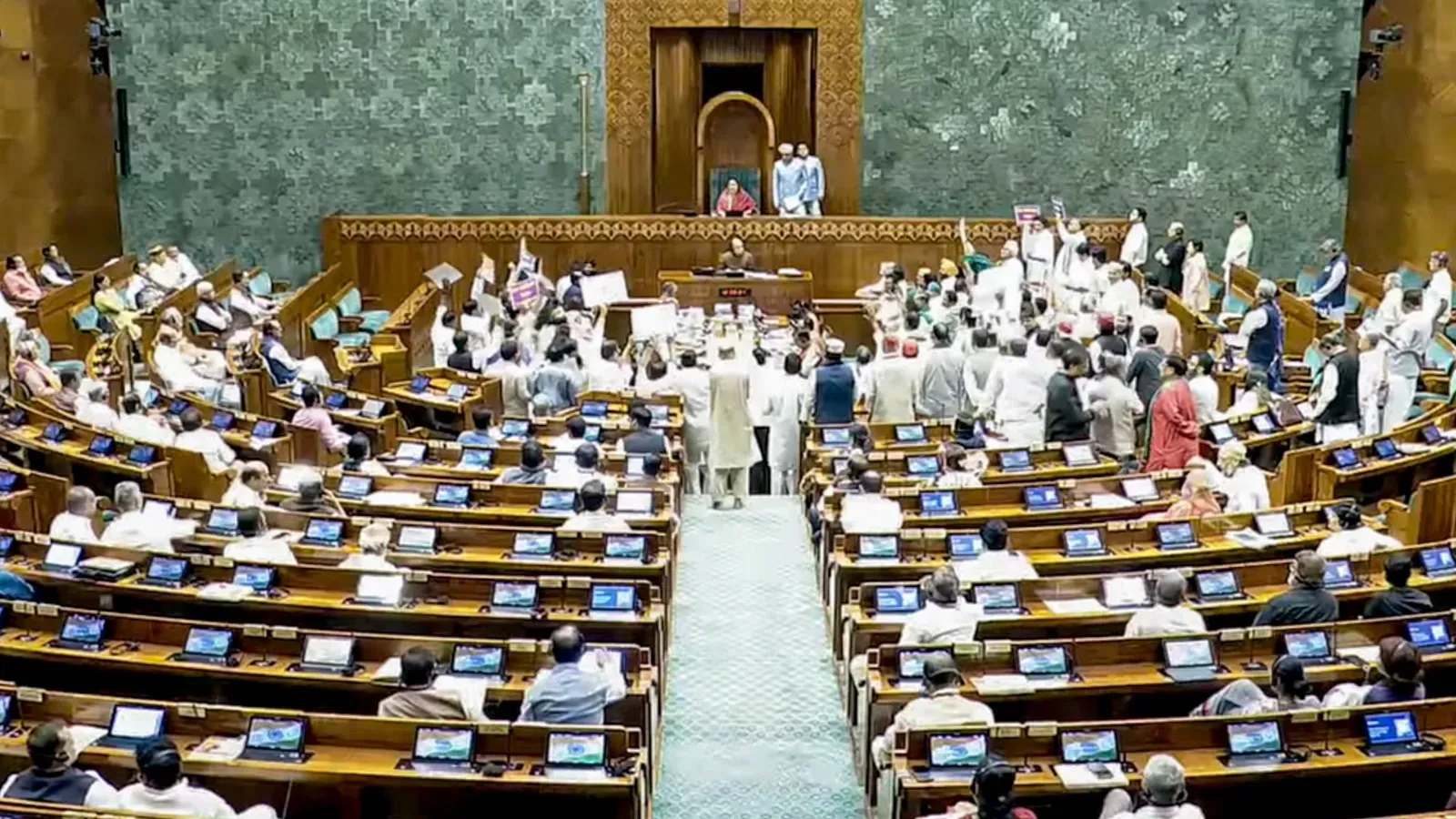
The Lok Sabha during the Monsoon session of Parliament, in New Delhi.
The government on Monday introduced a bill in the Lok Sabha to amend the anti-paper leaks law with stricter punishment, faster investigations and dedicated fast-track courts for offences related to public examination paper leaks and other malpractices.
The Public Examinations (Prevention of Unfair Means) Amendment Bill, 2026 seeks to increase the minimum punishment for persons resorting to unfair means from three years to five years, while raising the maximum jail term from five years to 10 years.
The maximum fine has also been proposed to be increased from ₹10 lakh to ₹50 lakh.
Investigations and trials timeframe
According to the Bill, investigations into paper leak cases are to be completed within two months.
The legislation empowers the Centre to constitute a Special Task Force to investigate offences under the Act, in addition to the existing provision allowing investigations by central agencies.
Where such a task force is constituted, the investigation will be carried out only by that body.
It also requires every state government and Union Territory administration to designate a Court of Session as a special fast track court, in consultation with the concerned High Court, for trying offences under the Act.
Such fast-track courts will conduct hearings swiftly and complete the trial within three months of filing of the chargesheet, according to the bill.
Pending cases under the Act would also stand transferred to the designated fast track courts and be concluded within three months from the date of transfer.
States and Union Territories will also appoint special public prosecutors for these courts.
Steeper penalties for service providers, organised crime
The Bill also proposes steeper penalties for service providers found guilty of offences under the Act.
The maximum fine for such entities has been proposed to be raised from ₹1 crore to ₹5 crore, while the period during which they can be barred from conducting public examinations has been doubled from four years to eight years.
For organised crimes involving examination authorities, service providers or other institutions, the proposed amendment increases the minimum imprisonment from five years to seven years and raises the minimum fine from ₹1 crore to ₹10 crore.
Reason for amendments
The amendments have been proposed following incidents of question paper leaks and examination malpractices in recent years.
In the wake of student protests, Prime Minister Narendra Modi had promised a law to deal with cases like the NEET-UG paper leak. He also said that cases of accused in such cases will be tried in fast-track courts.
The CJP on Saturday called off its 36-day agitation after Dharmendra Pradhan resigned as education minister and the government accepted its other demands.
Modi on Sunday also announced the constitution of a high-powered task force headed by Infosys co-founder Nandan Nilekani to recommend reforms to make the exam system leakproof.
“The objective of the said Act is to bring greater transparency, fairness and credibility and inspire confidence in the public examinations system,” the government said in a statement of objects and reasons.
About The Author
Next Story

