
Business News
Ethanol production capacity touches 2,000 crore litres, to support higher blends: Govt
.png)
3 min read | Updated on July 27, 2026, 20:44 IST


SUMMARY
Minister of State for Petroleum and Natural Gas Suresh Gopi said India achieved the 20% ethanol blending target in ESY 2025-26, five years ahead of the original 2030 deadline.
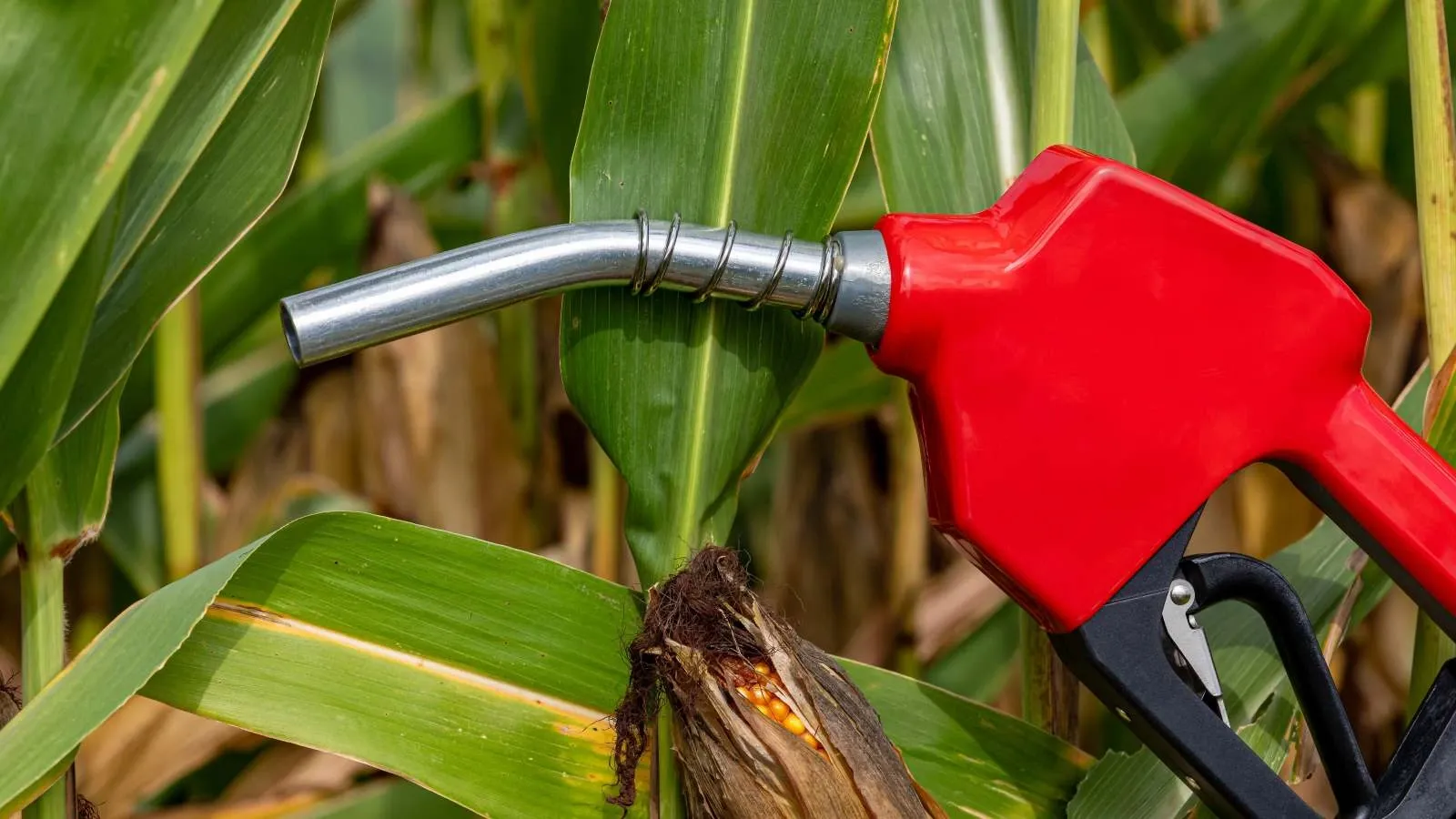
India's ethanol production capacity can sustain 20% ethanol blending (E20) in petrol and support future higher blends.
India’s ethanol production capacity has reached 2,000 crore litres per annum, which the government said has been planned not only to sustain 20% ethanol blending in petrol but also to support higher blends.
In a written reply to the Rajya Sabha on Monday, Minister of State for Petroleum and Natural Gas Suresh Gopi said India had achieved 20% ethanol blending during the Ethanol Supply Year (ESY) 2025-26, five years ahead of the original 2030 target.
"The current ethanol production capacity in the country is about 2,000 crore litre per annum providing adequate capacity to sustain the EBP Programme and meet future requirements," he said.
The minister said the capacity has been planned not only to meet the current requirement for E20 blending but also to cater to future growth in petrol demand, provide operational flexibility during seasonal variations in feedstock availability and support higher ethanol blends, flex-fuel vehicles and other emerging biofuel applications as and when approved by the government.
Gopi said pilot EBP programmes began in 2001 but blending remained limited for over a decade, touching just 1.53% in 2013-14.
He said a series of policy measures, including administered ethanol pricing, the National Policy on Biofuels, 2018, reduction of GST on ethanol for blending from 18% to 5%, interest subvention for ethanol projects, long-term procurement agreements by oil marketing companies and expansion of storage infrastructure, helped create a robust ethanol ecosystem.
As a result, ethanol blending rose to 10% in ESY 2021-22, 12.06% in ESY 2022-23, 14.60% in ESY 2023-24, 19.20% in ESY 2024-25 and reached 20% in the ongoing ESY 2025-26, he added.
On concerns over diversion of foodgrains for ethanol production, the minister said the government follows a diversified feedstock strategy under the National Policy on Biofuels.
Ethanol is produced from sugarcane-based feedstocks, maize, damaged foodgrains, broken rice, foodgrains unfit for human consumption, surplus foodgrains approved by the National Biofuel Coordination Committee and other approved agricultural feedstocks, he said.
The government is also promoting second-generation (2G) ethanol from agricultural residues under the Pradhan Mantri JI-VAN Yojana to increase the use of non-food feedstocks, Gopi said.
He said diversion of foodgrains for ethanol production is calibrated in consultation with the Department of Food and Public Distribution and other ministries, with food security, public distribution system requirements, National Food Security Act obligations, welfare schemes and buffer stock norms receiving the highest priority.
“Only surplus foodgrains, after meeting these requirements, are permitted for ethanol production,” the minister said.
“The Government is also promoting crop diversification towards comparatively less water-intensive feedstocks such as maize and encouraging sustainable agricultural practices so that expansion of ethanol feedstocks remains balanced with the production of pulses, oilseeds and other essential food crops,” he added.
About The Author
Next Story

