Business News
Did IndiGo create 'artificial scarcity' by grounding planes? CCI orders probe into mass flight cancellations

4 min read | Updated on February 05, 2026, 11:50 IST


SUMMARY
The Competition Commission of India (CCI) has ordered a detailed probe into InterGlobe Aviation, which operates IndiGo, over alleged abuse of dominant position following large-scale flight cancellations in December 2025.
Stock list
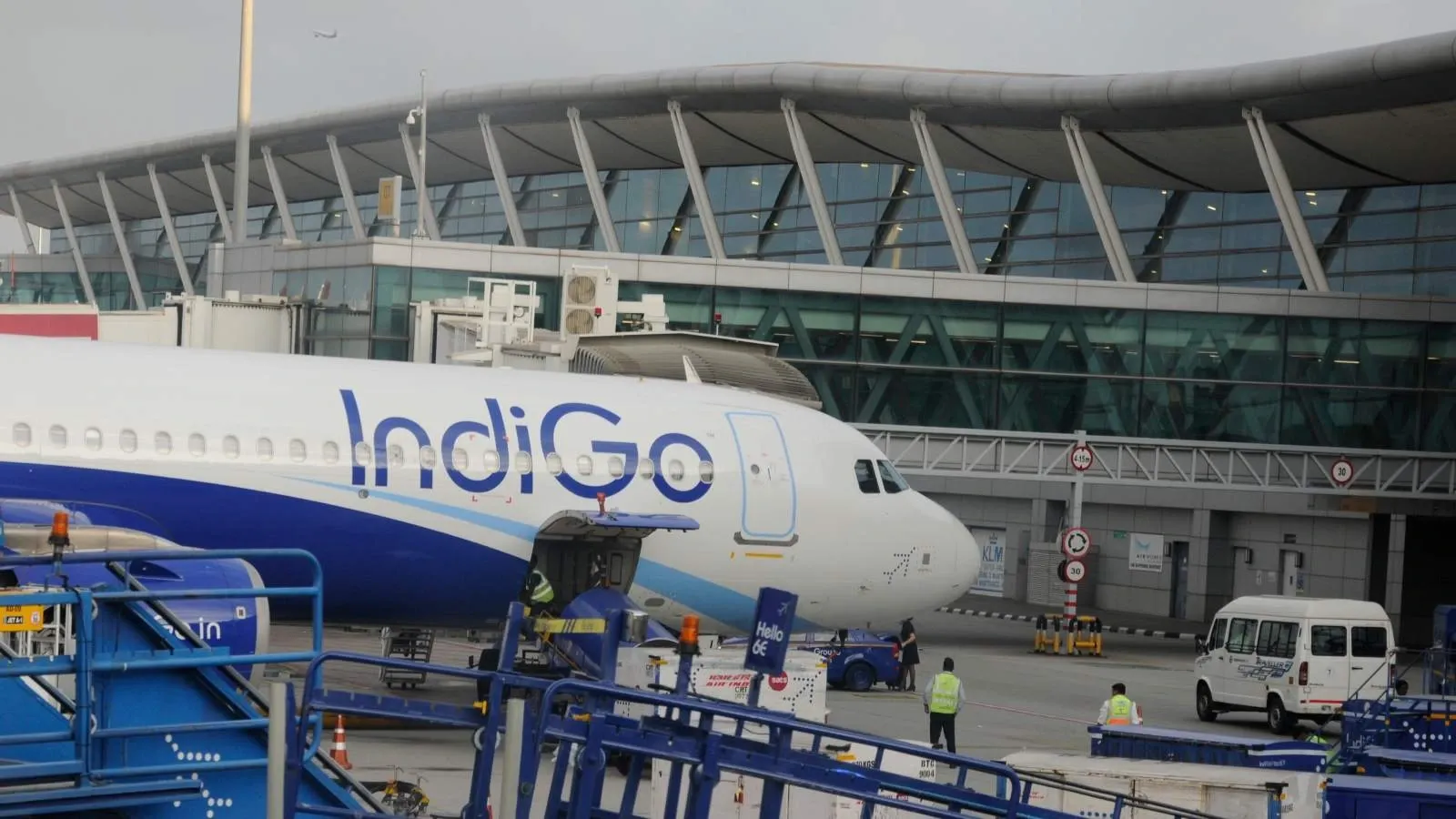
In a February 4 order, the CCI said a prima facie case exists, observing that IndiGo’s cancellation of thousands of flights may have created artificial scarcity and restricted services during peak demand.
The Competition Commission of India (CCI) has ordered a detailed investigation into InterGlobe Aviation Ltd, which operates IndiGo, over allegations of abuse of dominant position following large-scale flight cancellation that left lakhs of passengers stranded across the country.
The regulator, in an order dated February 4, said a prima facie case has been made out against the airline.
In a 16-page order, CCI said that by cancelling thousands of flights, which constituted a significant portion of the scheduled capacity, IndiGo effectively withheld its services from the market, creating an artificial scarcity, limiting consumer access to air travel during peak demand.
"Such conduct by a dominant enterprise may be viewed as restricting the provision of services under Section 4 (2) (b)(i) of the Act," the regulator said.
Section 4 of the Competition Act pertains to abuse of dominant position.
What’s the case?
A Bengaluru-based passenger alleged that IndiGo cancelled his return flight at short notice on December 5, 2025, without offering alternate arrangements.
He claimed that when he attempted to rebook, fares on the same sectors operated by IndiGo had surged significantly, forcing him to travel two days later at a much higher price.
The complainant further alleged that hundreds of flights were cancelled during the first week of December, triggering a spike in ticket prices across multiple routes and causing widespread disruption.
After examining submissions from IndiGo and data furnished by the Directorate General of Civil Aviation (DGCA), the CCI rejected the airline’s argument that the aviation regulator alone had jurisdiction over the matter.
The watchdog held that sectoral regulation and competition law operate in “distinct but complementary domains,” adding that DGCA does not conduct competition analysis such as assessing dominance or abuse thereof.
"Even if Trai also returns a finding that a particular activity was anti-competitive, its powers would be limited to the action that can be taken under the TRAI Act alone. It is only CCI, which is empowered to deal with the same anti-competitive act from the lens of the Competition Act. If such activities offend the provisions of the Competition Act as well, the consequences under that Act would also follow..." CCI cited a part of the ruling in its order. Noting that prima facie the airline's conduct seems to be causing an appreciable adverse effect on competition in India, CCI ordered a detailed investigation by its Director General (DG).
"IndiGo consistently accounts for approximately 60–61 per cent of total domestic ASKM (Available Seat Kilometres), which reflects not only passenger volumes but effective control over market capacity and supply-side conditions.
"The domestic passenger aviation market exhibits very high and increasing concentration, exhibiting that leading firms possess the ability to operate independently of competitive forces, as the presence of effective rivals is materially constrained," the regulator said.
According to the commission, the disruptions in December were not confined to isolated routes but amounted to a system-wide capacity shock, affecting passengers across the country simultaneously.
It also noted that the Ministry of Civil Aviation had imposed a penalty of ₹22.20 crore on IndiGo in January 2026 for large-scale delays and cancellations during the period.
The CCI said passengers were effectively left with no viable alternatives due to IndiGo’s dominant market position, forcing many to accept higher fares after last-minute cancellations.
“By cancelling thousands of flights constituting a significant portion of the scheduled capacity, IndiGo effectively withheld its service from the market, creating an artificial scarcity,” the commission observed.
“Such conduct by a dominant enterprise may be viewed as restricting the provision of services under Section 4(2)(b)(i) of the Act,” it added.
In early December, IndiGo faced massive operational disruptions, and subsequently, the Directorate General of Civil Aviation (DGCA) curtailed the airline's winter schedule by 10 per cent until February 10.
Between December 3 and 5, 2,507 flights were cancelled, and 1,852 flights were delayed, impacting over 3 lakh passengers at airports across the country, the regulator said in a statement on January 20.
IndiGo, which has been cornering over 63% of the domestic air traffic market share for many months, saw its share slip to 59.6% in December.
The watchdog directed its investigation arm to examine whether IndiGo abused its dominance by cancelling flights and subsequently charging excessive fares, clarifying that its current findings are only prima facie and do not represent a final view on the merits of the case.
About The Author
Next Story