Business News
Davos 2026: Why global leaders gather in Swiss town every year and why it still matters
.png)
4 min read | Updated on January 19, 2026, 14:48 IST


SUMMARY
Davos 2026: The annual meeting of the World Economic Forum (WEF) is being attended by several heads of state, senior ministers, central bank governors and leaders of major international organisations.
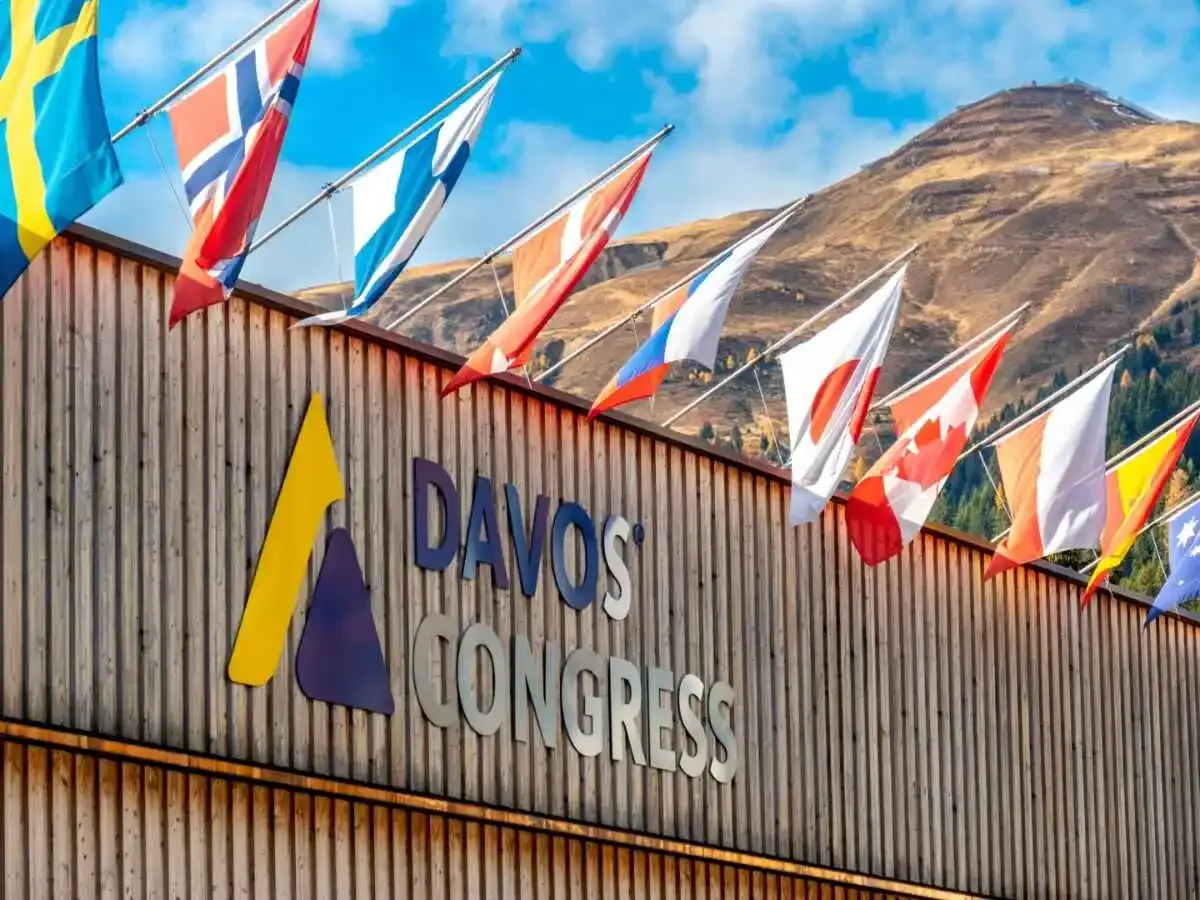
World leaders from government, business, civil society and academia are gathering in Davos, Switzerland, for the World Economic Forum’s annual meeting from January 19 to 23, 2026.
World leaders from government, business, civil society and academia have started converging in the Swiss ski resort town of Davos to set the year's agenda for how leaders can make the world a better place for all.
The annual meeting of the World Economic Forum (WEF) comes at a time of heightened global uncertainty marked by slowing growth, geopolitical tensions, widening inequality and an escalating climate crisis.
The five-day meeting will be held from January 19 to 23.
What is the WEF and why Davos?
Headquartered in Geneva, the WEF is an international not-for-profit organisation that promotes cooperation between the public and private sectors.
The Forum has been hosting its flagship annual meeting in Davos since 1971.
While the meeting does not produce binding agreements, treaties or formal communiques, the discussions and informal exchanges at Davos often influence government priorities, corporate strategies and global policy debates long after the event ends.
What is the theme this year?
The 2026 meeting is being held under the theme ‘A Spirit of Dialogue’.
The discussions usually centre on global economic growth, inequality, climate breakdown, technological disruption and conflict. This year’s focus is on rebuilding trust and dialogue amid growing global instability.
Davos is also known for the informal networking that takes place in hotel lobbies, private meetings, side events and even restaurants across the town.
“For me, Davos is all about making those unusual connections, where you get to talk to people who are doing very different things than you and being able to connect those dots and start to think about things in different ways,” McKinsey senior partner Kate Smaje said in a statement.
Critics, however, argue that the forum disproportionately reflects the interests of the world’s wealthiest and most powerful individuals and corporations, rather than those most affected by global crises.
Who is attending?
The meeting is being attended by several heads of state and government, including US President Donald Trump, Canadian Prime Minister Mark Carney, German Chancellor Friedrich Merz, European Commission President Ursula von der Leyen, Chinese Vice-Premier He Lifeng, Swiss President Guy Parmelin, Pakistan Prime Minister Shehbaz Sharif, Palestinian National Authority Prime Minister Mohammed Mustafa, Israeli President Isaac Herzog and Ukrainian President Volodymyr Zelenskyy.
More than 30 foreign ministers, over 60 finance ministers and central bank governors, and more than 30 trade ministers are also participating.
Heads of major international organisations present include Antonio Guterres, Ajay S Banga, Kristalina Georgieva, Christine Lagarde, Tedros Adhanom Ghebreyesus and Ngozi Okonjo-Iweala, among others.
India at Davos
India has a strong presence this year in Union ministers Ashwini Vaishnaw, Shivraj Singh Chouhan, Pralhad Joshi and K Ram Mohan Naidu.
Six chief ministers including Devendra Fadnavis, N Chandrababu Naidu, Himanta Biswa Sarma, Mohan Yadav, A Revanth Reddy and Hemant Soren will also gather in Davos for the annual meeting.
Indian leaders are expected to participate in panels, including one on whether India can become the world’s third-largest economy, besides holding bilateral meetings and investment-focused interactions.
Top Indian business leaders attending include Mukesh Ambani, N Chandrasekaran, Sanjiv Bajaj, Sunil Bharti Mittal, Nandan Nilekani and Vijay Shekhar Sharma, among others.
Security and protests
Given the high-profile nature of the event, Swiss authorities have put in place extensive security measures, including the deployment of more than 5,000 armed personnel, snipers, AI-powered drones and counter-espionage tools.
The Swiss government has said it is willing to authorise protests, provided strict conditions are met to ensure public safety and freedom of movement.
Additional security costs for the 2026 meeting are estimated at around CHF 9 million, shared between the WEF, the Swiss federal government and local authorities under a three-tier funding model.
About The Author
Next Story