
Business News
Amritsar airport joins India's hub-and-spoke network; What it means for international flyers
.png)
4 min read | Updated on July 28, 2026, 15:46 IST


SUMMARY
The government plans to develop four hub airports and 40 spoke airports to reduce reliance on overseas transit hubs such as Dubai, Doha and Singapore.
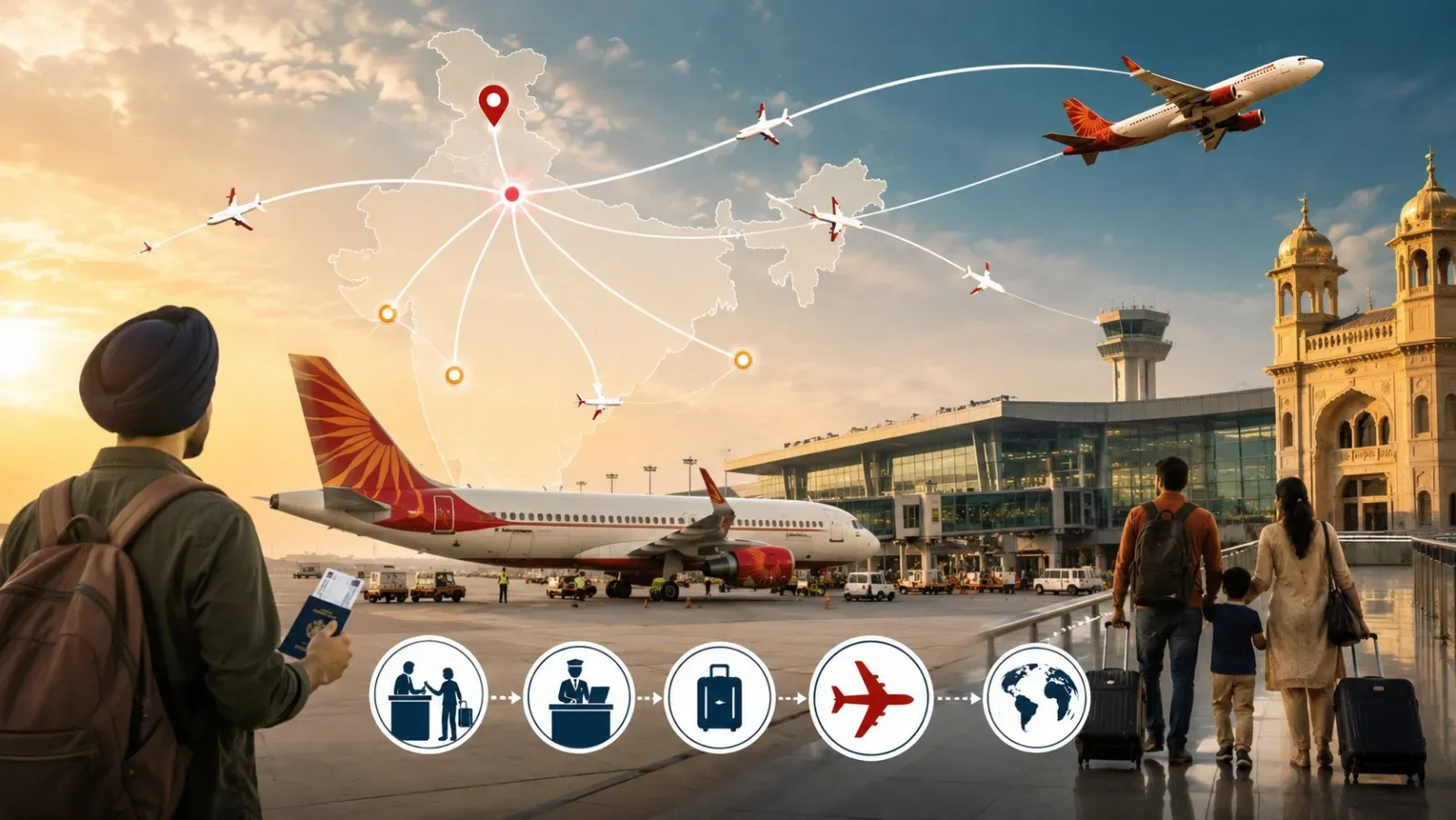
At the hub airport, travellers can directly board their onward international flights without repeating immigration or baggage procedures. Image: Representational / AI generated
Air India on Tuesday launched international "Easy Connect" flights from Amritsar under the government's hub-and-spoke aviation model, making the Punjab city the second spoke airport after Varanasi.
The service was inaugurated by the Ministry of Civil Aviation as part of its International Aviation Hub Strategy, under which Delhi currently serves as the lone hub airport while Varanasi and Amritsar function as spoke airports.
Ahmedabad is expected to be the next city to join the network.
What is the Hub-and-Spoke model?
Under the hub-and-spoke model, domestic airports designated as "spokes" are linked to a major "hub" airport, from where passengers board international flights.
The model allows passengers travelling abroad from tier-II and tier-III cities to complete check-in, immigration and customs formalities at the origin airport.
Their baggage is checked through to the final international destination, eliminating the need to repeat these procedures during transit at the hub airport.
At the hub, in this case Delhi, they can directly transfer to onward international flights without repeating immigration or customs procedures.
How is it different from the existing system?
Earlier, passengers travelling from cities such as Amritsar or Varanasi to an overseas destination via Delhi had to complete domestic travel first and then undergo international departure procedures at Delhi.
Under the new system, the domestic leg effectively becomes part of an international journey.
Once passengers arrive at the hub airport, they proceed directly to the departure gate for their onward international flight without re-checking baggage or clearing immigration again.
Why has Amritsar been chosen?
The government said Amritsar serves pilgrims, tourists, business travellers and a large overseas Indian diaspora from Punjab as well as neighbouring Jammu and Kashmir and Himachal Pradesh.
Civil Aviation Minister Ram Mohan Naidu, in a video message, said Delhi would function as the hub while Amritsar would emerge as an international gateway for northern India because of its strong diaspora links and regional catchment.
According to the ministry, passengers from Amritsar earlier had direct international connectivity to only seven destinations.
Under the new arrangement, they can access more than 20 international destinations through Delhi with a single check-in and baggage tag.
"Amritsar occupies a unique position as one of India's major international gateways, serving pilgrims, members of the Indian diaspora, business travellers and tourists from Punjab and neighbouring regions," Naidu said.
"Its inclusion under the Hub & Spoke framework is expected to substantially improve access to global destinations through Indian hubs while providing passengers with a faster, more convenient and predictable travel experience," he added.
Who operates the service?
The programme is currently being implemented by Air India.
The airline launched the first Easy Connect service from Varanasi on June 25 and began similar operations from Amritsar on Tuesday.
Air India said it will initially connect Amritsar to 27 international destinations through Delhi under its "Easy Connect" programme with two daily flights.
It plans to expand the service to Ahmedabad, Goa, Kochi and other cities in the coming weeks.
How many passengers are expected to benefit?
The ministry said the Varanasi service has been operating smoothly over the past month, connecting passengers to 18 international destinations through Delhi.
It estimated that around 250 passengers a day from Amritsar alone could benefit from the model.
As more spoke airports are added, the network is expected to serve around 1,200 passengers daily, or about 4.5 lakh passengers annually.
The government also said around 1.5 lakh passengers travel every year from Amritsar to Delhi to catch international flights, while a similar number arrive from overseas via Delhi before travelling onward to Amritsar.
What is the larger plan?
Speaking at the launch event in Amritsar, Civil Aviation Secretary Samir Kumar Sinha said the government plans to develop four hub airports and 40 spoke airports.
The strategy is intended to reduce India's dependence on overseas transit hubs such as Dubai, Doha and Singapore by routing more international traffic through Indian airports.
The government believes stronger hub operations could generate about 4 lakh direct and indirect jobs and add around $30 billion to the economy by 2030. By 2047, it projects the initiative could support about 16 million jobs and contribute nearly $1.4 trillion to the economy.
About The Author
Next Story

