
Personal Finance News
Selling agricultural land in 2026: When you have to pay capital gains tax and when it's exempted

5 min read | Updated on January 13, 2026, 18:18 IST


SUMMARY
Capital gains tax on the income from the sale of agricultural land depends on its location. Under certain conditions, the agricultural land is not treated as a capital asset. Hence, no capital gains tax arises from their sale.
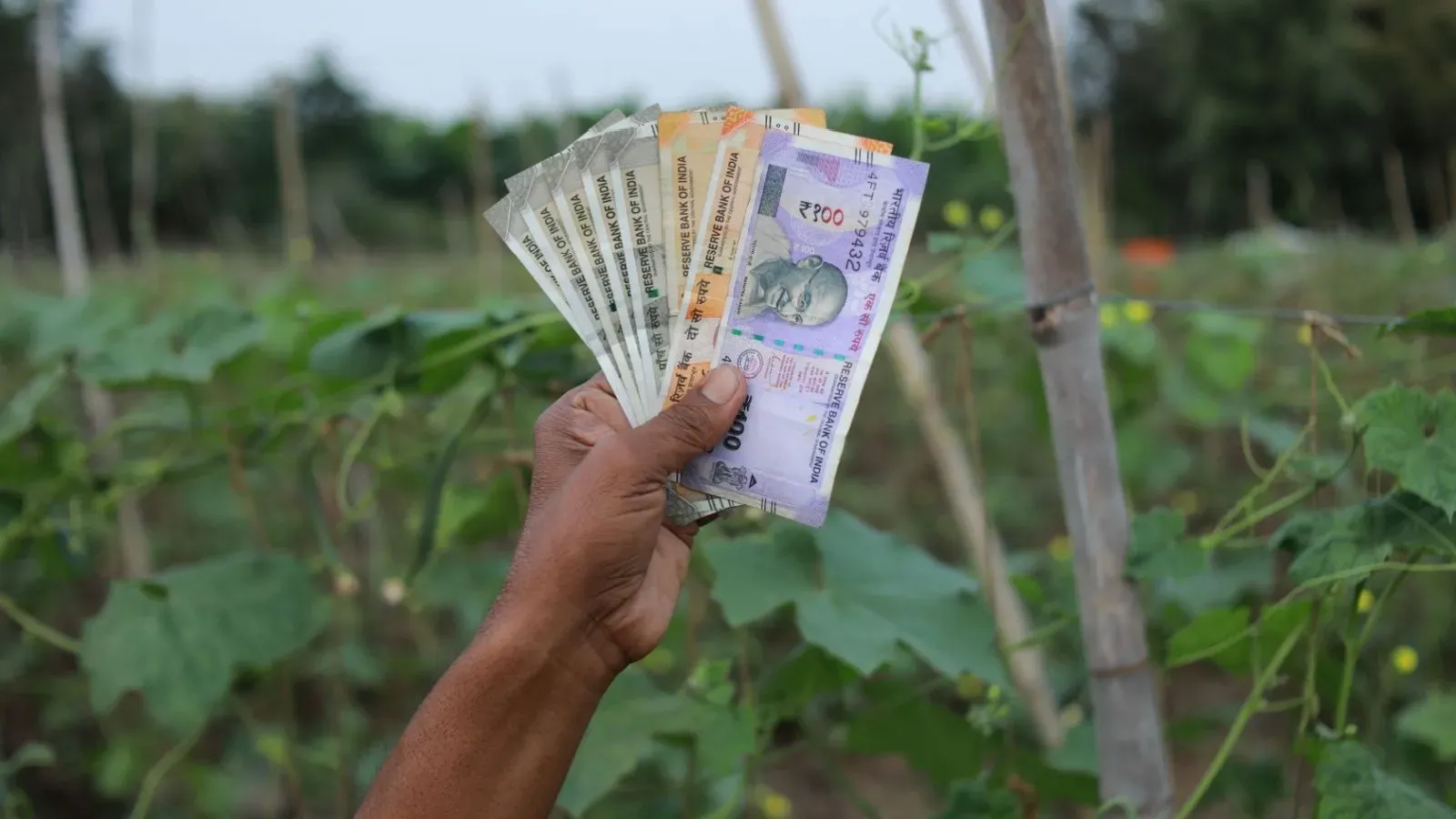
You don't have to pay capital gains tax if you are selling an agriculture land to buy another agricultural land. | Image source: Shutterstock
When capital gains tax does not apply
Capital gains tax on the income from the sale of agricultural land depends on its location. Under the following conditions, the agricultural land is not treated as a capital asset. Hence, no capital gains tax arises from their sale.
First, when the agricultural land is situated in any rural area
Second, when the agricultural land is situated at the following distances beyond the jurisdiction of a municipality or cantonment board:
-
Up to 2 km from the local limits of the municipality or cantonment board whose population is over 10,000 but less than 1 lakh.
-
Up to 6 km from the local limits of the municipality or cantonment board whose population is over 1 lakh but less than 10 lakh.
-
Up to 8 km from the local limits of the municipality or cantonment board whose population is over 10 lakh.
Capital gains tax on agricultural land: Rules and exemptions
| Condition | Tax Applicability |
|---|---|
| Land in rural area | No capital gains tax |
| Land beyond municipal limits: | |
| - Up to 2 km (population 10,000–1 lakh) | No capital gains tax |
| - Up to 6 km (population 1–10 lakh) | No capital gains tax |
| - Up to 8 km (population above 10 lakh) | No capital gains tax |
| Land not meeting above conditions | Capital gains tax applies: LTCG @ 12.5% (no indexation), STCG @ 20% |
| Reinvestment in new agricultural land | Exemption under Section 54B |
| Eligibility for Section 54B | Individuals and HUFs; land used for agriculture for at least 2 years before transfer |
| Exemption amount | Lower of: Capital gains OR Investment in new agricultural land (incl. CG deposit) |
| Time limit for purchase | Within 2 years of transfer; else deposit in Capital Gains Account Scheme |
| Withdrawal of exemption | If new land sold within 3 years OR deposit not used within 2 years |
When capital gains tax applies
If you are selling any agricultural land that does not meet the above conditions then you have to pay capital gains tax on income from the sale proceeds. The long-term capital gains (LTCG) tax rate in such a case in 2026 will be 12.5% without indexation and the short-term capital gains (STCG) tax will be 20%. On selling the land acquired before July 23, 2024, you can also opt for LTCG tax at 20% with indexation benefit.
LTCG applies when land is sold after 24 months, and STCG if done earlier.
However, if you reinvest the sale proceeds in another agricultural land then you can claim tax exemption. Let's understand this in more detail.
When you can claim capital gains tax exemption
You don't have to pay capital gains tax if you are selling an agriculture land to buy another agricultural land.
Under Section 54B of the Income Tax Act, taxpayers enjoy tax exemption on capital gains arising from transferring land used for agricultural purposes and investing in new agricultural land.
This exemption is available both for short-term and long-term capital gains arising from the transfer of agricultural land.
The exemption under Section 54B is allowed only to individuals and HUFs.
Further, you can claim this exemption only if the agricultural land in question has been used for agricultural purposes for at least 2 years before the date of transfer by the assessee, his parents, or HUF, according to the Income Tax Department.
This exemption is allowed only if you reinvest the capital gain for purchasing new agricultural land within the prescribed time limit.
The tax exemption under section 54B will be lower of the following:
-
Total capital gains
-
Investment in new agricultural land, including the amount deposited in Capital Gains Deposit Account Scheme.
You can avail this exemption by purchasing the agricultural land within 2 years after the date of transfer of the original asset. However, if you fail to do so till the date of filing the return of income, then you can claim the exemption by depositing the unutilised amount in Capital Gains Deposit Account Scheme. As per the tax department, the new land can be purchased by withdrawing the amount from the capital gains account within the specified time limit of 2 years.
Please note that the tax exemption under Section 54B can be withdrawn in following circumstances:
a) If you sell the new agricultural land before 3 years from the date of its purchase
In this case, the amount of capital gain claimed as exempt under Section 54B will be deducted from the cost of acquisition of the new land while calculating capital gains from its sale.
b) If you fail to use the amount in the capital gains account for two years
In this case, the unutilised deposit will be treated as a long-term capital gain of the relevant previous year in which the time-limit of 2 years expired.
Finance Minister Nirmala Sitharaman is expected to present the Union Budget 2026 on February in the Parliament.
Related News

About The Author
Next Story



