
Personal Finance News
Middle-class Budget 2026 expectations: What experts hope from Finance Minister Nirmala Sitharaman
5 min read | Updated on January 31, 2026, 10:55 IST


SUMMARY
Middle-class Budget 2026 expectations explained: experts share what the middle class hopes Finance Minister Nirmala Sitharaman will deliver in Budget 2026, from tax relief to cost-of-living support.
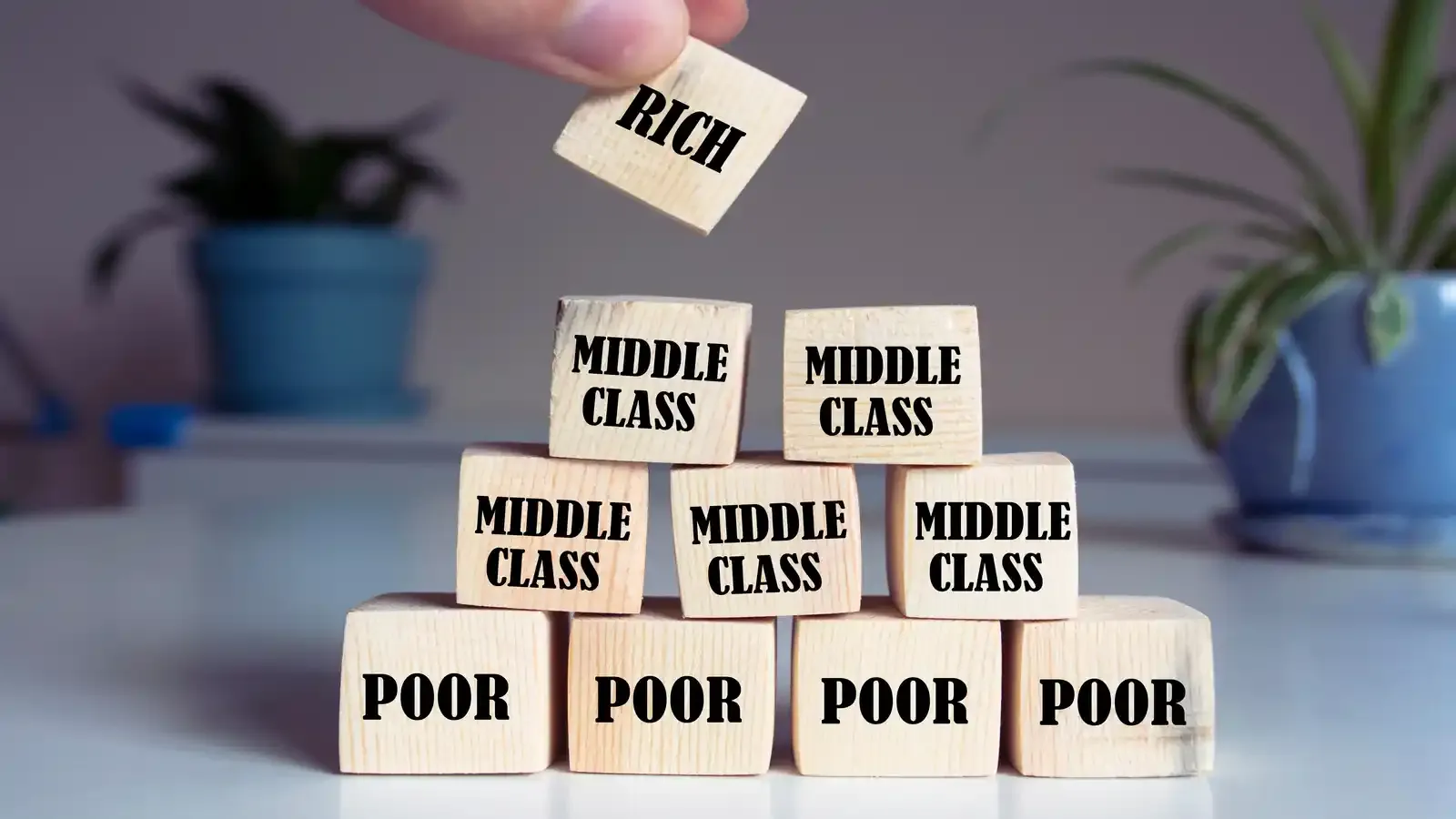
Middle-class taxpayers look for higher income tax exemption limits, enhanced standard deductions, and rationalised slabs. | Image: Shutterstock
1. Relief from rising prices
Rising prices of essentials such as food, fuel, and cooking gas are straining middle-class budgets. Citizens hope for better supply management, reduced indirect taxes, and stronger public distribution systems.
“At the top of the common man’s wish list is relief from inflation. Rising prices of essential commodities such as food grains, vegetables, cooking gas, and fuel have strained monthly budgets, particularly for low- and middle-income families. There is hope that the government will take steps to control price rise through better supply management, reduced indirect taxes on essentials, and strengthened public distribution systems," aid Rajarshi Dasgupta, Executive Director – Tax, AQUILAW
“Fuel prices remain a sensitive issue, as they directly impact transport costs and, in turn, the prices of almost all goods. A reduction in excise duty on petrol and diesel is one of the most widely voiced expectations, especially among daily commuters and small traders,” added Rajarshi Dasgupta.
2. Tax relief for salaried and pension earners
Middle-class taxpayers look for higher income tax exemption limits, enhanced standard deductions, and rationalised slabs, while pensioners seek tax alignment and parity for non-commuted pensions.
“The standard deduction should be increased from ₹75,000 to ₹1 lakh to provide meaningful relief to salaried taxpayers,” said Pankal Mathpal, MD & CEO at Optima Money Managers.
“Taxation has a harder impact on income for pension earners. We believe there is an opportunity to align taxation on pensions with other fixed-interest instruments by taxing only the interest or gains. This approach would increase post-retirement income for pension earners and mobilise long-term savings through life insurance solutions. Additionally, providing a standard deduction for pension earners who do not commute their corpus would ensure tax parity across all pensioners,” said Venky Iyer, Co-Chairperson, Insurance Awareness Committee (IAC-Life)
3. Employment and income security
With unemployment and underemployment affecting many, especially youth, there’s an expectation that the Budget will boost job creation and support small businesses.
“Unemployment and underemployment remain major concerns, particularly for the youth. The common man expects the Budget to focus on job creation through increased investment in infrastructure, manufacturing, and MSMEs. Small businesses, which employ a large section of the workforce, seek easier access to credit, simplified compliance, and continued government support. For those in the informal sector, daily wage workers, gig workers, and self-employed individuals, there is hope for stronger social security measures, including health insurance coverage and pension schemes,” noted Dasgupta.
4. Affordable healthcare and education
Rising medical costs have pushed many families into debt, making increased allocations critical. Similarly, parents seek better government schools, digital learning infrastructure, and affordable higher education loans.
“Increased allocation to government hospitals, primary health centres, and affordable medicines is a key expectation. Education, too, remains a priority. Parents hope for greater investment in government schools and colleges, digital infrastructure for learning, and affordable higher education loans,” highlighted Executive Director – Tax, AQUILAW.
5. Housing affordability and urban infrastructure
“The next phase of India’s residential momentum will be shaped not only by construction activity but also by how easily mid-segment and affordable homebuyers can navigate the financial decisions linked to ownership. Housing continues to play an important role in supporting urban employment, allied economic activity, and rising middle-class consumption, making affordability a critical policy priority,” suggested Amit Prakash, Co-Founder & CBO, Urban Money.
“While today’s consumer is digitally aware and research-driven, the home loan journey for mid-segment buyers, many of whom are first-time urban homeowners, remains fragmented and often intimidating. A forward-looking budget that aligns affordability-focused reforms with digital enablement can widen participation, improve borrower confidence, and support a more balanced and resilient housing finance ecosystem,” elaborated Parag Saraiya, COO – North & West, Embassy Developments Limited
6. Real-time tax refund tracking
“A real-time refund tracking dashboard on the taxpayer portal should be implemented, along with interest on income tax refunds at par with interest on tax dues," recommended Deloitte India.
7. Simplification of TDS rates
Experts also suggest simplifying TDS rates to make compliance easier.
“TDS is not intended for revenue collection. It is supposed to serve as an audit trail. Currently, there are six TDS rates: 0.1%, 1%, 2%, 5%, 10%, and 20%. ICAI has suggested that there could be only two rates of TDS: 1% and 5%,” stressed ICAI.
8. Strengthening NPS benefits for retirement planning
The National Pension System (NPS) remains a crucial tool for long-term retirement savings, though its tax incentives are currently limited.
“Stronger tax incentives can encourage more individuals to start planning for retirement early,” said Abhishek Soni, CEO & Co-founder, Tax2win.
Tax2win expects the Union Budget 2026 to bring several improvements, including a hike in the additional NPS deduction under Section 80CCD(1B) to ₹1 lakh, wider availability of NPS benefits under the new tax regime, and a simplified tax treatment for withdrawals.
Related News


About The Author
Next Story



