
Personal Finance News
India-France tax treaty: From capital gains to dividend taxation. Key points to know

7 min read | Updated on February 24, 2026, 13:09 IST


SUMMARY
India-France treaty protects against double taxation. If capital gains or dividends are taxed in the country where the company is located, your country of residence typically allows you to claim credit for the tax paid abroad.
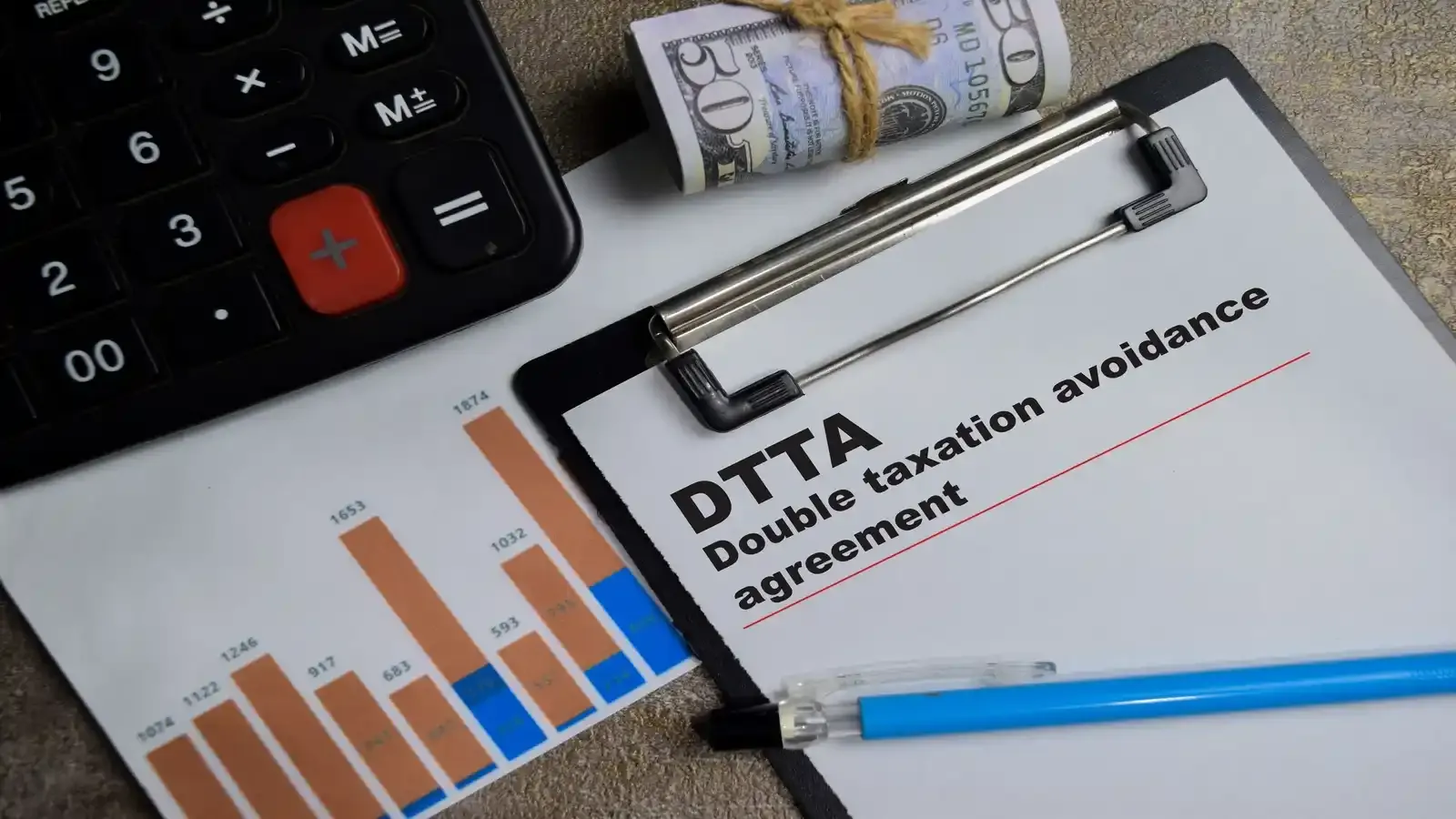
India-France tax treaty: Under the amended treaty, capital gains from the sale of shares will now be taxed in the country where the company is resident. | Image: Shutterstock.
The revised India-France tax treaty may have an impact on how your gains and dividends are taxed if you own shares in a French company, invest in French-owned Indian businesses, or hold cross-border equities through direct stock acquisitions.
The 1992 Double Taxation Avoidance Convention (DTAC) between France and India has been modified to provide clarity and openness for international investments.
Thierry Mathou, the French ambassador to India, and Ravi Agrawal, the chairperson of the Central Board of Direct Taxes (CBDT), signed the amendments during French President Emmanuel Macron's recent visit to India.
While the announcement may sound technical, the impact is not limited to large multinational corporations. Individual shareholders are covered, too.
Who should pay attention?
-
Retail investors buying overseas stocks
-
High-net-worth individuals with cross-border holdings
-
NRIs investing in India or France
-
Corporates operating in both countries
In short, if you are a tax resident of one country and earn investment income from the other, these rules matter.
Capital Gains: Where will you pay tax now?
One of the most important changes concerns capital gains from selling shares.
Under the revised framework, the country where the company is based gets full taxing rights over gains from the sale of its shares.
If a French resident sells shares of an Indian company, India can tax the capital gains.
If an Indian resident sells shares of a French company, France may tax the gains under its domestic rules.
This eliminates previous ambiguity and deletes the Most-Favoured-Nation (MFN) clause, which had confused investors.
Dividend Income
Dividend taxation has also been revised. The single flat rate of 10% is now split into two.
Instead of a flat 10% rate, dividends will now be taxed as follows:
-
5% if the shareholder owns at least 10% of the company
-
15% for smaller shareholdings
“These changes will enable and facilitate seamless exchange of information and strengthen mutual tax cooperation between India and France,” the CBDT said, PTI quoted.
What about the MFN clause removal?
The MFN clause previously allowed France to claim better tax terms if India granted more favourable treatment to another country in a later treaty. With its removal, treaty benefits are now limited strictly to what is written in the India-France agreement.
Will you be taxed twice?
The treaty still protects against double taxation. If capital gains or dividends are taxed in the country where the company is located, your country of residence typically allows you to claim credit for the tax paid abroad.
What is in it for Indian Investor?
If an Indian investor is investing in France, the treaty between India and France helps by ensuring you don’t pay tax twice on the same income. The tax treaty between India and France creates a clear advantage in terms of more transparency for Indian investors who want global exposure, especially in France.
If an Indian resident earns dividends or capital gains from French investments, France may levy tax as per its domestic rules. However, because of this treaty, the same income will not be taxed twice. The tax paid in France can be claimed as a foreign tax credit while filing returns in India. This directly protects your net returns.
"From a planning angle, investors should understand dividend withholding rates in France, expected capital gains treatment, and reporting requirements under Indian tax laws. Proper documentation is critical to successfully claim credit. So, always calculate your expected post-tax return before investing internationally. Many global opportunities look attractive on paper, but real wealth is created only when tax efficiency is properly managed," said Shweta Shastri, who is a Certified Financial Planner (CFP).
CFP Shweta aid that, before you invest internationally, you must make sure that
-
You must comply with LRS ( Liberalised Remittance Scheme)documentation.
-
Foreign assets must be disclosed in your Indian income tax return (Schedule FA).
-
Dividends and capital gains will be taxed as per French laws, and you must report them in India.
The 'math' of the treaty: A tax scenario
How does the DTAA actually save you money? Let’s look at a hypothetical investment in a French-listed company.
"Suppose you invest ₹10 lakh in a French company listed on France Exchange. After 5 years, it becomes ₹15 lakh. So, your gain is ₹5 lakh. In France, capital gains tax can go up to around 30%. So roughly ₹1.5 lakh may go as tax there itself. Now, because you are a resident of India, India taxes your global income. Let’s say you’re an Indian tax on that gain works out to ₹1 lakh. Here is where the treaty helps. You don’t pay tax twice. The ₹1 lakh Indian tax can be adjusted against the tax already paid in France. So practically, you end up paying the higher of the two, not both," explained Shweta.
| Particulars | Amount / Rate | Explanation |
|---|---|---|
| Initial Investment | ₹10,00,000 | Amount invested in a French company |
| Value After 5 Years | ₹15,00,000 | Market value at time of sale |
| Capital Gain | ₹5,00,000 | ₹15,00,000 − ₹10,00,000 |
| Capital Gains Tax in France (Approx.) | 30% | Under France’s PFU “Flat Tax” |
| Actual Tax Paid in France | ₹1,50,000 | 30% of ₹5,00,000 |
| Tax Payable in India (As per Indian rules) | ₹1,00,000 | Hypothetical Indian tax liability on global income |
| Foreign Tax Credit Available in India | ₹1,00,000 | Because France already taxed more |
| Total Tax You Actually Pay | ₹1,50,000 | Higher of Indian or French tax (treated as final due to DTAA) |
| Extra Tax Payable in India | ₹0 | Indian tax offset by Foreign Tax Credit (FTC) |
The same logic applies to dividends. If France deducts tax first, you can claim a credit in India.
The holding period trap
"You end up paying the higher of the two taxes generally, but it depends on the exact draft of the treaty. So it is always advisable to understand the tax laws of both countries," added Shweta.
The treaty doesn’t reduce taxes directly. It simply protects you from paying twice.
When do these rules apply?
The changes will take effect after both countries complete their internal approval processes. Until then, existing provisions remain in force.
Related News

About The Author
Next Story



