
Personal Finance News
Income tax refund for AY 2026-27: Are refunds being credited faster this year?

4 min read | Updated on July 10, 2026, 07:58 IST


SUMMARY
The Upstox News team spoke to tax experts to understand whether refunds are indeed being processed faster this filing season and what taxpayers can do to improve their chances of getting an early refund.

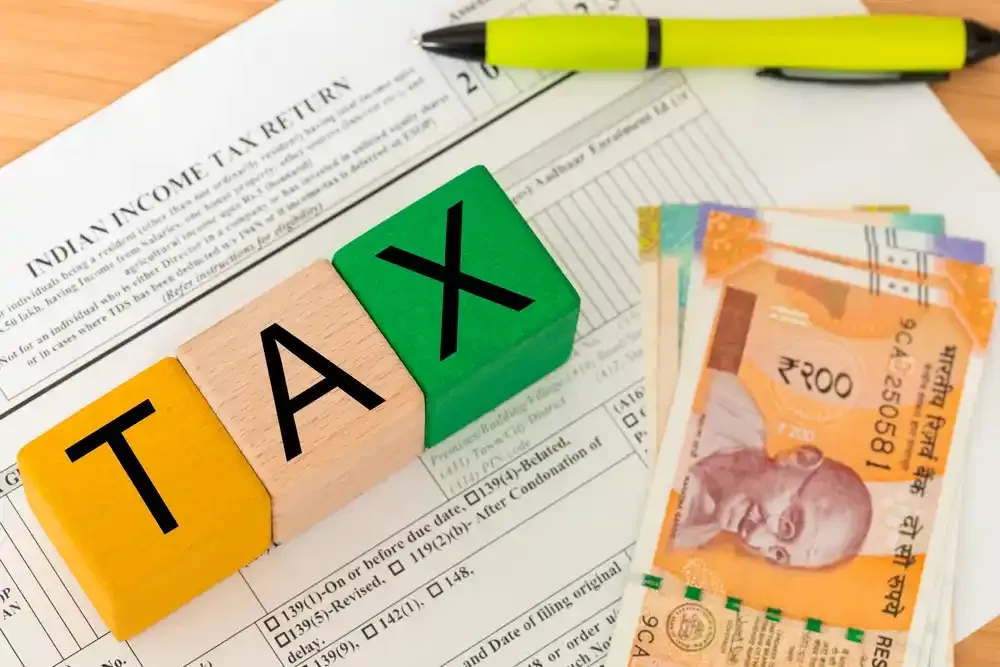
The speed of tax refund ultimately depends on successful processing of the return by the income tax department. | Image: Shutterstock.
Filing an income tax return (ITR) early does not guarantee a faster refund, but it can improve the chances of early processing. Early trends for Assessment Year (AY) 2026-27 suggest that many taxpayers, particularly those with straightforward returns, are receiving refunds sooner than in previous years.
One example that caught taxpayers' attention came from chartered accountant Chirag Chauhan, who shared on X that an ITR filed at 12:30 pm on July 6 was processed by 1:30 pm, with the refund credited by 3 pm the same day.
The Upstox News team spoke to tax experts to understand whether refunds are indeed being processed faster this filing season and what taxpayers can do to improve their chances of getting an early refund.
Many taxpayers are seeing quicker refunds
"Yes, many taxpayers are receiving their income tax refunds faster this year, with several refunds being credited within a week to 10 days of e-verification," said CA Abhishek Soni, CEO & Co-founder, Tax2win.
However, he noted that not every taxpayer can expect the same experience.
"However, faster refunds are typically seen in cases where the return is filed accurately, all income and TDS details match with AIS and Form 26AS, the bank account is pre-validated, and there are no discrepancies," said CA Abhishek Soni.
What can taxpayers do to speed up refunds?
The speed of refund ultimately depends on successful processing of the return by the income tax department. Experts say taxpayers can take a few steps to reduce the chances of delays.
"If early refund is on your mind, then get the bank account details pre-verified and e-verify your income-tax return immediately," added CA Gaurav Singh Parmar, Associate Director, Fincorpit Consulting.
Quick refunds are possible, but delays remain a reality
Although several taxpayers have reported receiving refunds within days of filing, experts caution that this may not be the experience for everyone.
"Indian taxpayers’ story around their refund amount this year appears to be one of both bright and bleak possibilities. While it is indeed possible to get a fast refund (ITR filed on July 7, 2026, for AY 2026-27 has been reported to receive its refund the same day; for early taxpayers it's an encouraging development), 2026 will likely witness in excess of 2.4 million taxpayers seeing their refund amount delayed beyond 90 days of ITR filing," said CA Gaurav Singh Parmar.
He said several factors could hold up refund processing.
Does the ITR form affect refund timelines?
While the exact processing time varies from case to case, returns filed early are generally processed sooner, if there are no discrepancies or verification issues.
Sandeep Bhalla, Partner at Dhruva Advisors, said the complexity of the return often influences how quickly it is processed.
"Generally, simpler returns filed in forms such as ITR-1 (salary and other basic income) and ITR-4 (presumptive business/professional income) tend to be processed more quickly than returns involving complex disclosures. The ITR form itself is not the determining factor. However, returns filed in simpler forms such as ITR-1 typically involve fewer data points and are often processed faster. In contrast, returns requiring ITR-2 or ITR-3 generally involve more complex disclosures, which may necessitate additional validations before processing and refund issuance," said Sandeep Bhalla.
How to improve your chances of getting an early refund
-
File your ITR as early as possible.
-
Ensure all income, TDS and tax payment details match AIS and Form 26AS.
-
Pre-validate your bank account.
-
Complete e-verification immediately after filing.
-
Avoid errors or incorrect deductions or claims that could trigger additional scrutiny.
July 31, the first due date of ITR filing for AY 2026-27, is approaching fast, so filing your return well before the due date, while ensuring the return is accurate and complete, can help avoid unnecessary delays and the last-minute rush.
Related News



About The Author
Next Story

