
Personal Finance News
Budget 2027: LTCG tax cut debate takes a new turn as economists suggest maintaining status quo

3 min read | Updated on November 17, 2026, 17:08 IST

SUMMARY
Months ahead of the Union Budget 2027-28, economists in consultation with the Ministry of Finance have advised against revamping the Long-Term Capital Gains (LTCG) tax norms for domestic equity investors
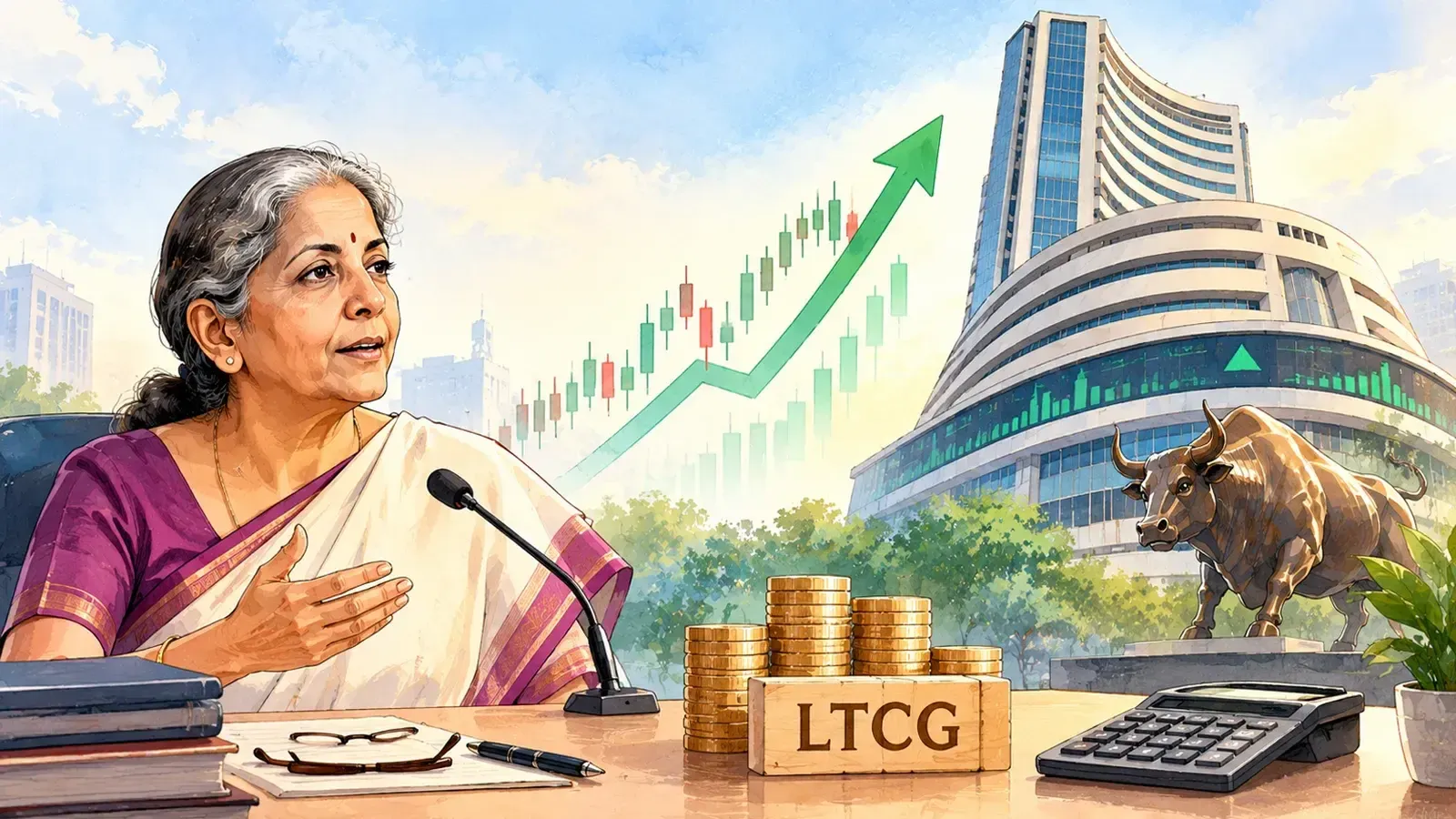
The key reason mentioned by the economists for retaining the LTCG is the expectation that inflation will fall further due to favourable geopolitical developments.
Taxpayers are looking forward to the Union Budget 2027-28, anticipating changes to the Long Term Capital Gains (LTCG) tax and the Securities Transaction Tax (STT) for equities. The issue has garnered significant attention with several industry stakeholders such as SBI Research, the Securities and Exchange Board of India (Sebi) and the Federation of Indian Chambers of Commerce and Industry (FICCI) proposing a reduction in LTCG tax and modifications or discontinuation of STT.
However, a new twist has been added to the discussion around the issue with suggestions being made for retaining the existing tax-structure in the first round of pre-budget consultation. According to a recent report by the Press Trust of India (PTI), which cited sources privy to the matter, economists advising the ministry have suggested not making changes to the existing tax structures in the first round of consultations which concluded on November 16.
Why do economists suggest retaining LTCG Tax and STT?
According to the sources cited in the report, the economists believe that ‘green shoots’ are visible in the economy at present. Additionally they believe that these green shoots have started showing results and private investments are beginning to come in. They also appreciated the Finance Ministry for showcasing fiscal prudence in the previous budgets and controlling inflation. The key reason mentioned by the economists for retaining the LTCG is the expectation that inflation will fall further due to favourable geopolitical developments and a potential reduction in oil prices. These in turn are expected to cheer the economy and provide the government with sufficient fiscal headroom. While proposing to keep the LTCG tax structure unchanged for domestic investors, the economists have suggested revamping the tax treatment for foreign portfolio investors (FPIs) in equity, as LTCG on equities is tax-exempt for FPIs in other emerging markets. Additionally, they have also urged the ministry to devise a new method of computing gains for FPIs and calculating them in US dollar terms.
What industry stakeholders have proposed
Contrary to what the economists have proposed, several industry bodies and financial institutions have urged the government to revisit the LTCG tax structure to boost the competitiveness of the domestic securities market and provide equity investors relief amid volatility in the broader market.
According to a report by the Economic Times, FICCI has recommended removing the LTCG tax on listed equities. Furthermore, according to a PTI report, PHD Chamber of Commerce and Industry (PHDCCI) has also pitched for scrapping the LTCG tax. Currently, the LTCG tax on listed equity shares and equity-oriented mutual funds is levied at a flat rate of 12.5% on gains exceeding ₹1.25 lakh in one financial year.
PHDCII has also recommended slashing the Short-Term Capital Gains (STCG) tax rate from 20% to 10%. Meanwhile, stakeholders have pushed for a review of the STT, arguing that overall transaction costs should be rationalised.
According to a report by SBI Research, it was estimated that completely scrapping the LTCG tax on equities would result in a revenue hit of ₹40,000–50,000 crore for the exchequer in FY28.
CBDT Chairman clears timeline for prospective changes
According to a separate PTI report, Central Board of Direct Taxes (CBDT) Chairman Ravi Agrawal clarified that no decisions on rationalising capital gains taxes will be taken before the Union Budget 2027-28.
Speaking on the sidelines of the inauguration of a CBDT lounge at the India International Trade Fair (IITF) in Delhi, Agrawal said the government is analysing the representations and issues flagged by various stakeholders regarding capital gains and STT.
Related News
About The Author
Next Story

