
Personal Finance News
RBI raises limits for NRI and OCI equity investments; expands access for overseas investors

3 min read | Updated on June 05, 2026, 13:35 IST


SUMMARY
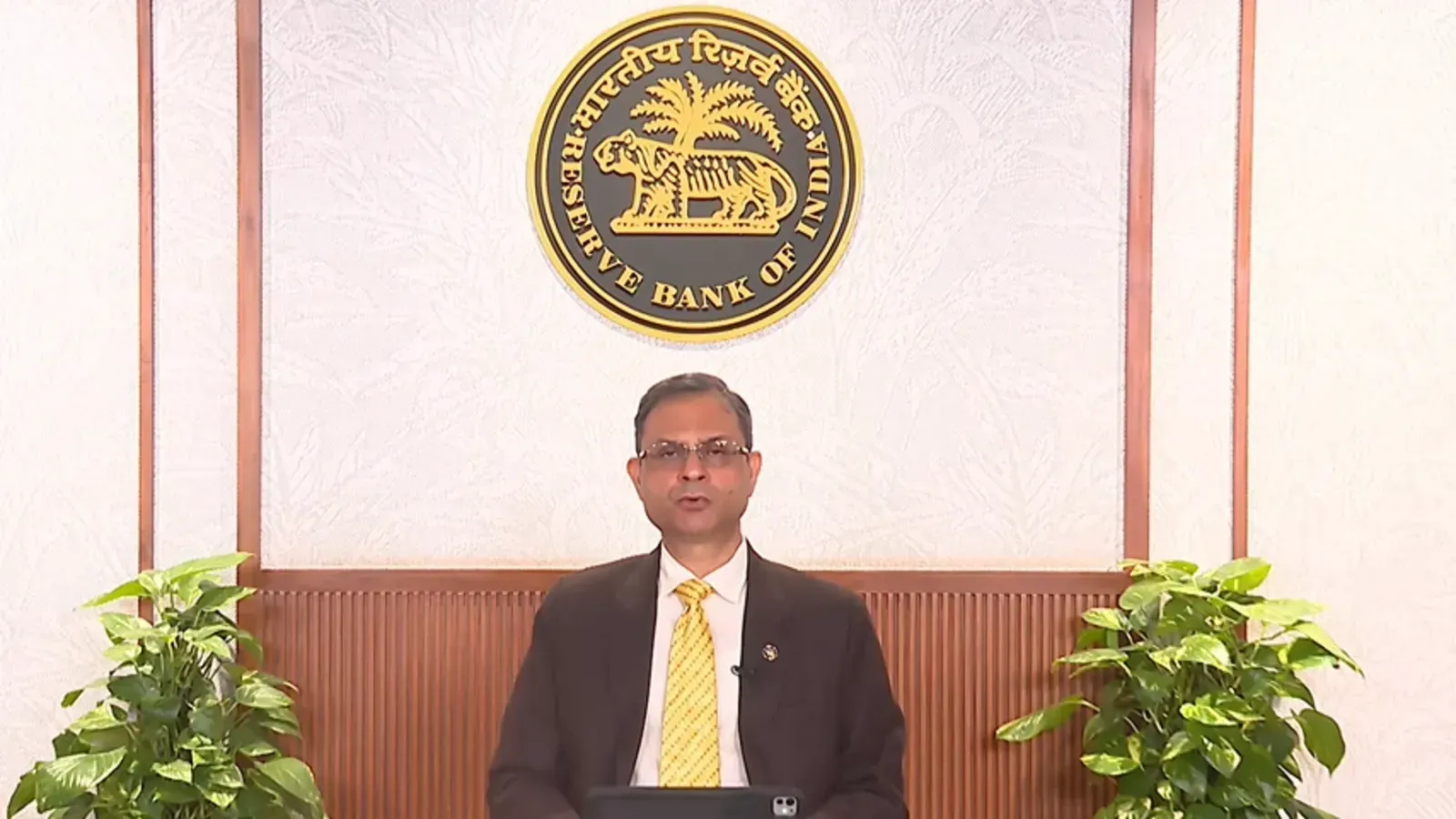
The announcement was made as part of RBI Governor Sanjay Malhotra’s Monetary Policy Committee (MPC) statement on Friday, June 4.
RBI said it is widening participation in Indian markets by expanding investment access for overseas investors and simplifying existing limits. | Image: Shutterstock.
The Reserve Bank of India (RBI) on Friday announced a set of measures aimed at attracting foreign capital, including an increase in investment limits for Non-Resident Indians (NRIs) and Overseas Citizens of India (OCIs) in equity instruments traded on stock exchanges.
Higher access for NRI, OCI and overseas investors
RBI said it is widening participation in Indian markets by expanding investment access for overseas investors and simplifying existing limits.
"The limits for investment by NRIs and OCIs in equity instruments traded on the stock market without SEBI registration are being increased. Further, the same facility is being extended to all individual Persons Resident Outside India (PROIs) at par with NRIs and OCIs."
This move is expected to enhance retail participation from overseas investors and improve liquidity in domestic equity markets.
Foreign capital inflows
The central bank also announced changes under the Fully Accessible Route (FAR) for government securities and eased restrictions for foreign portfolio investors.
"For government securities under the Fully Accessible Route (FAR), we are expanding the universe of ‘specified securities’ by including all new issuances of 15-, 30- and 40-year tenor G-secs."
It added that limits on short-term investment, concentration and individual securities under the General Route are being removed.
"These measures along with the tax benefits provided by the government this morning should help attract foreign capital for government borrowing."
Incentives for external borrowing and deposits
RBI also introduced temporary incentives for external commercial borrowings (ECBs) and foreign currency deposits.
"A facility of concessional forex swap will be provided till 30th September 2026 to incentivize ECBs by PSUs."
"A similar facility for bearing the full hedging cost shall be provided till 30th September 2026 to AD banks for raising fresh 3 to 5-year FCNR (B) deposits, said RBI Governor.”
“The RBI delivered a policy rooted in the Tinbergen principle, clearly separating instruments across objectives. While the MPC remained focused on price stability by keeping the repo rate unchanged, the RBI complemented this with measures aimed at boosting capital inflows. The expansion of the Fully Accessible Route (FAR) to include new 15-, 30- and 40-year G-Secs, along with the removal of FPI investment restrictions under the General Route, should enhance foreign participation in government securities and support the government borrowing programme. From a fixed income market perspective, the widening of the investable universe and easing of participation constraints should improve demand for longer-duration G-Secs, deepen market liquidity and support a more stable foreign investor presence in India's bond market over time. Alongside the liberalisation of investment norms for NRIs, OCIs and other overseas individuals, the measures strengthen India's capital account at a time when external financing conditions remain dynamic, while also supporting rupee stability,” said Kaustubh Gupta, CIO – Fixed Income, Aditya Birla Sun Life AMC Ltd.
The central bank on June 5 expectedly kept interest rates unchanged for the second time in a row. Announcing the second bi-monthly monetary policy for the current fiscal, RBI Governor Sanjay Malhotra said MPC has unanimously decided to retain short-term lending rate or repo rate at 5.25 per cent with a neutral stance.
Related News

About The Author
Next Story

