
Personal Finance News
What will happen to gold prices if the US revalues its massive reserves? SBI Research explains

6 min read | Updated on March 10, 2026, 16:20 IST


SUMMARY
If the US formally reasserts the monetary role of gold through revaluation, it could trigger a substantial global spike in gold prices. This could also prompt a global repricing of gold, as other central banks may respond by increasing their reserves, according to SBI Research.
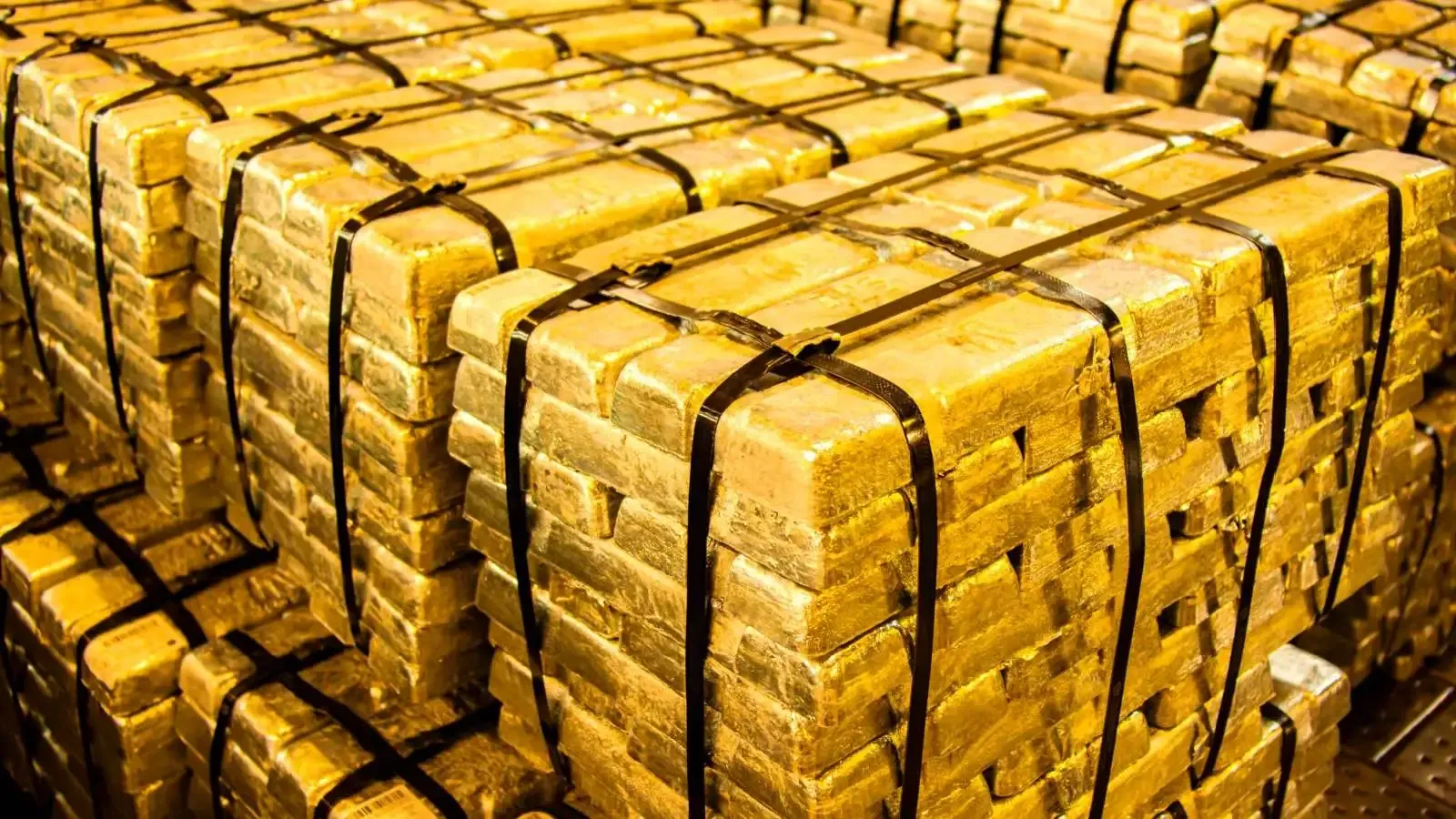
Here's what can happen to gold prices if the US revalues its gold reserves. | Representational image source: Shutterstock
But what if such an event actually happens? How would it affect gold prices and, in turn, your investment portfolio? In its latest report, the SBI Research offers some interesting insights into the implications of such a move. Read on to find out
What is gold reserve revaluation?
Gold reserve revaluation is a financial strategy, where a central bank adjusts the recorded value of its gold holdings from an outdated historical or statutory price to current, fair market prices.
If a central bank reports its gold holdings at the current fair market prices, it can lead to a dramatic increase in the value of the gold, especially if it is valued at an old price. The increased value will be recorded as an asset. The unrealized profits from this valuation change will be simultaneously recorded in "revaluation accounts" on the liability side of the balance sheet. The newly generated funds can then be shifted to offset losses, strengthen the balance sheet, or manage public debt.
At present, United States holds the world's largest gold reserves, amounting to 261.5 million troy ounces. However, this gold is still valued at $42.22 per troy ounce, a rate fixed in 1973.
There has been a growing discussion in the US about revaluing this gold to current market prices of over $5,000 per ounce. Such a move can have a monumental impact.
According to SBI Research report, the revaluation of gold reserves by the US could lead to:
-
Massive asset jump: The recorded value of the gold reserves would jump from approximately $11 billion to around $1.3 trillion, which is equal to more than 4% of the US GDP.
-
Deficit reduction: Gold revaluation could effectively wipe out about 70% of the US Budget deficit, and improve the country’s fiscal flexibility to handle its colossal $38.8 trillion debt burden.
In November 2025, US Senator Cynthia M. Lummis had proposed the US Bitcoin Act (Sec 9(c)), which stipulated that the Treasury Secretary would revalue gold market price to purchase one million Bitcoins.
Has any country revalued its gold reserves till now?
Yes, but only a few countries have revaluated their gold reserves since 1990s. These include Germany, Italy, Lebanon, South Africa, Curacao, and Saint Martin. A study by the US Federal Reserve in August 2025 noted that these countries used the revaluation proceeds to offset central bank losses and manage debt.
Potential impact on gold price
As per the report, a formal revaluation of gold reserves by the US could trigger a sizeable uptick in global gold prices. This gold price surge would be driven by several compounding factors such as the following:
If the US formally reasserts the monetary role of gold through revaluation, it could trigger a substantial, global spike in gold prices. This could force a global repricing of gold as other central banks may respond by hoarding more reserves, which could weaken global confidence in fiat (paper) currencies.
Moreover, gold would undergo a global repricing to capture its reasserted monetary role and its new "on/off balance sheet significance."
"But the price response would not occur in a vacuum if gold is formally revalued or its monetary role reasserted by the US…. A sizeable price uptick could be in the offing as gold would be repriced to capture its renewed on/off balance sheet significance and its role in global reserves, in particular if other central banks respond by increasing gold holdings or if confidence in fiat currencies weakens,” the report says.
The revaluation move by the US may prompt other central banks around the world to respond by further increasing their own gold reserves. The report notes that there is already a marked trend of central banks diversifying away from the US dollar into non-dollar reserves. This ongoing shift naturally continues to drive gold prices up.
| Country | Q1 2000 | Q4 2009 | Q4 2020 | Latest available |
|---|---|---|---|---|
| USA | 54.8% | 70.4% | 78.7% | 80.4% |
| Germany | 33.3% | 66.5% | 76.1% | 80.4% |
| Italy | 46.1% | 65.2% | 70.7% | 79.4% |
| France | 41.2% | 64.6% | 66.0% | 77.7% |
| Netherlands | 45.1% | 54.5% | 69.0% | 70.7% |
| Turkey | – | – | – | 48.9% |
| Russia | 24.7% | 5.2% | 23.4% | 40.0% |
| India | – | 6.9% | 7.0% | 17.6% |
| Switzerland | 43.4% | 27.0% | 5.8% | 12.1% |
| Japan | 2.2% | 2.5% | 3.3% | 8.7% |
| China | – | 1.5% | 3.5% | 8.6% |
| Taiwan | – | 4.1% | 4.6% | – |
| Portugal | 38.7% | – | – | – |
| United Kingdom | 12.3% | – | – | – |
| Spain | 12.3% | – | – | – |
The gold reserve revaluation by the US would mean a formal re-anchoring of the country’s financial strategies to gold. This could signal or cause a weakened global confidence in fiat (paper) currencies. It may also trigger a flight-to-safety response among investors and institutions, further boosting the demand and price for gold.
Side-effects of gold revaluation
While revaluing gold can create massive on-paper assets, the report warns of severe consequences:
“From the international experience that when gold reserves are reported at fair value and the central bank uses its revaluation accounts to offset other operating losses…else this can be inflationary as this must be compensated by printing of currency,” the report says.
“Even though recalibrating the Fed’s gold holdings would enhance its B/S (though not reduce its debt directly), a general consensus is more assets should improve America’s fiscal flexibility and financial reputation, making it easier to handle the colossal debt burden… a Catch-22 could be on the nominal GDP front if liabilities jump up to balance the assets ballooning, exerting inflationary pressure and ultimately weakening the GDP,” the report says.
Related News

About The Author
Next Story



