
Market News
Will US Fed hold key interest rates? Experts predict key focus remains on Jerome Powell’s speech

4 min read | Updated on April 28, 2026, 19:38 IST


SUMMARY
The US Federal Reserve is set to begin its two-day policy meeting on April 28. Experts predict the FOMC will maintain its wait-and-watch stance, keeping the interest rates unchanged, but the key focus will be on Powell's commentary after the outcome.
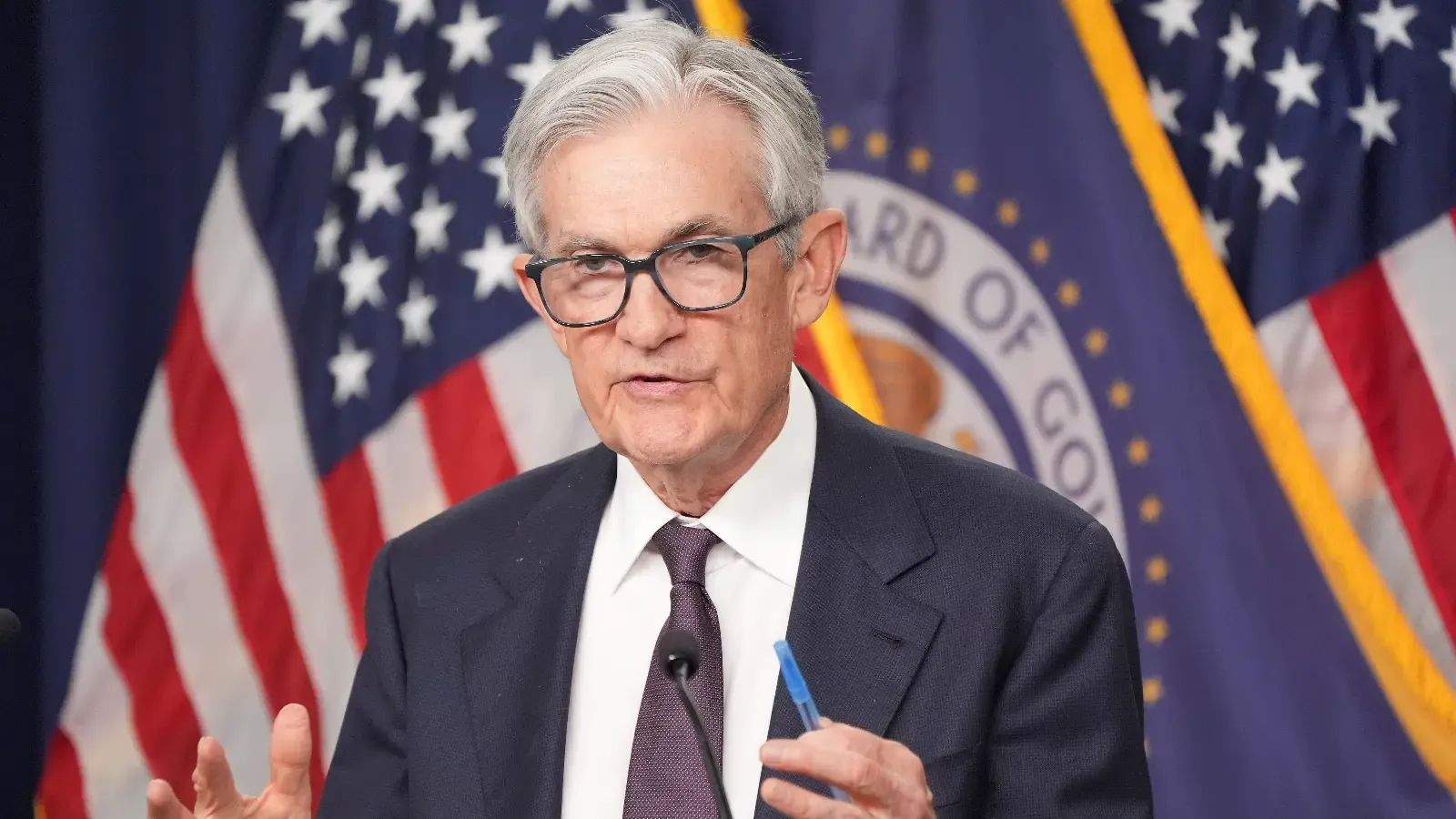
US Fed’s FOMC will start its two-day meeting on Tuesday, April 28.
Experts anticipate that the Chairman Jerome Powell-led committee will maintain its “wait and watch” stance amid the geopolitical uncertainty and the US-Iran conflict at its ninth week, with no signs of a potential peace deal between the two nations.
According to the official website, the US Fed’s FOMC will start its two-day meeting on Tuesday, April 28, and conclude the same on Wednesday, April 29, after which the committee will disclose its outcome via a press release.
The official statement will be followed up by a press conference with Chairman Jerome Powell and the press. This upcoming US Fed meeting will mark the last key monetary policy meeting for Powell, whose term as the head is set to expire at the end of May 2026.
What do the market experts anticipate?
Umesh Sharma, the CIO-Debt of The Wealth Company Mutual Fund, said that the FOMC is expected to keep the policy rates unchanged at the current 3.50–3.75% range at its April meeting, reflecting a continued “wait and see” approach amid heightened geopolitical risks and surging energy prices.
“While the rate decision itself appears straightforward, the tone of forward guidance will be the key market focus. Recent FOMC communications suggest a slight hawkish tilt, with policymakers emphasising the risk that energy-driven inflation could become more persistent,” said Umesh Sharma.
Ajitabh Bharti, Co-Founder and Executive Director, Capital XB, also expects the interest rates to remain unchanged at their current levels, with no fresh economic projections or dot plot to guide the markets.
“With no fresh economic projections or dot plot to guide markets, attention will shift to Chair Jerome Powell’s tone and the statement’s language,” said the expert.
Bharti also explained that policymakers should balance two ‘competing’ risks, the West Asia crisis and the elevated energy prices in the market.
“Because the United States is a net energy exporter, the terms-of-trade hit is milder than for major importers, giving the Fed latitude to look through oil-driven price spikes and stay focused on domestic demand,” he said.
CME Group’s FedWatch data also showed that the market expects a 100% chance of the US Federal Reserve’s FOMC to keep the interest rates unchanged at the range of 3.50 to 3.75% in the upcoming policy decision.
Key things in focus
In the March policy outcome, Jerome Powell-led FOMC kept its key benchmark interest rates unchanged at the range of 3.50-3.75%, citing a somewhat elevated level of inflation and risks from the impact of the West Asia crisis.
The central bank decided to wait to analyse incoming economic data to gauge the interest rate trajectory of the US economy. Investors need to watch out for the Fed’s latest stance on its dual mandate to keep the inflation rate in check and cater to the labour market in the economy.
US Bureau of Labor Statistics data showed that the inflation rate in the economy was at 3.3% for the 12 months ending March 2026, compared to its 3% level in February 2026, and 2% rise in January 2026.
Along with the inflation risks, the focus will also remain on Jerome Powell’s final speech before his term ends in May 2026, for any signals on how unified the Fed Committee is ahead of the leadership transition, as a divided FOMC could take an early rate cut trajectory under the new chairman.
Related News

About The Author
Next Story

