Market News
Union Budget 2026: Textile sector seeks policy support to safeguard exporters, MSMEs and jobs amid global challenges

4 min read | Updated on January 13, 2026, 19:23 IST


SUMMARY
The textile and garment sector is crucial for India, as the sector provides employment to over 45 million people, and its current size, at $174 billion, is projected to reach $350 billion by 2030, per government estimates
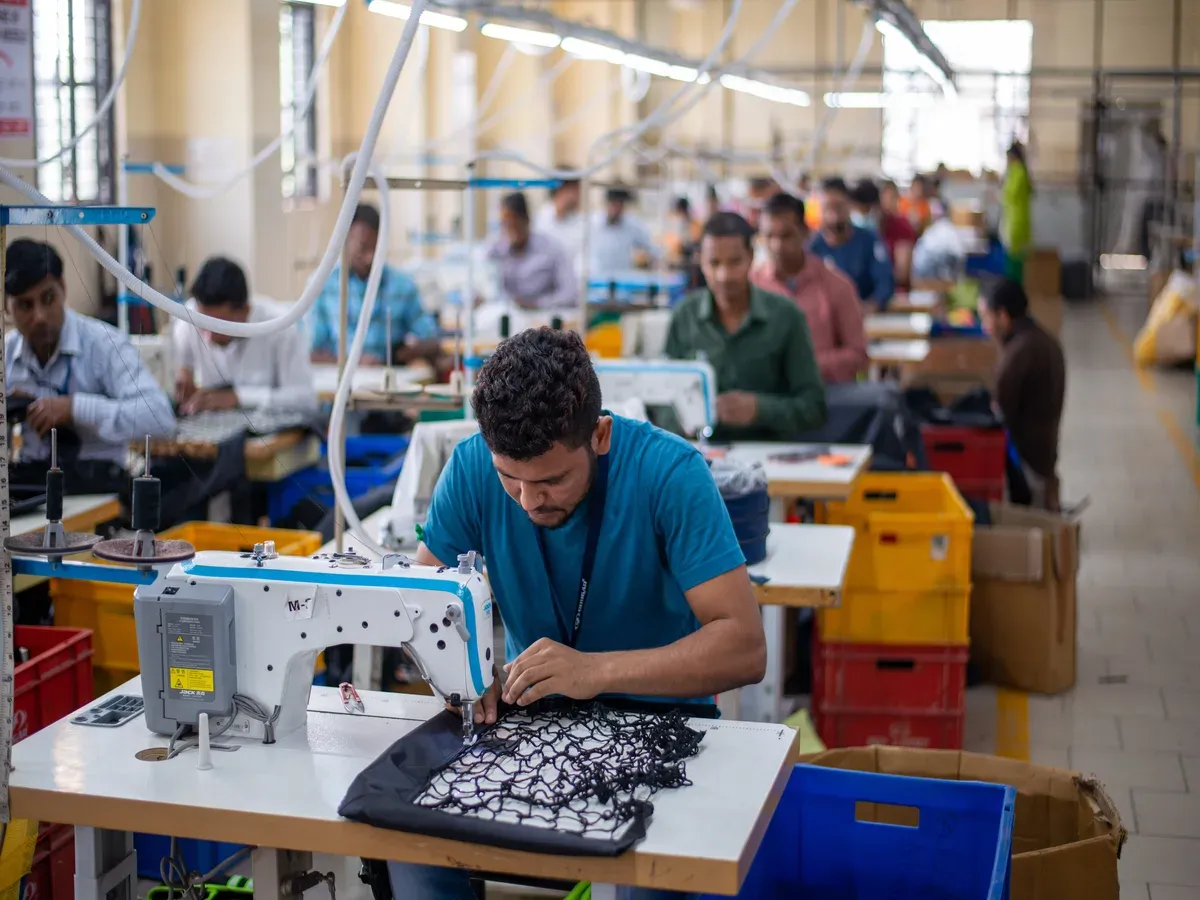
India’s exports of textiles and apparel, including handicrafts, have registered a 9.4% growth in November 2025.
The textile industry remained under pressure in 2025, impacted by the US imposing a 50% tariff on exports and intensifying competition from neighbouring countries.
In Budget 2025-26, the Ministry of Textiles had allocated ₹5,272 crore to the sector, marking a 19% increase over the ₹4,417.03 crore provided in the Budget Estimates for 2024–25. To address the challenges of stagnant cotton productivity, the Union Budget FY26 has announced a five-year Cotton Mission to increase cotton productivity, especially extra-long staple varieties. Science & Technology support will be provided to farmers under this mission.
Further, to promote domestic production of technical textile products such as agro-textiles, medical textiles and geotextiles at competitive prices, two more types of shuttleless looms were added to the list of fully exempted textile machinery.
In the FY26 Union Budget, the Basic Customs Duty on knitted fabrics covered under nine tariff lines was increased from “10% or 20%” to “20% or ₹115 per kg, whichever is higher.” The move was expected to enhance the competitiveness of Indian knitted fabric manufacturers and curb cheap imports.
Textile exports
India’s exports of textiles and apparel, including handicrafts, have registered a 9.4% growth in November 2025. According to the Textiles Ministry, the sector recorded growth of over $2,855 million in November 2025, compared with $2,601 million in November 2024.
Meanwhile, hit by the steep 50% tariffs imposed by the US, India's textile exports had declined 12.91% in October 2025, pushing industry bodies to seek relief measures to arrest the fall in shipments.
The US is the largest export market for India's textile and apparel industry. In 2024-25, the overall size of the textile and apparel sector is estimated at $179 billion, comprising a domestic market of $142 billion and exports worth $37 billion.
Sectoral expectations
Srikumar Krishnamurthy, Senior Vice President and Co-Group Head, Corporate Ratings at ICRA Limited, in a note said 2025 proved to be a challenging year for the domestic textile industry, with US tariff-related issues affecting the entire value chain, particularly the apparel and home textile segments. He noted that intensifying competition from neighbouring countries further added pressure on exporters.
He added that with global retailers preparing to place fresh orders for the upcoming season, an early resolution of tariff negotiations has become critical to restore competitiveness and improve order flows for Indian exporters.
Against this backdrop, Krishnamurthy said the Union Budget is expected to focus on policy measures to support exporters, including temporary relief schemes and more favourable financing terms on bank loans. He also highlighted that proposals aimed at supporting MSMEs, ensuring job security, strengthening skill development initiatives, and addressing supply chain challenges would provide much-needed relief to the sector.
EY India expects Union Budget 2026 to reinforce India’s growth narrative by balancing fiscal prudence with targeted reforms. A predictable policy roadmap, anchored in tax certainty and sustained public investment, could unlock private capital, enhance competitiveness, and support inclusive economic growth.
The textile and garment sector is crucial for India, as the sector provides employment to over 45 million people, and its current size, at $174 billion, is projected to reach $350 billion by 2030, per government estimates.
Confederation of Indian Textile Industry's request
Ahead of Union Budget 2026, a delegation of the Confederation of Indian Textile Industry (CITI) has appealed to Union Agriculture Minister Shivraj Singh Chouhan for duty-free cotton imports, citing competitiveness challenges while noting that the minimum support price (MSP) mechanism adequately protects farmers’ interests.
The delegation has also demanded that the government permanently remove the 11% cotton import duty, as it would help mitigate the cost pressure for domestic companies.
India’s textile industry, the country’s second-largest employment provider, requires stable access to high-quality cotton. In view of the persistent demand–supply gap, the government extended the import duty exemption on cotton until December 31, 2025.
With no further notification for extension from the government, the duty is reinstated from January 1, 2026. According to CITI, this will adversely impact the competitiveness of the country's textile and apparel sector.
The minister assured the group that these concerns would be carefully considered during the review process, CITI stated.
CITI also highlighted that cotton production in India has been steadily decreasing and is projected to fall this year to its lowest level in the last two decades, heightening concerns about supply shortages.
Related News

About The Author
Next Story