Market News
Bharti Airtel, Vi, RJio: What telecom sector expects from the FM in Union Budget 2026; check the full wishlist
.png)
5 min read | Updated on January 14, 2026, 09:11 IST


SUMMARY
Budget 2026: Industry body Cellular Operators' Association of India (COAI) Director General SP Kochhar said 2025 saw a sharper focus on resilience.
Stock list
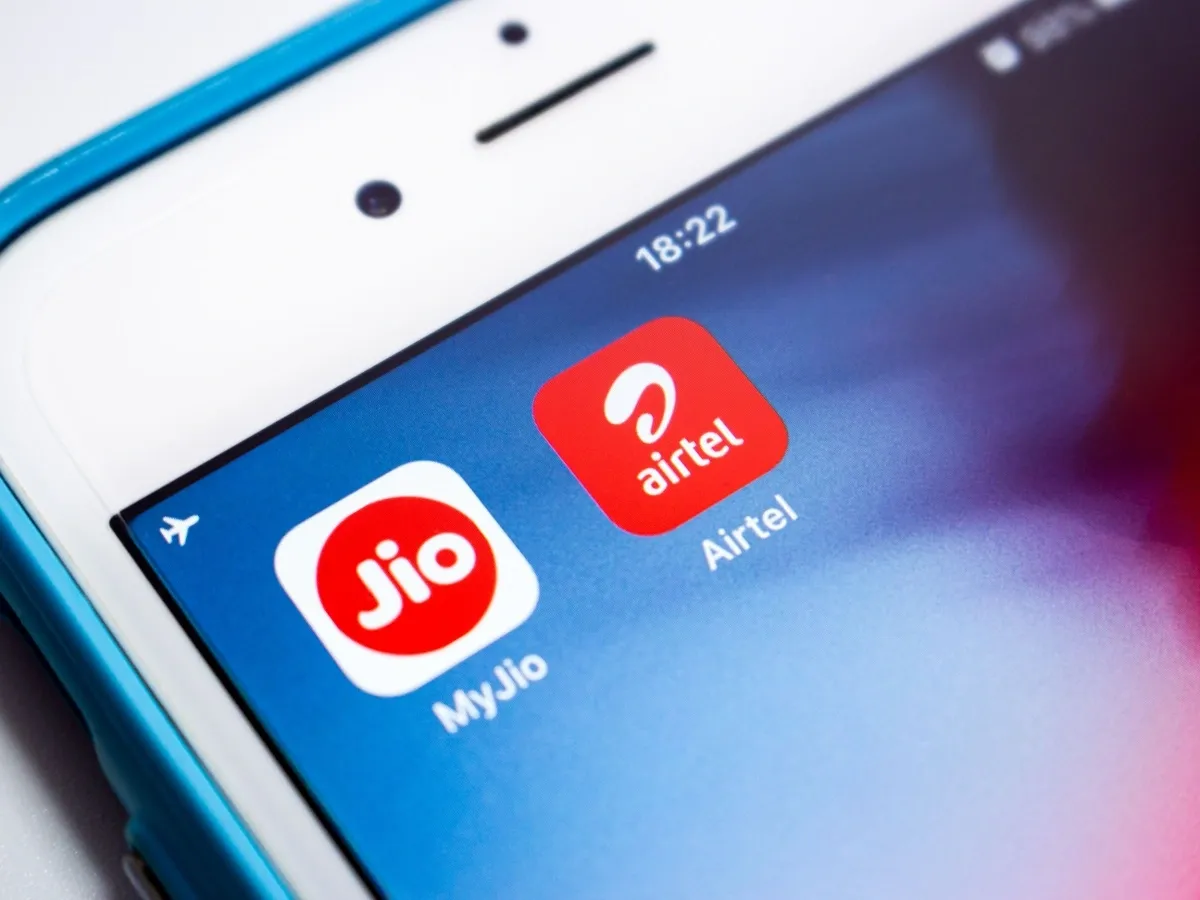
Industry leaders and analysts expect the telecom operators to increase mobile tariffs by 15% in FY27. | Image: Shutterstock
The entry of new communications service providers in the form of satcom created a spark in the sector, with Elon Musk-led Starlink getting permission to start services, but pending security clearance and a delay in the decision over spectrum pricing have pushed its potential rollout to the next year (2026).
The entry of Starlink is expected to add to the competition in the premium segment, which is dominated by telecom operators, mainly Reliance Jio and Bharti Airtel.
Besides this, the government has been making efforts to revive Vodafone Idea (VIL) and BSNL to prevent the market from slipping into a duopoly and to maintain competition, thereby protecting consumer interests.
COAI observation: Industry saw resilience in 2025
Industry body Cellular Operators' Association of India (COAI) Director General SP Kochhar said 2025 saw a sharper focus on resilience.
"Domestic manufacturing gained momentum under the Make in India and PLI schemes, enabling nearly 60% import substitution in telecom products and turning India into an emerging exporter of 4G and 5G equipment. Moreover, telecom exports from India have increased by 72% in the last five years, increasing to ₹18,406 crore in FY25, from ₹10,000 crore in FY21," Kochhar said.
HFCL Managing Director Mahendra Nahata said the telecommunications infrastructure landscape has reached a critical threshold where capacity, density, and deployment speed determine competitive advantage.
"India installed over 5 lakh 5G base stations, achieving 85 per cent population coverage, while total wireless data reached 65,009 petabytes in the second quarter of 2025 -- an unprecedented surge that makes fiberisation not optional but existential for network quality," he said.
HFCL has emerged as the first company in India to design, develop, and manufacture 5G fixed wireless access equipment for giga-speed wireless broadband connectivity.
GX Group CEO Paritosh Prajapati said demand resilience, policy continuity, and manufacturing scale met industry expectations in 2025.
What to expect in CY 2026 and Budget FY27 expectations
Industry leaders and analysts expect the telecom operators to increase mobile tariffs by 15% after about two years, which is estimated to more than double the revenue growth rate of the sector in FY27.
A recent report by Jefferies, authored by equity analyst Akshat Agarwal and equity associate Ayush Bansal, expects that a proposed initial public offering (IPO) of Reliance Jio in the first half of 2026 will increase the valuation of the sector as well as support an increase in mobile services rates.
"We expect mobile tariffs in India to rise by 15% in June 2026, two years after the last tariff hikes -- in line with trends in the past," the report said.
Rising data penetration and postpaid penetration, as well as increasing data usage, are driving up mobile ARPU (average revenue per user) in India, besides headline tariff hikes, the report said.
"We expect sector revenue growth to pick up to 16% YoY in FY27, as against our estimate of 7% YoY in FY26. Given a high likelihood of tariff hikes in CY26, we model a 15% headline tariff hike in Jun-26, which should support a healthy 14% YoY ARPU growth in FY27. We expect subscriber additions to be fairly muted due to the impact of tariff hikes," the report said.
The report projects a hike of 10-20% in mobile tariff by Jio to push its valuation closer to Bharti Airtel and offer investors a double-digit internal rate of return.
Budget wishlist
Industry body COAI, according to a report by PTI, has sought a reduction in regulatory levies, including in the licence fee, to 0.5-1% from 3% in the upcoming Budget.
In its submission to the government, COAI suggested that funds to the Digital Bharat Nidhi should be paused till the time the unused corpus is completely utilised by the telecom department.
COAI members include Reliance Jio, Bharti Airtel and Vodafone Idea.
Key points
The industry body said it has been advocating for measures that would reduce the sector's financial burden, enabling further expansion and rollout of next-generation connectivity to achieve the goal of `Viksit Bharat'.
"The licence fee, which is a combination of the licence (three per cent of AGR) and Digital Bharat Nidhi Contribution (five per cent of AGR), is a huge financial burden for the licensed telcos," the association said.
COAI has requested that the licence fee be reduced from 3% to 0.5-1% just to cover the administrative costs.
GST-related issues
On GST policy-related issues, too, COAI has recommended specific measures to help reduce the financial burden and offer relief to the sector.
"Special benefit may be provided to telecom operators in GST by way of exemption of GST on regulatory payments of licence free (LF), spectrum usage charges (SUC), and spectrum assigned under auction," it said.
Alternatively, COAI has suggested that the rate of GST under Reverse Charge on spectrum payment, licence fees, and SUC be reduced from the existing 18% to 5%.
This would be revenue-neutral to the government and would help in reducing ITC accumulation.
ITC stands for input tax credit.
"COAI has also suggested that usage of existing ITC balance be allowed for discharging GST under RCM (Reverse Charge Mechanism) on LF/SUC, which will not only protect the cash outflow for telcos but also help in utilising accumulated ITC," it said.
Telecom a ‘horizontal value-added enabler'
COAI argued that telecom is no longer just a vertical but a ‘horizontal value-added enabler’ for all other verticals, and accordingly, a recalibration of spectrum pricing and assignment models is necessary too.
Related News
About The Author
Next Story