Market News
Union Budget 2026 expectations: Assocham urges incentives for hydrogen-based steelmaking
.png)
4 min read | Updated on January 08, 2026, 17:41 IST


SUMMARY
Assocham pointed out that despite being the world's second-largest steel producer after China and maintaining a healthy growth rate of 8-9%, the sector is facing significant headwinds
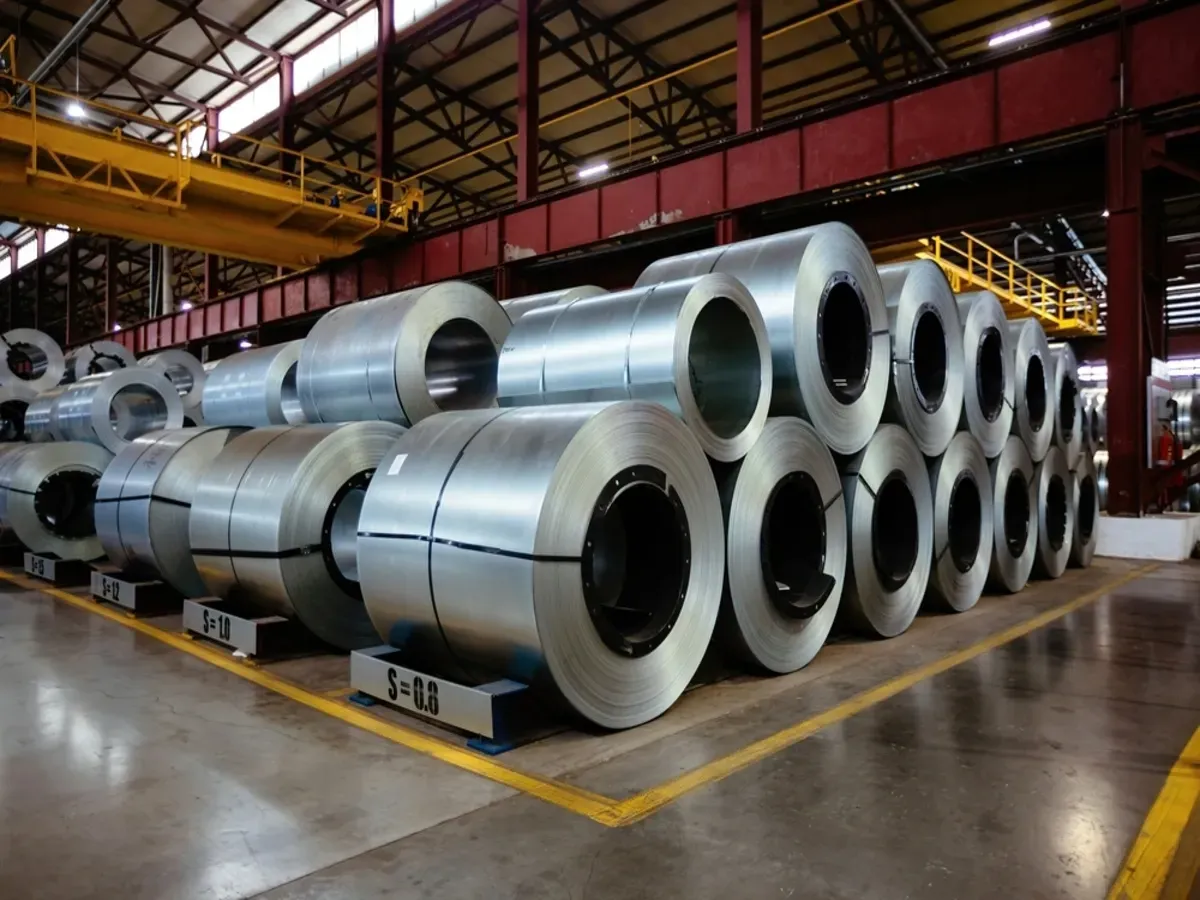
Finance Minister Nirmala Sitharaman is expected to table the Union Budget for the Financial Year 2026-27 in Parliament on February 1, 2025.
Finance Minister Nirmala Sitharaman is expected to table the Union Budget for the Financial Year 2026-27 in Parliament on February 1, 2025.
The industry body noted that decarbonisation presents both a challenge and a competitive opportunity, asserting that these measures can accelerate sustainable production.
Assocham further pitched for incentivising scrap collection and recycling, noting that strengthening domestic recycling infrastructure through skilling is essential to reduce the country's dependence on imports.
India as world's second-largest steel producer
Highlighting the challenges, Assocham pointed out that despite being the world's second-largest steel producer after China and maintaining a healthy growth rate of 8-9%, the sector is facing significant headwinds.
Elevated input costs of key raw materials, a depreciating rupee, and heavy reliance on imported coking coal—due to negligible domestic mineable reserves—remain major pain points. Furthermore, the chamber stated that iron ore production has been stagnant, and many of the auctioned mines are yet to start production. The growing steel demand and continued export of iron ore are creating pressure on supply, resulting in high costs for domestic mills.
Assocham believes the upcoming Union Budget offers a vital opportunity to position India as a global manufacturing hub for steel and value-added products under the 'Make in India' initiative.
To achieve this, the body has called for promoting iron ore beneficiation, removing import duty on critical raw materials, and rationalising royalty calculations to eliminate double taxation. It also emphasised that incentivising R&D in steel recycling, alloy innovation, and process digitisation will enhance productivity and reduce dependence on speciality steel imports.
Steel sector contribution to India's GDP
The Union Minister H.D. Kumaraswamy had recently highlighted that India is currently the world’s second-largest steel producer, a position achieved through sustained reforms, steady investments and a clear long-term vision focused on modernisation, self-reliance and sustainability.
He noted that the steel sector contributes around 2.5% to India’s GDP and supports nearly 2.8 million livelihoods, with demand being driven by infrastructure expansion, manufacturing growth and strategic sectors such as defence and mobility.
According to the Economic Survey of FY26, India remained a net importer of steel even as the industry faced price pressures. The decline in the export of finished steel during FY25 was mainly driven by gaps between international and domestic prices, the pre-budget document for the 2024-25 fiscal year had said.
Outlook for CY26
Sumit Jhunjhunwala, Vice President and Sector Head – Corporate Sector Ratings at ICRA Ltd, said CY2025 was a challenging year for domestic steel players, as earnings were impacted by steel price corrections amid global headwinds and significant capacity additions over the past three to four quarters, which led to a supply overhang. "While India’s finished steel imports declined due to safeguard duty, the rising trade barriers globally would continue to pose diversion risks. In this backdrop, continuation of safeguard duties remains critical to shield domestic prices," he added.
According to Jhunjhunwala, the continuation of safeguard duties remains critical to shield domestic steel prices in an environment marked by global uncertainty and shifting trade dynamics. He emphasised that policy support will be important to protect domestic producers from external pressures.
Looking ahead to CY2026, Jhunjhunwala said resilient domestic demand, the gradual absorption of new capacities, and a meaningful recovery in buying activity in China’s property market are expected to be the key factors driving domestic steel prices. He added that ICRA has a stable outlook on the sector, with industry OPBDITA per tonne expected to remain above $100 in the near term.
Related News


About The Author
Next Story