
Market News
RBI policy April 2026: Interest rates unchanged, inflation risk ahead amid West Asia crisis; top highlights

6 min read | Updated on April 08, 2026, 12:18 IST


SUMMARY
RBI decided to keep the key benchmark interest rates of the economy unchanged at 5.25% while the central bank moved into a wait-and-watch strategy with the changing circumstances and the evolving growth-inflation outlook.
RBI decided to keep the key interest rates unchanged at 5.25% while maintaining a ‘neutral’ stance on April 8.
RBI’s decision to keep the key interest rates unchanged comes for the second consecutive time since the February 2026 MPC outcome to hold the repo rate. The repo rate is the benchmark interest rate at which banks borrow funds from the RBI.
In its December policy outcome, the Reserve Bank of India cut its interest rates to 5.25%, compared to its earlier 5.5% level, with an accommodative stance, which was later switched to neutral in the February meeting outcome on the backdrop of moderate inflation.
Top takeaways from RBI’s MPC outcome
RBI on ‘wait and watch’
Reserve Bank of India’s MPC committee, comprising Chairman and Governor Sanjay Malhotra, Dr Nagesh Kumar, Saugata Bhattacharya, Prof. Ram Singh, Dr Poonam Gupta and Indranil Bhattacharyya, unanimously decided to keep the policy repo rate unchanged at 5.25% in the April 2026 meeting outcome.
The central bank also decided to keep the standing deposit facility (SDF) unchanged at 5% and the marginal standing facility (MSF), and Bank Rate at 5.5%, as RBI said it is prudent to wait and watch the changing circumstances and the evolving growth-inflation outlook.
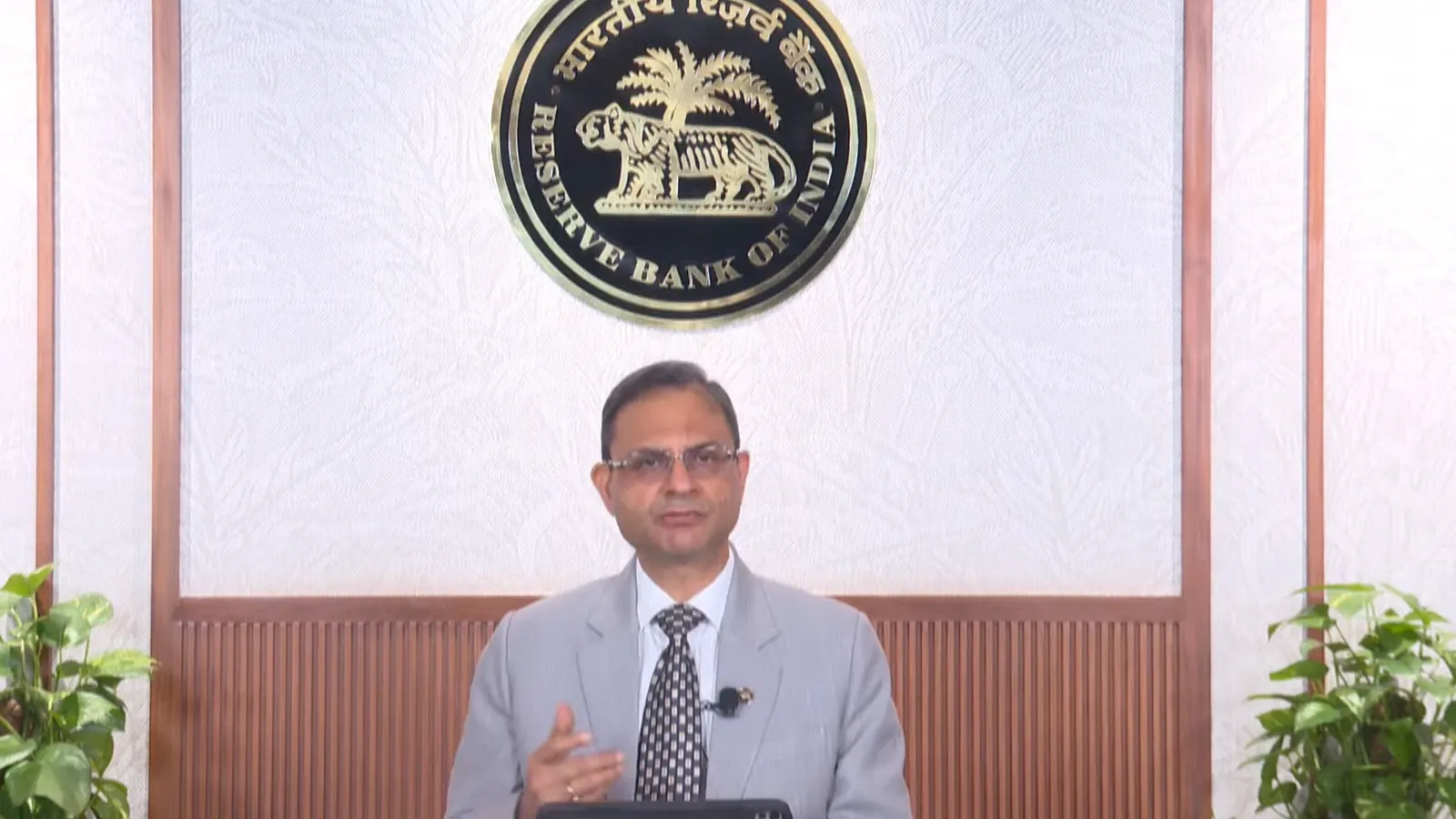
“The MPC voted to keep the policy rate unchanged even as it remains vigilant, closely monitoring incoming information and assessing the balance of risks,” said Governor Sanjay Malhotra in his address.
Malhotra further highlighted that the West Asia conflict is set to impact the growth of the Indian economy due to the higher input cost associated with the rise in energy, international transport and insurance prices across the world.
Inflation risk ahead
Although the inflation was under the RBI’s target range before the US-Iran conflict, the changing geopolitical condition has given rise to a risk of inflation in the domestic economy due to the supply chain disruption issues of key energy resources.
RBI said that the headline inflation in the Indian economy remains ‘contained and below target’, but there are upside risks to the inflation outlook ahead for the country. “Upside risks to the inflation outlook, driven by increased energy price pressures and probable weather disturbances affecting food prices, have increased. Core inflation pressures remain muted, although supply chain dislocations and the risk of second-round effects render the future inflation trajectory uncertain,” said Governor Malhotra.
The rising risk of inflation in the economy is due to the increase in crude oil prices, which has the potential to increase the country’s current account deficit (CAD) or the difference between imports and exports.
CPI inflation for the month of January at 2.7%, and for February, at 3.2%, falls under the RBI’s target range of 4% which has a tolerance of 2% on either side.
The CPI inflation for the financial year 2026-27 is estimated at 4.6%, with the rates expected to rise to 4% in the first quarter, then 4.4% in the second quarter, and by 5.2% in the third quarter before it cools to 4.7% in the fourth quarter of the current fiscal.
“Excluding precious metals, core inflation is even lower indicating that underlying inflation pressures are expected to remain contained. The risks are on the upside,” said Sanjay Malhotra.
Conflict to impact India’s GDP growth
The global cues from the West Asia conflict are expected to adversely impact India’s growth in the financial year 2026-27 due to the supply disruption issues in the Strait of Hormuz, raising the input costs for sectors despite active consumption and investment support from the economic activity in the country.
Along with the supply disruption, the elevated energy and commodity prices in the market will also impact the growth in the fiscal year. The central bank expects that the real GDP growth for FY2026-27 is expected to be at 6.9%.
The Indian economy is projected to grow at 6.8% in the first quarter, 6.7% in the second quarter, 7% in the third quarter, and 7.2% in the fourth quarter of the current financial year.
“Looking ahead, elevated energy and other commodity prices, coupled with supply shock due to disruptions in the Strait of Hormuz, would act as a drag on domestic production in 2026-27,” according to RBI’s MPC statement.
However, factors like the services sector, impact from GST rate cuts, and healthy balance sheets of corporates are expected to provide momentum in the economy.
Widening current account deficit
India’s current account deficit (CAD) is at risk due to the trade disruptions and the conflict with elevated crude oil prices, increasing the fears of a widening deficit.
Apart from oil, fertilisers, and other commodity disruptions, may also impact the Indian industries, agriculture and services sector due to the reduced domestic output, amid the heightened uncertainty, increased risk aversion and safe haven demand.
With merchandise imports witnessing 22.2% growth, driven by higher gold imports, have resulted in a widening trade deficit.
“Rising global uncertainties and elevated prices of key energy commodities pose some upside risks to India’s current account deficit in 2026-27,” said Malhotra on Wednesday.
$5 billion foreign outflows in Q4
Governor Sanjay Malhotra also highlighted that although the gross foreign direct investment (FDI) witnessed strong growth, the Foreign portfolio investment (FPI) outflow from emerging markets like India was a result of the elevated global geopolitical, trade and investment uncertainties.
“Foreign portfolio investment (FPI) to India, driven by outflows in the equity segment, recorded net outflows of $16.5 billion in 2025-26, followed by outflows of $5.4 billion in 2026-27 (till April 6),” said Malhotra.
However, the RBI also said that the bilateral and regional trade agreements with major trading partners are expected to boost India’s trade and investment opportunities in the future.
Related News

About The Author
Next Story

