Market News
Rupee vs USD: RBI not targeting any specific exchange rate price band, says Guv Sanjay Malhotra

4 min read | Updated on April 08, 2026, 12:56 IST


SUMMARY
Speaking at the Monetary Policy Committee (MPC) repo rate decision address, Malhotra stated that the apex bank’s intervention in the foreign exchange market is aimed at smoothing excessive and disruptive volatility, without targeting any specific level band of price for the exchange rate.

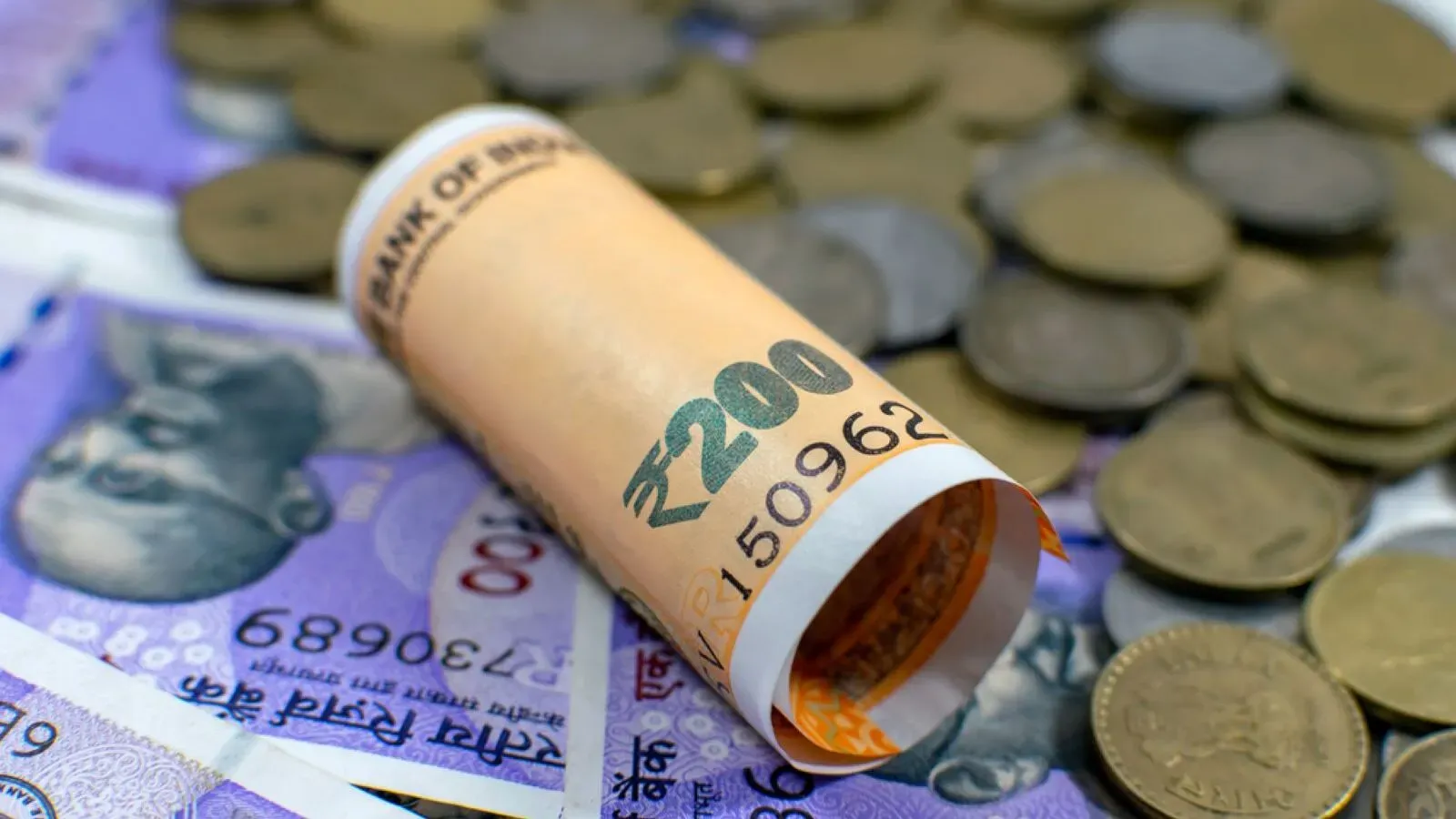
In FY26, the Indian rupee depreciated 9.88% against the US dollar. | Image: Shutterstock
Addressing the fall in rupee, the Reserve Bank of India (RBI) Governor Sanjay Malhotra on Wednesday, April 8, said that the domestic currency has depreciated more than average in the last financial year (FY26), compared to the previous years.
In this regard, he reiterated that the RBI’s exchange rate policy has remained unchanged specifically.
Speaking at the Monetary Policy Committee (MPC) repo rate decision address, Malhotra stated that the apex bank’s intervention in the foreign exchange market is aimed at smoothing excessive, and disruptive volatility, without targeting any specific level band of price for the exchange rate.
He added that this remains consistent with the central bank’s standing policy of exchange rates being market determined.
“And we in the RBI stand committed to this policy and would judiciously continue to contain excessive or disruptive volatility to ensure that self-fulfilling expectations do not exacerbate currency movements beyond what is warranted by fundamentals," he further stated.
During the address, Governor Sanjay Malhotra said that the RBI’s MPC committee has decided to keep the repo rate unchanged at 5.25%.
Rupee in FY26
In the 2025-26 financial year (FY26), the Indian rupee depreciated 9.88% against the US dollar, reflecting the sharpest fall against the greenback in 14 years.
Furthermore, the rupee breached the 95 /US dollar mark for the first time on March 30, the last trading day of FY26.
In FY12, the domestic currency declined by 12.4% against the dollar at a time when the current account deficit had widened to 4.2%.
Persistent foreign fund outflows, elevated crude oil prices, and a strengthening dollar globally drove the steep depreciation in the previous fiscal year. Volatility in global financial markets and tightening liquidity conditions further weighed on the rupee in FY26.
RBI intervention
In a circular issued on April 1, the RBI said banks authorised to deal in foreign exchange will no longer be allowed to offer non-deliverable derivative contracts involving the rupee to either residents or non-residents.
However, banks may continue to offer deliverable foreign exchange derivatives for genuine hedging requirements, provided that users do not undertake offsetting non-deliverable derivative positions.
The RBI has asked dealers to seek necessary documentation from clients to ensure compliance.
The central bank also barred rebooking of any cancelled foreign exchange derivative contracts involving the rupee, whether deliverable or non-deliverable, with immediate effect.
The banking regulator said authorised dealers shall not undertake any forex derivative contracts involving the rupee with their related parties, as defined under applicable accounting standards.
This comes on the back of the apex bank, on March 27, capping the net open position (NOP-INR) that banks can hold overnight at $100 million, in a bid to curb speculative positions and stabilise the currency.
Domestic currency on April 8
The rupee appreciated 50 paise to 92.56 against the US dollar in early trade on Wednesday, April 8, after US President Donald Trump announced the suspension of military strikes against Iran for two weeks.
Forex traders said the two-week ceasefire announcement triggered a wave of outsized bargain buying amongst the risk assets as Asian Stocks, Dow futures, Gold, and Silver all rallied while Brent Oil fell below $100 to $95 per barrel (bbl).
The rupee, in accordance, surged to 92.56 levels, with the RBI deadline still in place till the 10th of April (regarding squaring of positions taken overnight up to $100 million).
At the interbank foreign exchange market, the rupee opened at 92.92 against the US dollar, then gained ground to touch 92.56 against the US dollar in initial trade, registering a gain of 50 paise over its previous close.
Related News

About The Author
Next Story