Market News
Iran-US conflict: Crude oil prices cross $100/barrel for first time since 2022; things you need to know

5 min read | Updated on March 09, 2026, 07:47 IST


SUMMARY
Oil price: Oil prices surpassed $100 per barrel for the first time in more than three and a half years on Sunday as the Iran war hinders production and shipping in the Middle East.
Stock list
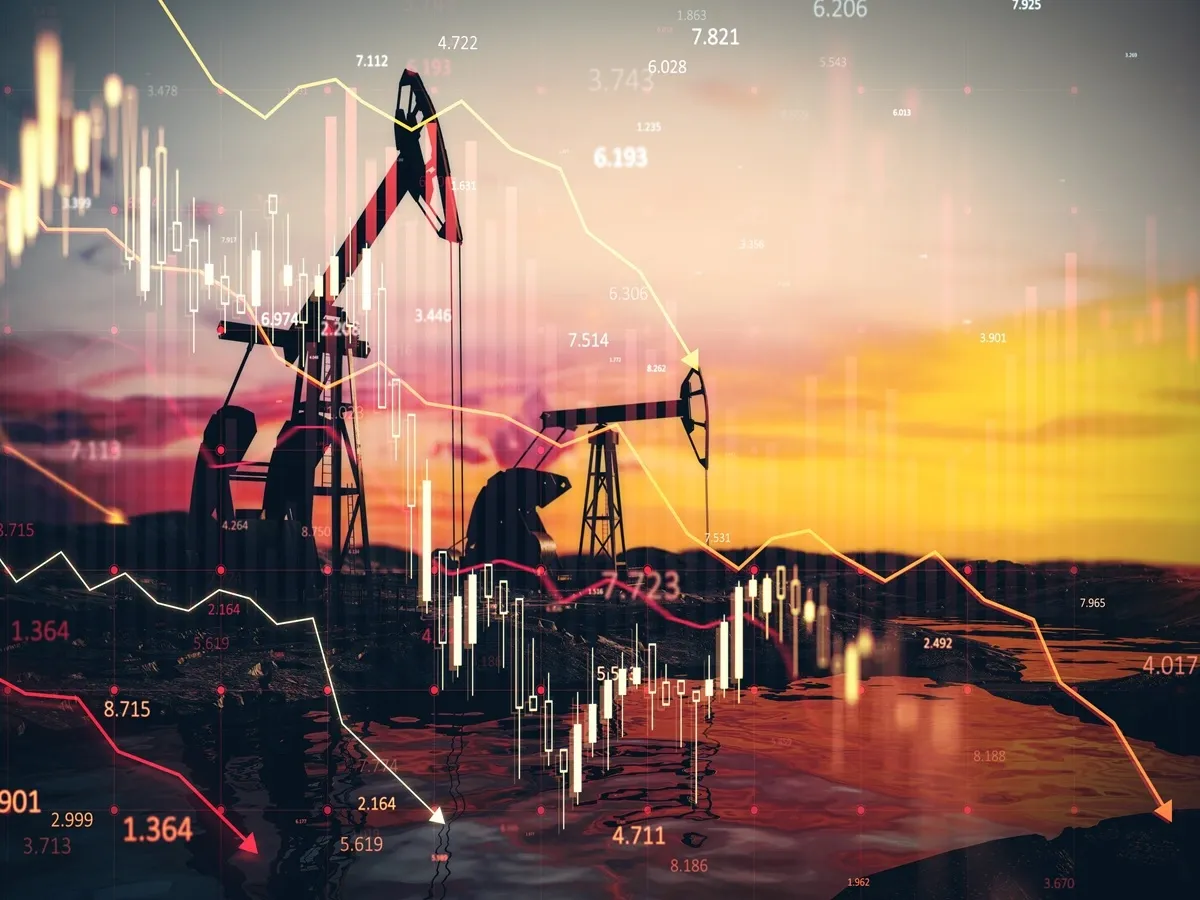
The last time US crude futures traded above $100 per barrel was June 30, 2022, when the price reached $105.76. | Image: Shutterstock
Oil prices surpassed $100 per barrel for the first time in more than three and a half years on Sunday as the Iran war hinders production and shipping in the Middle East.
At the time of writing this article on Monday, WTI crude futures (April contract) were trading at $113.85 per barrel, up 25.96%, while Brent crude futures traded at $113.28, up 22.21%.
On Sunday, according to a report by AP, the price for a barrel of Brent crude, the international standard, was at $107.97 after trading resumed on the Chicago Mercantile Exchange, up 16.5% from its Friday closing price of $92.69.
West Texas Intermediate, the light, sweet crude oil produced in the United States, was selling for about $106.22 a barrel. That was 16.9% higher than it closed Friday at $90.90.
Oil on the boil: More details
The increases followed a surge in US crude prices of 36% and Brent crude of 28% last week. Oil prices have rallied as the war, now entering its second week, has drawn in countries and regions that are crucial for the production and transportation of oil and gas from the Persian Gulf.
Roughly 15 million barrels of crude oil -- about 20% of the world's oil -- are typically shipped every day through the Strait of Hormuz, according to independent research firm Rystad Energy.
The threat of Iranian missile and drone attacks has all but stopped tankers from travelling through the strait, which is bordered in the north by Iran, carrying oil and gas from Saudi Arabia, Kuwait, Iraq, Qatar, Bahrain, the United Arab Emirates, and Iran.
What OPEC Members said
Kuwait, the fifth-largest producer in OPEC, announced precautionary cuts to its oil production and refinery output on Saturday, citing “Iranian threats against the safe passage of ships through the Strait of Hormuz."
The state-owned Kuwait Petroleum Corporation did not detail the size of the cuts, CNBC reported.
Output in Iraq, the second-biggest OPEC producer, has effectively collapsed. Production from its three main southern oilfields has fallen 70% to 1.3 million barrels per day, three industry officials told Reuters Sunday. Those fields produced 4.3 million bpd before the Iran war.
And the United Arab Emirates, the third-biggest producer in OPEC, said Saturday that it is “carefully managing offshore production levels to address storage requirements". The Abu Dhabi National Oil Company (ADNOC) said its onshore operations are continuing normally.
Gulf Arab states are cutting production because they are running out of storage space, as oil barrels pile up with nowhere to go due to the closure of the Strait. Tankers are unwilling to transit the narrow waterway because they are worried Iran will attack them.
Oil crosses $100/bbl for first time after 2022
The last time US crude futures traded above $100 per barrel was June 30, 2022, when the price reached $105.76. For Brent, it was July 29, 2022, when the price hit $104 per barrel.
Impact on Indian economy
High crude oil prices tend to have a negative impact on the Indian economy, as the country imports nearly 85% of its oil requirements.
A sustained rise in crude prices increases the import bill, widens the current account deficit (CAD), and puts pressure on the rupee.
It also fuels inflation by raising fuel, transportation, and manufacturing costs, which eventually pushes up prices of goods and services.
Higher crude prices can strain government finances through increased subsidy burdens and may weigh on economic growth, as rising input costs affect corporate margins and consumer spending.
Stocks in focus
Oil-sensitive stocks such as upstream companies (ONGC, Oil India), OMCs (IOCL, BPCL, HPCL), paints (Asian Paints, Kansai Nerolac), tyres (MRF, JK Tyres, others), and aviation will be in focus.
Upstream oil producers such as Oil and Natural Gas Corporation (ONGC) and Oil India typically benefit from higher crude prices, as their realisations improve, supporting revenue and profitability.
On the other hand, oil marketing companies (OMCs) such as Indian Oil Corporation, Bharat Petroleum Corporation Limited, and Hindustan Petroleum Corporation Limited may face margin pressures if retail fuel prices are not increased in line with rising crude costs.
Sectors heavily dependent on crude-linked raw materials are also likely to feel the pinch. Paint makers such as Asian Paints and Kansai Nerolac Paints, as well as tyre manufacturers like MRF and JK Tyre & Industries, could see input cost pressures due to petrochemical-linked raw materials.
The aviation sector is also negatively impacted, as higher crude prices raise aviation turbine fuel (ATF) costs, which form a major portion of airlines’ operating expenses.
Related News

About The Author
Next Story