Market News
Indian economy on a stronger footing than in previous crisis episodes, says RBI Governor Malhotra
.jpeg)
3 min read | Updated on April 08, 2026, 12:10 IST


SUMMARY
Governor warned of risk to global growth on the back of sharp rise in energy prices which has resulted in fears of spiralling inflation.
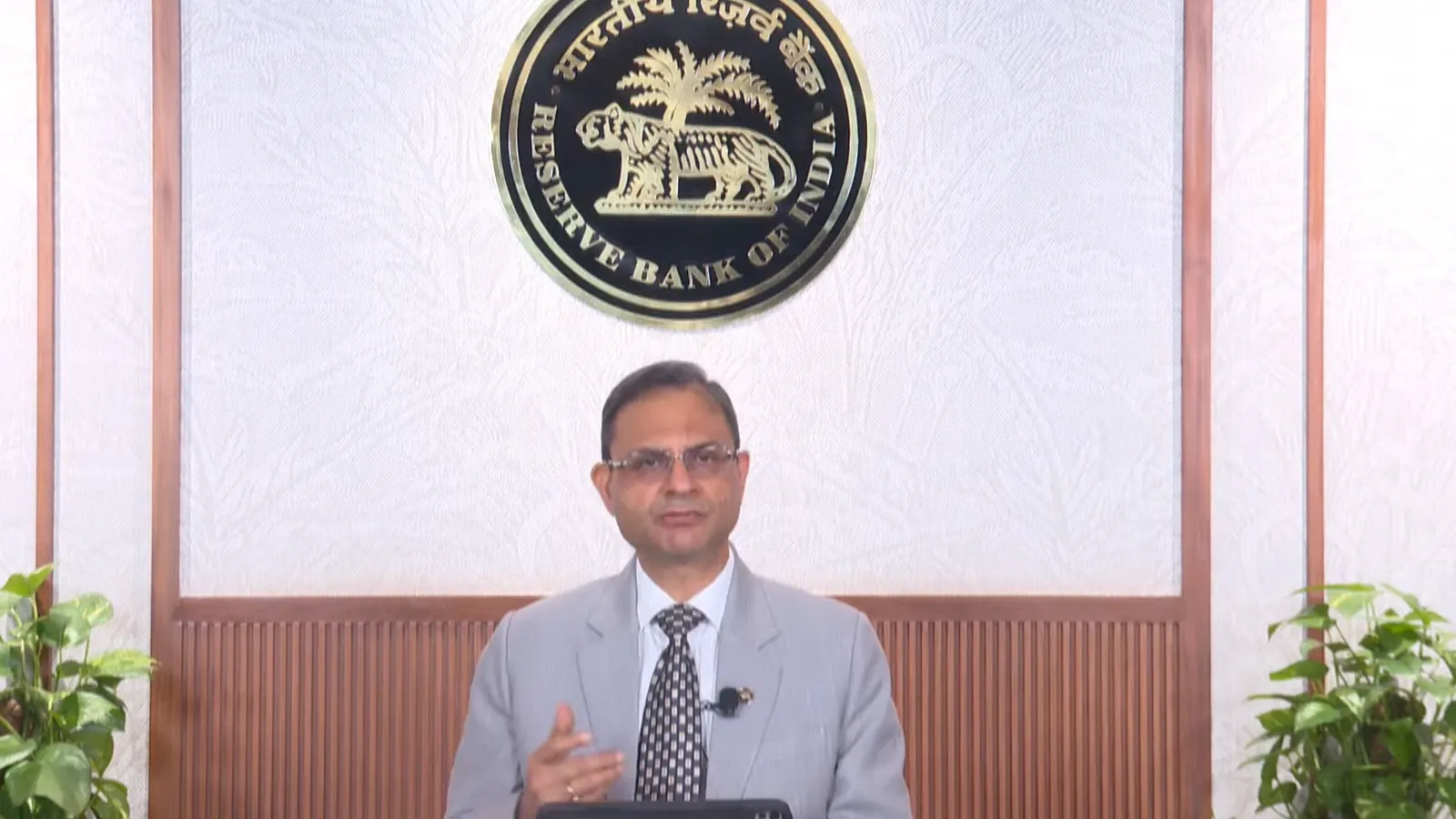
RBI Governor Sanjay Malhotra. | Image: RBI
The fundamentals of the Indian economy are on a stronger footing at the current juncture than in previous crisis episodes, the Reserve Bank of India Governor Sanjay Malhotra said while announcing the decision of RBI's Monetary Policy Committee's (MPC) on Wednesday, April 8.’
Commenting on the state of macro-economic fundamentals amid crisis in West Asia, Governor Malhotra said, "Conditions turned adverse in March with the widening of the conflict zone and its intensification. The fundamentals of the Indian economy are on a stronger footing at the current juncture than in previous crisis episodes as well as relative to many other economies, providing it with greater resilience to withstand shocks."
Governor, however, warned of risk to global growth on the back of sharp rise in energy prices which has resulted in fears of spiralling inflation.
"Global growth faces increasing downside risks as the sharp rise in energy prices and shortages of inputs for various industries have stoked inflation fears and pushed up the geopolitical risk premium in oil markets. Heightened uncertainty precipitated by the ongoing conflict is weighing on the outlook," he said.
"Safe-haven flows have exerted depreciation pressure on currencies of major economies as the US dollar has strengthened. While commodity prices, such as of metal and gold, have moderated, financial markets have become more volatile. Equities registered a broad-based correction. Sovereign bond yields, already elevated due to long-run fiscal sustainability concerns, driven by inflation fears, have hardened across major economies," he added.
Malhotra warned that elevated crude oil prices could increase imported inflation and widen the current account deficit and disruptions in energy markets, fertilisers and other commodities may adversely impact industry, agriculture and services, reducing domestic output.
"Adverse spillovers from global financial markets could tighten domestic financial conditions and raise the cost of borrowing. Overall, the initial supply shock can potentially transform into a demand shock over the medium term if the restoration of supply chains is delayed," he said.
He added that elevated energy and other commodity prices, as also shocks to availability of inputs due to disruptions in the Strait of Hormuz are likely to impact growth in 2026-27.
In the backdrop of all the prevailing conditions RBI pegged GDP growth of 6.9% for the current financial year.
The consumer price index (CPI) based inflation for the current financial year was pegged above its upward tolerance limit of 4% at 4.6%. The RBI expects CPI inflation in the first quarter of FY27 at 4%, Q2 is expected at 4.4%, third quarter inflation is expected to come in at 5.2% and fourth quarter 4.7%.
“The ongoing conflict has led to large volatility in international energy and other commodity prices imparting considerable uncertainty to the near-term inflation outlook. The pass-through of higher global energy prices has resulted in price increases in select fuels such as premium petrol and LPG and diesel for industrial use. On the other hand, the near-term food supply prospects have been boosted by robust rabi crop providing some comfort,” MPC said on inflation forecast.
About The Author
Next Story