Market News
Budget 2026-27: Focus on infrastructure, AI adoption; check top expectations from education sector

4 min read | Updated on January 29, 2026, 18:10 IST


SUMMARY
In Budget 2025, the government allocated ₹1.28 lakh crore to the education sector, reflecting a 6.22% increase, with ₹50,077.95 crore allocated to higher education.
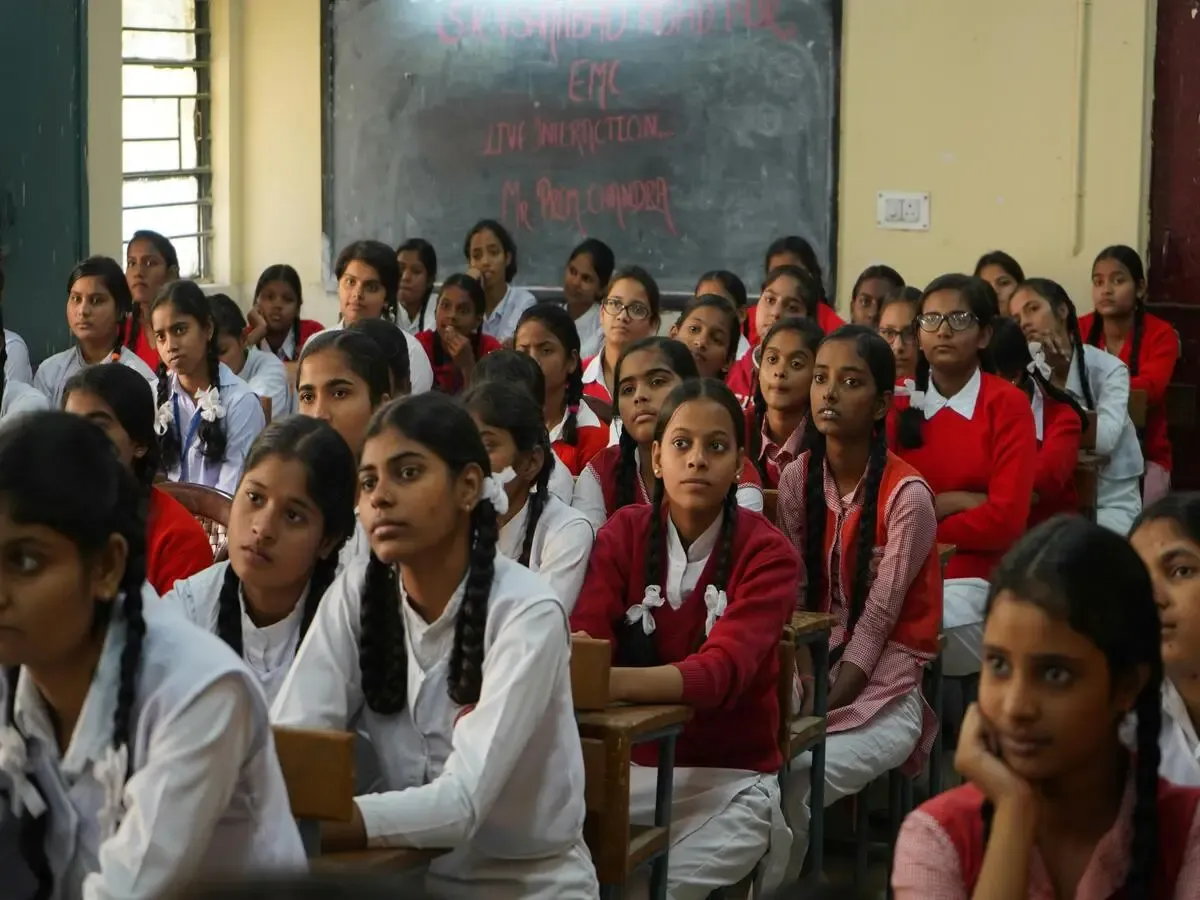
The education market in India has been growing at a rapid pace and is projected to reach $313 billion by FY30. | Image: Pexels
India also operates one of the world’s largest school systems, serving 24.69 crore students across 14.71 lakh schools, the Economic Survey 2025-26 showed.
The survey also revealed that the number of higher education institutions increased to stand at 70,018 as of June 2025 from 51,534 in 2014-15. In Budget 2025-26, the government allocated ₹1.28 lakh crore to the education sector, reflecting a 6.22% increase, with ₹50,077.95 crore allocated to higher education.
Furthermore, as per multiple research papers, education has been identified as the primary driver of the demographic dividend.
The country is experiencing a significant five-decade-long demographic dividend, which is defined as “the economic growth potential that arises from a favourable age structure within a population. The demographic dividend occurs when the working-age population (15-64 years) outnumbers the dependent population (children and the elderly).”
Given this context, the Union Budget 2026 will play a pivotal role in shaping the educational landscape in the country. Let’s look at the demands from the education sector.
Top expectations from the education sector for Budget 2026-27
- Infrastructure improvement
Dr. P. R. Sodani, president of the Indian Institute of Health Management Research (IIHMR) University, said higher public investment in education and healthcare is essential for human capital development.
"Spending should focus on building skilled talent, digital transformation and institutional capacity," he stated.
He added that Budget 2026 could be a turning point if it strengthens infrastructure, digital and multilingual education, and prepares students for a knowledge-driven economy.
"Access has expanded, but infrastructure such as labs, hostels and student facilities has not kept pace with enrolment growth," Pankaj Priya, deputy director and dean (academics) at BIMTECH, said.
Pravesh Dudani, Founder & Chancellor of Medhavi Skills University (MSU), noted that increased funding for academic and digital infrastructure could strengthen apprenticeship ecosystems, flexible learning pathways, recognition of prior learning, faculty upskilling, responsible AI integration, and digital platforms such as DIKSHA and SWAYAM.
- Quality improvement
“As the Union Budget approaches, education and skilling must be backed by targeted financial allocations that convert intent into impact. While the Economic Survey 2024–25 highlights a rise in higher education institutions and an increase in Gross Enrolment Ratio, budgetary spending should now focus on improving access, quality and outcomes,” said Pravesh Dudani.
Kuldip Sarma, Pro-Chancellor & Co-Founder of MSU, said that fiscal support for apprenticeships, flexible learning options for drop-outs, improved Gross Enrolment Ratio, inclusive AI adoption, teacher training, and access to technology would be critical to improving both the quality and reach of education.
- Increased investment in R&D
“Increased investment in research and development can help universities convert ideas into industry-ready solutions,” said Sarma.
Pankaj Priya stated that Budget 2026 should prioritise capacity-building, research and employability. "The next phase of reform must pivot towards quality, deep research capacity and strong employability outcomes, not just expanding access," he added.
- Curricular alignment with AI
Many industry leaders reiterated that the curricula need to be aligned with emerging technologies such as generative artificial intelligence (AI) and machine learning, in line with the New Education Policy (NEP) 2020.
They added that responsible AI integration, along with teacher training and access to technology, would improve both the quality and reach of education.
About The Author
Next Story