
Market News
Ola Electric Mobility Q2 FY27 results: Net loss narrows to ₹362 crore YoY; firm expects gross margin to reduce further

4 min read | Updated on November 12, 2026, 17:15 IST

SUMMARY
The EV maker’s revenue from operations for the quarter under review stood at ₹421 crore, marking a decline of 39% from ₹690 crore reported in the second quarter of FY26.
Stock list
Ola also plans to reach about 450 stores by December and 700 by March 2027. Image: Shutterstock
The EV maker’s revenue from operations for the quarter under review stood at ₹421 crore, marking a decline of 39% from ₹690 crore reported in the second quarter of FY26.
For Q2 FY27, the company’s earnings before interest, taxes, depreciation, and amortisation (EBITDA) loss were at ₹218 crore as against ₹203 crore year-on-year (YoY).
According to Ola’s investors' presentation, the gross margin also contracted to 29.93% from 30.9% reported in Q2 FY26. The company expects over Q3 and Q4, the gross margin will reduce a little due to the dealer rollout, but the operating margin will improve meaningfully.
“The dealer transition has progressed strongly, and the EV macro is robust. We stopped orders from our D2C stores on 1 November, and they will largely close by December. Gross margin was stable at about 29.9% despite higher commodity costs,” the company said.
Ola further said that its operating expenses stood at ₹369 crore in Q2 FY27, down from ₹390 crore in Q1 (excluding a one-time non-cash reversal of ₹57 crore in Q1), and will keep declining as the front-end network transitions fully to the dealer model.
It said that the QIP and rights issue strengthened the firm’s balance sheet, and Ola has deleveraged significantly. Total borrowings came down from ₹3,132 crore in December 2024 to ₹1,819 crore in September 2026.
The Bhavish Agarwal-led company’s auto borrowings reduced from ₹2,422 crore to ₹337 crore for the quarter under review. “With low Auto debt, a healthy gross margin and cost structure, and a much-improved working capital cycle under the dealer model, we expect Auto to generate free cash flow in the near term,” said Ola.
In Cell, the new-age company achieved SCOD on time for 6 GWh, and the government extended our ACC PLI to CY31. Ola said production was ramping up, with its cells being increasingly used in its own vehicles.
The company added that it was on track for Shakti and other launches in the coming quarters. It also highlighted the strong cell market environment, citing the government’s focus on components and lithium refining, along with growing energy storage deployments and higher localisation requirements.
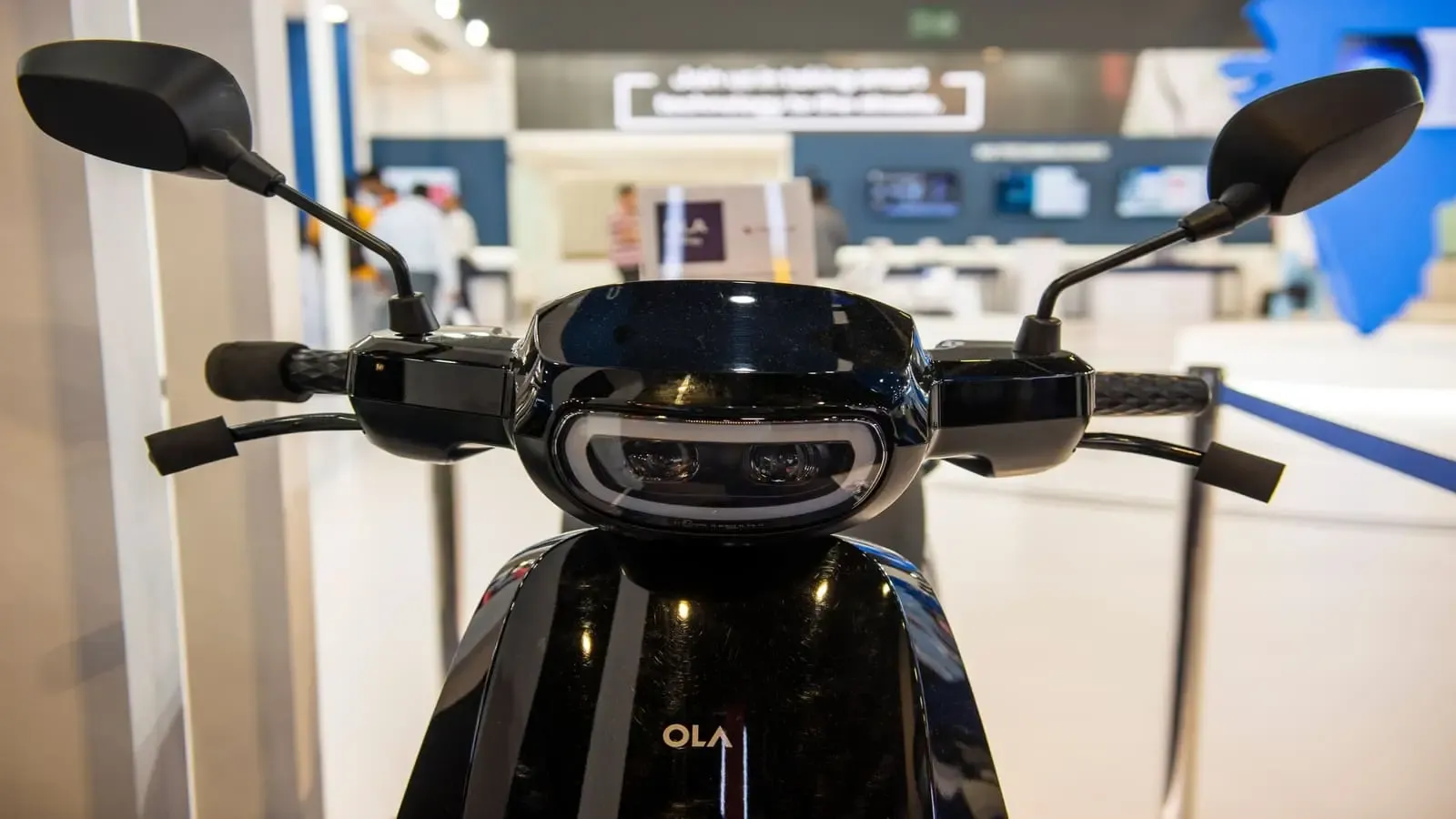
Ola also plans to reach about 450 stores by December and 700 by March 2027. The firm said its production had remained broadly flat for several months but was now increasing month-on-month. It expects to produce around 25,000 vehicles in December.
“Demand is ahead of supply, and we can sell every vehicle we produce. About 5,000 vehicles with paid orders in September had their deliveries delayed by a week, pushing them into October, because of charger unavailability. After the transition to dealers, we are now running a paid order backlog which we intend to quickly extinguish as we ramp production,” Ola said.
On Thursday, Ola Electric Mobility shares closed at ₹35.74 apiece on the National Stock Exchange, rising 3.8%. The earnings, however, came after market hours.
According to NSE data, as of November 12, 2026, Ola Electric has a total market capitalisation of ₹16,541.93 crore.
Related News

About The Author
Next Story

