Market News
Eicher Motors, Maruti, and M&M: How 2-wheelers, PVs, and CVs will perform in Q3 FY26; key monitorables to track

3 min read | Updated on January 09, 2026, 12:07 IST


SUMMARY
In Q3 FY26, passenger vehicle (PV) retail discounts remained largely flat on a QoQ, while inventory levels declined sequentially to about 3–4 weeks (wholesale versus registrations)
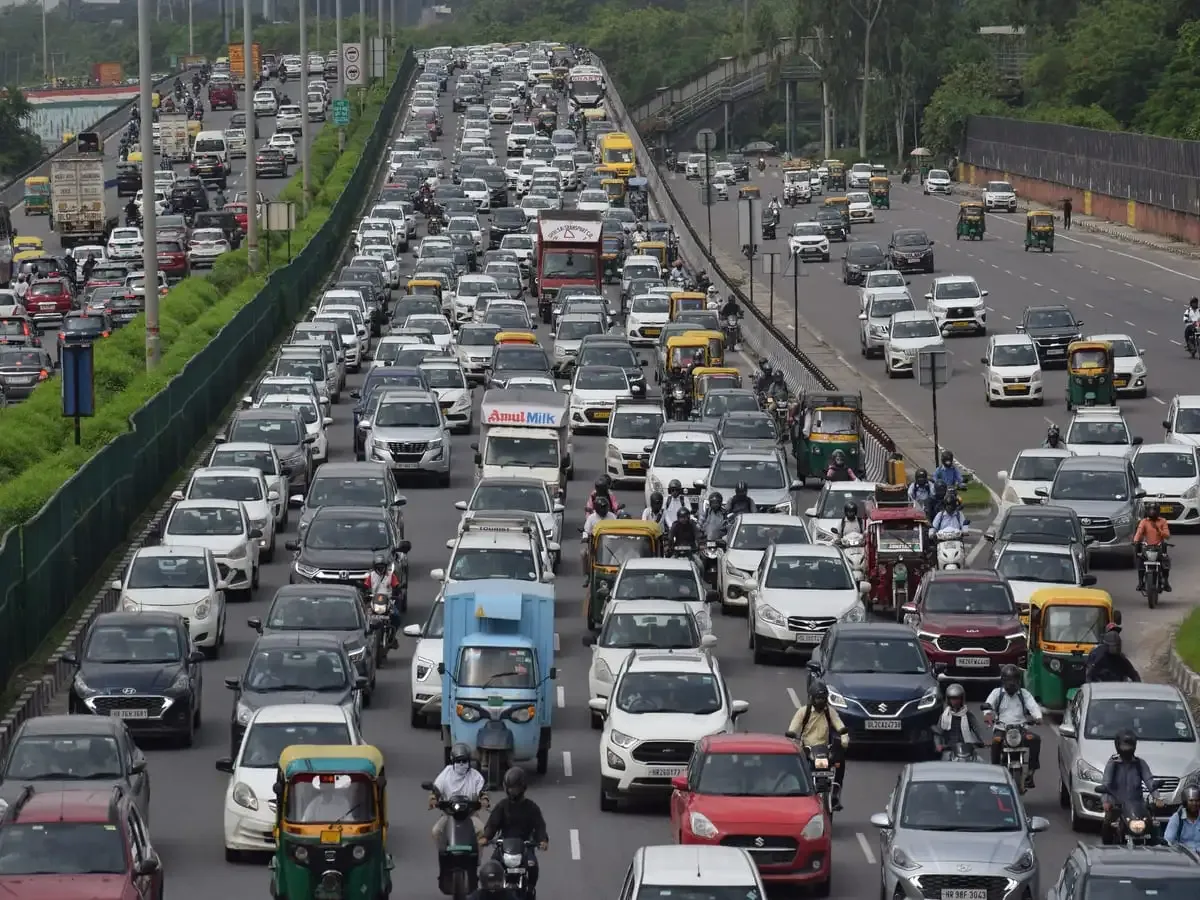
Retail sales of vehicles across categories in India in 2025 grew by 7.71% to 28,161,228 units as compared to 26,145,445 in 2024. Image: Shutterstock
“For 2W OEMs, margins are set to remain stable sequentially as we expect lower discounts to offset adverse commodity prices. Higher than estimated impact of commodity cost inflation is a downside risk to our 3Q margin estimates,” HSBC said in a report.
In Q3, wholesale volumes rose across most auto segments on a quarter-on-quarter (QoQ) basis, with two-wheelers (2Ws) up 2%, passenger vehicles (PVs) rising 17%, light commercial vehicles (LCVs) up 16%, medium and heavy commercial vehicles (MHCVs) up 16%, and tractors up 19%.
On a year-on-year (YoY) basis, these segments recorded growth of 15%, 16%, 19%, 18%, and 21%, respectively. In contrast, three-wheeler (3W) volumes declined 10% QoQ, although they were up 23% year-on-year (YoY). Hence, on a quarterly basis, analysts at HSBC Global Investment Research expect positive operating leverage across OEMs.
PVs in Q3
In Q3 FY26, passenger vehicle (PV) retail discounts remained largely flat on a quarter-on-quarter basis (QoQ), while inventory levels declined sequentially to about 3–4 weeks (wholesale versus registrations).
Two-wheelers
In contrast, in the two-wheeler segment, discounts eased QoQ during the festive season, and inventory levels were lower at around four weeks towards the end of the quarter.
Commercial vehicles
“CV discounts were largely flat q-o-q, while exit inventory was 2-3 weeks. Tractor discounts were largely stable while inventory decreased towards the end of the quarter amid strong demand momentum,” the report further added.
Retail auto sales in 2025
Retail sales of vehicles across categories in India in 2025 grew by 7.71% to 28,161,228 units as compared to 26,145,445 in 2024, with GST 2.0 helping overcome a subdued start to the year, the Federation of Automobile Dealers Associations (FADA) said on Tuesday.
PV retail sales stood at 4,475,309 units in 2025 as against 4,079,532 units in 2024, a growth of 9.7%, FADA said in a statement. Similarly, two-wheeler sales also grew by 7.24% to 20,295,650 units last year as compared to 18,924,815 units in 2024.
In 2025, three-wheeler retail sales were at 1,309,953 units as compared to 1,221,886 units in 2024, up 7.21%. Commercial vehicle retail also witnessed a growth of 6.71% at 1,009,654 units in 2025 as against 946,190 units in 2024.
Commenting on the performance, FADA President CS Vigneshwar said 2025 was a tale of two halves—January to August remained subdued despite supportive macro cues such as direct-tax relief in the Union Budget and RBI's cumulative rate easing through 2025.
Auto sector outlook
ICRA Ratings, in its outlook for the auto sector, said that the Indian automotive industry is currently at a crossroads amidst changing consumer preferences, technological advancements and a focus on sustainability.
The recently concluded festive season has reinforced the strong consumption base of the country, supported by favourable rural sentiments following good monsoons and firm crop prices, positive effects of the GST overhaul and interest rate cuts.
The demand sentiments are expected to remain stable in the coming year as well, with the expectation of stable economic activities.
"Nevertheless, factors like supply chain-related headwinds, softened global auto demand and higher US tariffs on exports from India are critical to monitor," said Srikumar Krishnamurthy, Senior Vice President & Co-Group Head, Corporate Ratings, ICRA Limited.
Related News


About The Author
Next Story