Market News
Axis Bank Q1 results: Technical setup, NIM outlook, loan growth and options strategy
.png)
4 min read | Updated on July 17, 2025, 11:15 IST


SUMMARY
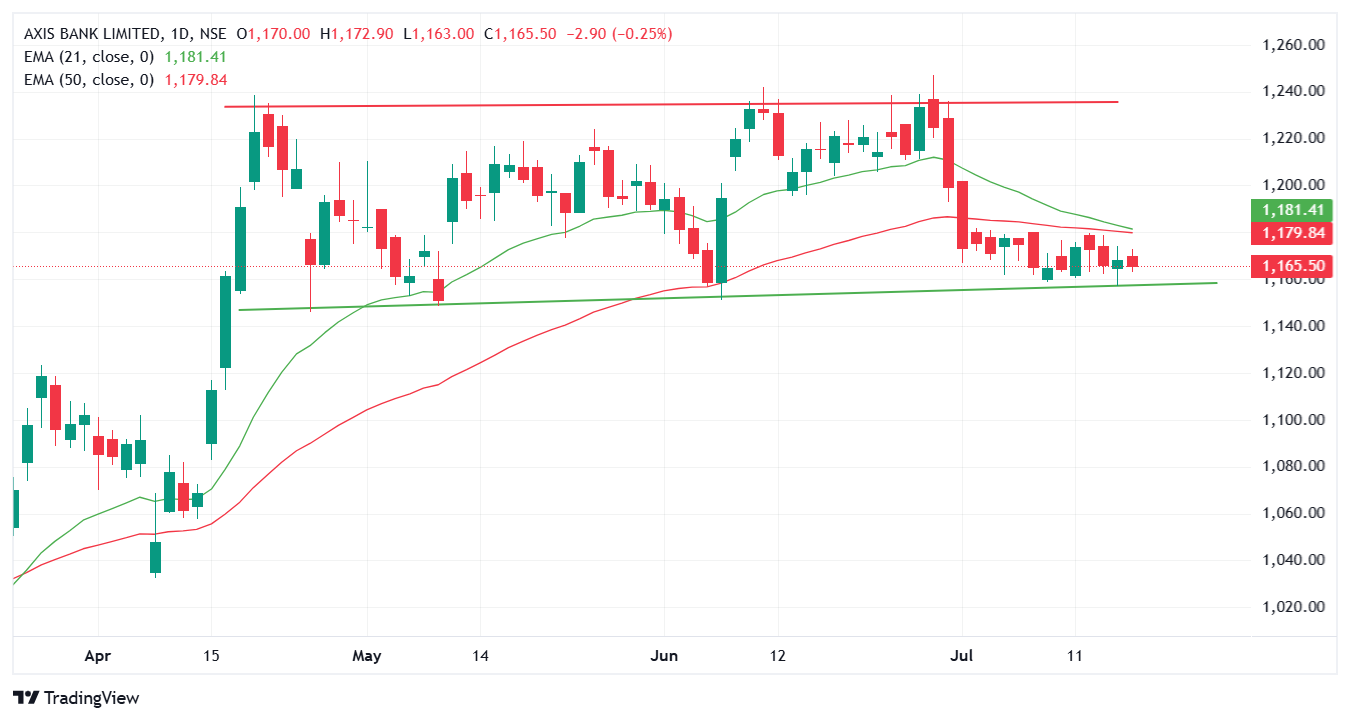
Ahead of its Q1 results, the options market is pricing in a ±4.3% move by the July 31 expiry. On the charts, Axis Bank remains rangebound between ₹1,150 and ₹1,180. A breakout on either side of this range could trigger a decisive directional move.
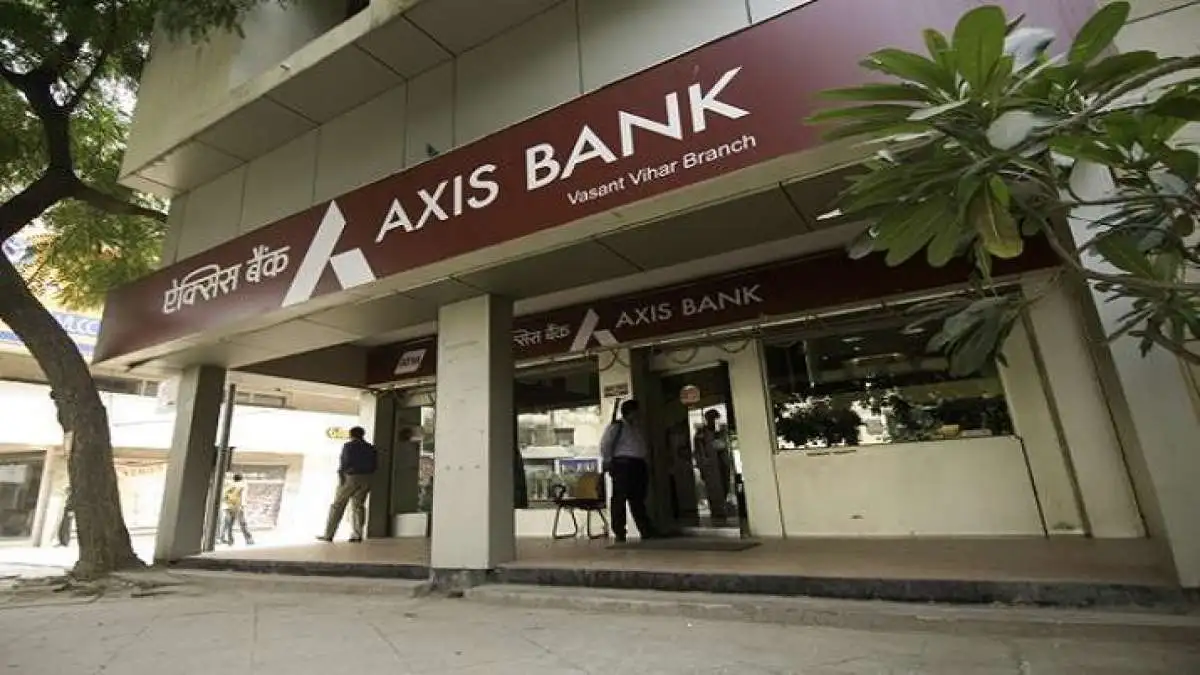
Axis Bank shares in focus as the private lender will announce its Q1FY26 earnings today.
The private sector lender Axis Bank will announce its results for the June quarter on 17 July, marking the start of the earnings season for the banking sector.
According to experts, Axis Bank is expected to report low-single-digit growth in standalone net profit. Its net profit could rise by 3-5% on a yearly basis, ranging between ₹6,310 crore and ₹6,400 crore. Lower-than-expected profitability is mainly due to tepid growth in the loan book and higher provisions. Axis Bank reported a standalone net profit of ₹6,035 crore in the June quarter of FY25, while it stood at ₹7,118 crore in the previous quarter.
Net interest income (NII) of the bank is expected to increase by 1-2% YoY to ₹13,550 to ₹13,650 crore. It reported a NII of ₹13,448 crore in the same quarter last year, while it stood at ₹13,810 crore in Q4FY25.
Investors will be tracking key performance indicators such as net interest margin, growth in loan disbursements, and gross and net non-performing assets (NPAs). They will also be paying close attention to management commentary on the business outlook, particularly in light of the recent RBI repo rate cuts.
Ahead of the Q1 result announcement, Axis Bank shares ended the Wednesday’s session flat at ₹1,165. So far this year, they have delivered over 8.7% return to investors.
Technical view
Options outlook
Meanwhile, Axis Bank's at-the-money (ATM) strike is 1,170, with both call and put options priced at ₹50. This indicates an expected price movement of ±4.3% before 31 July expiry. In order to make more informed trading decisions, let's examine how Axis Bank's share price has behaved in response to previous earnings announcements.
Options strategy for Axis Bank
Based on options data suggesting a potential price movement of ±4.3%, traders have the opportunity to engage in either long or short volatility strategies.
The Long Straddle strategy is appropriate for those looking to capitalise on the sharp price movement in Axis Bank. This involves buying an at-the-money (ATM) call and put option with the same strike price and expiry date. The strategy aims to generate a profit if the price moves by more than ±4.3% in either direction.
Conversely, the Short Straddle strategy is suitable for scenarios where volatility is expected to fall. In this approach, a trader would sell both an ATM call and put option with the same strike price and expiry, implying that the price of Axis Bank will remain within a range of ±4.3% after the earnings release.
Meanwhile, traders who anticipate Axis Bank to break the range of ₹1,180 and ₹1,150 or the trendlines on a closing basis can consider a Bull Call Spread or a Bear Put spread strategies.
Disclaimer Derivatives trading must be done only by traders who fully understand the risks associated with them and strictly apply risk mechanisms like stop-losses. The information is only for educational purposes. We do not recommend any particular stock, securities and strategies for trading. The stock names mentioned in this article are purely for showing how to do analysis. Take your own decision before investing.

About The Author
Next Story