Market News
Why do higher oil prices weigh down on NIFTY50 returns? Explained

6 min read | Updated on March 13, 2026, 18:10 IST


SUMMARY
Global crude oil prices and rising tensions from the US-Iran conflict are hurting investor sentiment, dragging down returns of the NIFTY50 in the domestic market. For an import-dependent country like India, the natural gas and crude oil import crisis emerging due to the raging West Asia conflict has started to weigh down on the blue-chip stocks. Here's what investors should know about how oil prices weigh down stock returns.
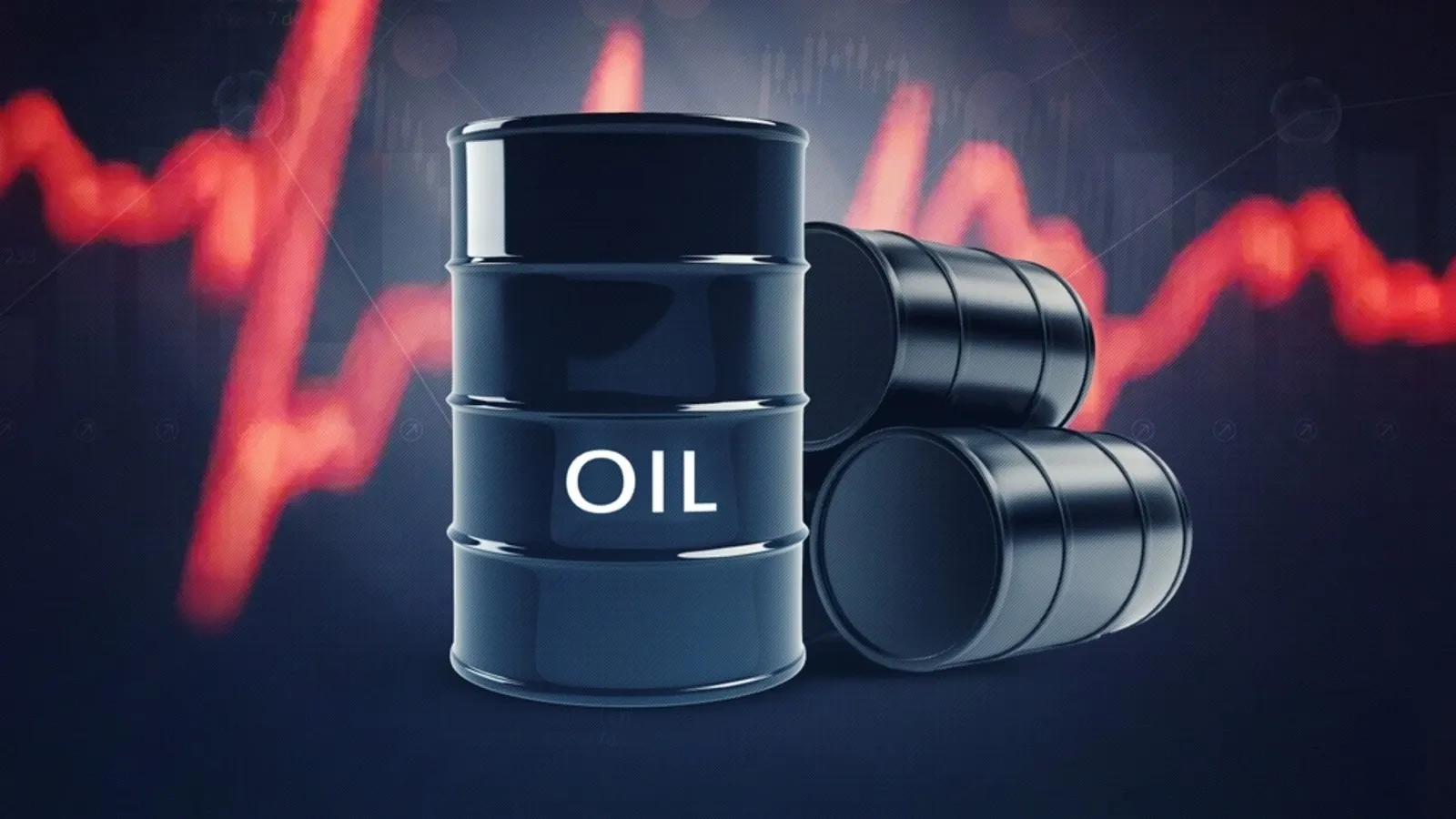
Crude oil prices hit a fresh record high of $119.50 per bbl this week, surging nearly 65% since the beginning of the conflict over the raging tensions of crude oil supply in the market.
Skyrocketing global crude oil prices and rising tensions from the US-Iran conflict are hurting investor sentiment, dragging down returns of the NIFTY50 in the domestic stock market. These factors are closely linked and are putting pressure on equities.
As India is an import-dependent country for crude oil and other petroleum products like natural gas, the import crisis emerging due to the raging West Asia conflict has started to weigh down on the benchmark companies.
The increased costs to import commodities through an alternative route avoiding the Strait of Hormuz are likely to affect the corporate earnings of the Indian companies, including the blue-chip companies that are part of the benchmark NIFTY50 index.
Sectors like oil and gas, paints, aviation, tyres, cement, etc., are set to face the harder edge of the rising costs, as their input expenses will inflate due to the heavy use of petroleum products in the manufacturing processes.
India’s import-inflation factor
Ratings agency ICRA data suggest that India imports nearly 20% of its total imports from the West Asian countries, which include Saudi Arabia, the United Arab Emirates (UAE), Kuwait, Qatar, Iraq, Bahrain, and Oman. While the total exports from the country to the region are around 14%.
As the cost of imports rises due to the conflicts, India’s current account deficit (CAD) is expected to widen, with total imports rising more than the cumulative total exports from the nation.
The Reserve Bank of India (RBI) data highlighted that the CAD for the October to December (Q3) of the financial year ending 2025-26 widened due to the higher merchandise trade deficit in the economy.
India’s CAD for the third quarter was at $13.3 billion, or 1.3% of the nation’s GDP, compared year-on-year (YoY) with $11.3 billion, or 1.1% of GDP.
“As per ICRA’s analysis, a $10/bbl increase in the average price of crude oil for the year (vis-à-vis the baseline estimate) would raise the country’s CAD by 30-40 bps,” according to a report from the ratings agency ICRA.
This, in turn, is likely to have an effect on the overall retail inflation rate in India, which rose to 3.21% in February 2026, compared to 2.74% in January 2026, driven up by the rise in food prices in India.
How much has NIFTY50 lost since the US-Iran conflict?
Data collected from the NSE website showed that the benchmark NIFTY50 index has lost more than 2,000 points since the United States, along with Israel, launched their targeted attacks against Iran using long-range weaponry and ground forces in an effort to change the regime of Supreme Leader Ali Khamenei.
The NIFTY50 index, which closed lower at 25,178.65 points after the trading session on February 27, has since then been on a downward trajectory with a brief relief in the middle over US President Donald Trump’s signal of the conflict likely to end ‘very soon’.
As of Friday, March 13, 2026, which marks two weeks since the conflict between the United States and Iran started in West Asia, the benchmark NIFTY index has lost more than 8%. The NIFTY50 index closed 2.06% lower at 23,151.10 points, compared to 23,639.15 points at the previous stock market session.
Although the NIFTY50 has given stock market investors more than 54% returns in the last five years and over 34% gains in the last three years, the index has lost 11.46% on a year-to-date (YTD) basis in 2026.
The NIFTY50 has lost more than 9.11% in one month and is trading 5.31% lower in the last five market sessions on the Indian stock market, according to the official data.
Oil prices' movement over last two weeks
On Friday, February 27, 2026, Brent crude oil prices were at $72.48 per barrel (bbl), which surged more than 13% to hit $82.37 per bbl during the trading session on Monday, March 2, 2026. US President Trump carried out the attacks over the weekend, which had a delayed impact on the commodity prices after the opening bell on Monday.
Over the course of the first week of the US-Iran conflict, the crude oil prices hit a high of $94.64 per barrel as of March 6, rising over 30% due to the tensions looming over the West Asia region amid the frequent attacks from either side.
However, on Monday, March 9, the crude oil prices hit a fresh record high of $119.50 per bbl, surging nearly 65% since the beginning of the conflict over the raging tensions of crude oil supply in the market as Iran exercised its control over the key maritime trading route of the Strait of Hormuz.
After hitting a record high, the oil prices cooled down on the backdrop of US President Donald Trump’s signal that the conflict would potentially end soon and potential talks of the International Energy Agency (IEA) releasing oil reserves to cater to the raging demand.
The elevated yet cool-down period lasted from March 10 to 11, when the oil prices dropped as low as $81.16 per barrel, according to Investing.com data. What appeared to be the beginning of the end of the US-Iran conflict soon turned around as reports emerged of Iranian boats striking the civilian trade ships, which again fuelled the crude oil prices.
Brent crude hit an intraday high of $102.73 per bbl on Friday, March 13, after the newly elected Iran’s Supreme Leader, Mojtaba Khamenei, made remarks on how the key trading passage, the Strait of Hormuz, should remain closed in an effort to exercise pressure amid a global energy crisis.
The Strait of Hormuz remains the hot trigger for the financial markets around the world, as the key geopolitical chokepoint in maritime trade serves as one of the busiest trade routes for civilian shipping companies hauling cargo, crude oil, and natural gas, connecting the Western and Eastern Hemispheres with the West Asian Gulf nations.
Any further attacks or retaliation from either side of the conflict can potentially fuel severe volatility in the equity and commodity markets in India and around the world.
About The Author
Next Story