Business News
Why today’s AI falls short of true general intelligence: Google DeepMind CEO explains 'frozen model' limits

3 min read | Updated on February 18, 2026, 12:38 IST


SUMMARY
DeepMind CEO Demis Hassabis said current AI systems are not true general intelligence because they lack continual learning, long-term planning and consistency.
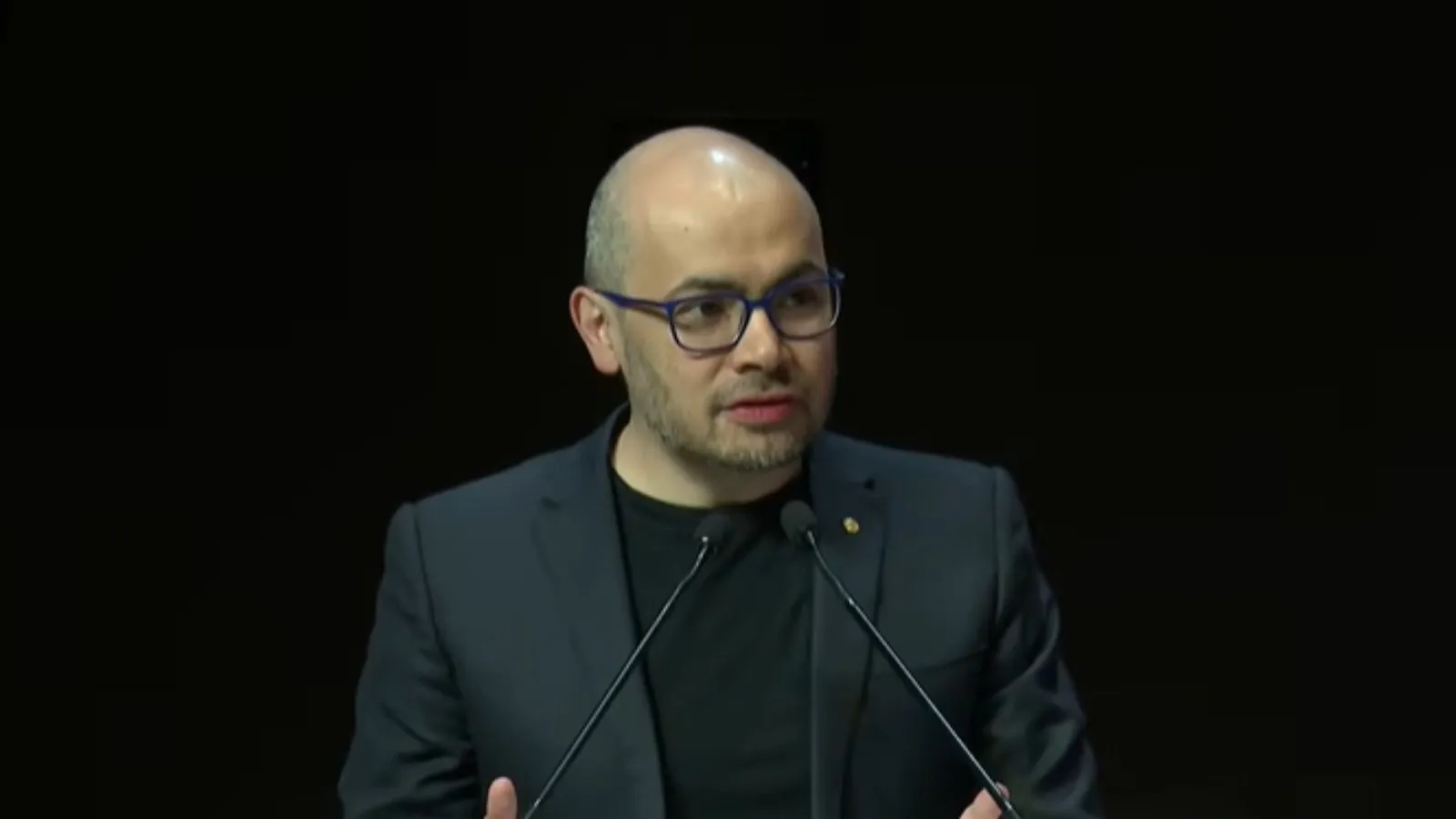
Google DeepMind CEO Demis Hassabis delivering keynote address at India AI Impact Summit on February 18, 2026.
Current artificial intelligence systems lack continual learning which stops them from being a true general intelligence, DeepMind Technologies CEO Demis Hassabis said on Wednesday.
Speaking at the India AI Impact Summit 2026, Hassabis said today’s AI models are largely “frozen” after training and are unable to learn continuously from real-world experiences once deployed.
“When I look at the current systems and what’s missing from them being a kind of general intelligence, I would say things like continual learning,” he said.
Hassabis explained that while existing systems undergo extensive pre-training and fine-tuning before release, they do not typically update themselves dynamically based on new contexts or personalised user needs.
“In today’s systems, we train them, we do various different types of training on them, and then they’re kind of frozen and then put out into the world. But what you’d like is for those systems to continually learn online from experience, to learn from the context they’re in, maybe personalised to the situation and the task that you have for them — and today’s systems don’t do that,” he said.
Hassabis also highlighted limitations in long-term planning capabilities.
“They can plan over the short term, but over the longer term, in the way that we plan over years, they don’t really have that capability at the moment,” he noted.
Another major concern, according to him, is what he described as “consistency”, or the lack of it.
“So today’s systems are kind of like jagged intelligences. They’re very good at certain things, but they’re very poor at other things, including sometimes the same things,” Hassabis said.
Illustrating the point, he said AI systems have demonstrated the ability to solve extremely complex mathematical problems, yet can falter on relatively simple arithmetic if questions are framed differently.
“Today’s systems can get gold medals in the International Maths Olympiad, really hard problems, but sometimes can still make mistakes on elementary maths if you pose the question in a certain way. A true general intelligence system shouldn’t have that kind of jaggedness,” he added.
Hassabis said the world is at a "threshold moment", with Artificial General Intelligence (AGI) potentially on the horizon within the next five to eight years, making the the event in New Delhi particularly timely as more autonomous and agentic AI systems begin to emerge.
"My message is one of, I would say, cautious optimism. So I think we're on the cusp of an absolutely incredible transformation that's going to bring incredible benefits in science and medicine specifically, is what I'm passionate about, and I can see revolutionising the way we deal with human health," he said.
Hassabis noted many amazing companies, tools and products are building on top of AI systems.
"But then also, I would just add a note of caution, which is, I think we will solve these technical issues given enough time and enough brain power on it. I believe in human ingenuity, and if the best minds work towards that, I think it will solve the technical risks," he said.
He added that the effort must be undertaken internationally on societal challenges posed by AI, something Hassabis said could ultimately prove more complex than the technical aspects.
"...but we also need to do this internationally, so the societal challenges of that may actually end up being the harder problem than the technical ones," he said.
About The Author
Next Story