Business News
When will India-Oman free trade agreement be implemented? Piyush Goyal indicates timeline
.png)
4 min read | Updated on December 19, 2025, 18:01 IST


SUMMARY
The free trade agreement provides near-complete duty-free access for Indian exports to Oman, covering over 98% of Omani tariff lines and benefiting key labour-intensive sectors such as textiles, gems and jewellery, pharmaceuticals, engineering goods and agriculture.
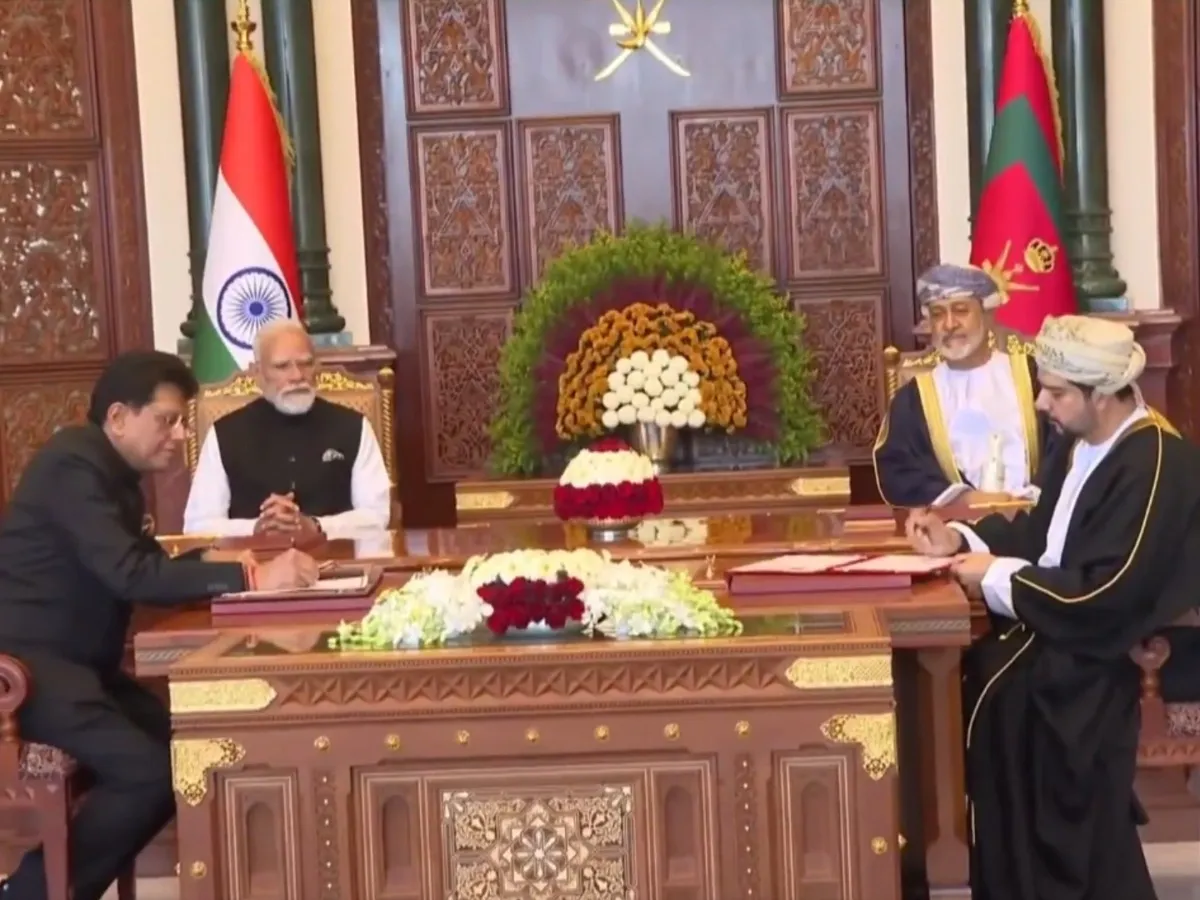
The Comprehensive Economic Partnership Agreement (CEPA) was signed in the presence of Prime Minister Narendra Modi, who is on a four-day, three-nation visit.
India and Oman will endeavour to operationalise the recently signed free trade agreement within the next three months, Commerce and Industry Minister Piyush Goyal said on Friday.
India and Oman signed the Comprehensive Economic Partnership Agreement (CEPA) on December 18.
“The Oman minister and I have discussed that this agreement, we will try to operationalise within three months,” Goyal told reporters.
Under the pact, Oman has offered zero-duty access on over 98% of its tariff lines, covering 99.38% of India’s exports to the Gulf nation.
All major labour-intensive sectors, including gems and jewellery, textiles, leather, footwear, sports goods, plastics, furniture, agricultural products, engineering goods, pharmaceuticals, medical devices and automobiles, will attract nil duty.
Currently, these products face import duties ranging from 5 to 100% in Oman.
On the other hand, India has offered duty concessions on 77.79% of its total tariff lines, covering 94.81% of its imports from Oman by value.
When asked about the areas where Indian businesses can invest in Oman, the minister said sectors like steel, energy, education, and healthcare hold huge potential.
"Those which require natural resources will be the ones (where Indian firms would like to invest). A large steel investment is coming up for producing green steel," he said.
He also pointed to opportunities in the energy sector, including conversion of energy into green hydrogen or green ammonia for exports, which could generate jobs and boost Indian exports.
"There is a huge amount of potential for processing of large volumes of marble...huge amounts of investment interests in education, healthcare...some people are also looking at battery manufacturing in Oman," Goyal said.
Goyal noted strong interest among Omani companies in collaborating with Indian firms.
"Already, we have received interest from an Omani dairy to have a joint venture with Amul," he said, adding that he has invited Omani firms and the Sovereign Wealth Fund to invest in India.
The CEPA was signed by Goyal and Oman’s Minister of Commerce, Industry and Investment Promotion Qais bin Mohammed Al Yousef in the presence of Prime Minister Narendra Modi and Sultan Haitham bin Tarik.
The agreement is expected to boost bilateral trade by reducing barriers, providing a stable policy framework and unlocking opportunities across sectors, leading to higher growth, job creation and increased investment flows.
This is Oman’s second free trade agreement with an individual country and the first in nearly two decades.
Under the pact, a wide range of Indian agricultural and processed food items such as natural honey, fresh eggs, cashew, potatoes, boneless meat and bakery products will get duty-free access to Oman.
Duties will also be removed on animal products like cheese, curd, milk and cream, frozen fish, butter, meat and yoghurt, as well as processed foods including bread, pastry, cakes, chocolate, sugar confectionery and mineral water.
Major export gains are expected for basmati and parboiled rice, bananas, potatoes, onions, soybean meal, sweet biscuits, cashew kernels, mixed condiments, butter, fish body oil, prawn and shrimp feed, frozen boneless bovine meat and fertilised eggs.
Zero-duty access for fresh eggs is expected to cement India’s 98.3% share in Oman’s egg imports, making it India’s largest export destination for the product.
The pact will mean cheaper imports of dates, with India allowing zero-duty access for 2,000 tonnes annually. India will also extend concessions to Oman’s traditional products Gum Arabica and frankincense.
At the same time, India has protected the interests of domestic farmers and MSMEs by excluding sensitive items from tariff concessions.
For certain sensitive products of export interest to Oman, India has offered tariff-rate quota-based liberalisation, under which duty concessions apply only up to a specified volume.
India-Oman bilateral trade stood at about USD 10.5 billion in 2024-25, with India’s exports at USD 4 billion and imports at USD 6.54 billion.
By signing up you agree to Upstox’s Terms & Conditions

About The Author
Next Story