Business News
What is ‘trade bazooka’? Europe’s potential move to counter Trump’s Greenland-linked tariffs
.png)
3 min read | Updated on January 19, 2026, 12:18 IST


SUMMARY
European leaders are considering invoking the European Union’s powerful Anti-Coercion Instrument (ACI), known informally as the “trade bazooka,” after US President Donald Trump threatened to impose sweeping tariffs unless Denmark agrees to the US acquisition of Greenland.
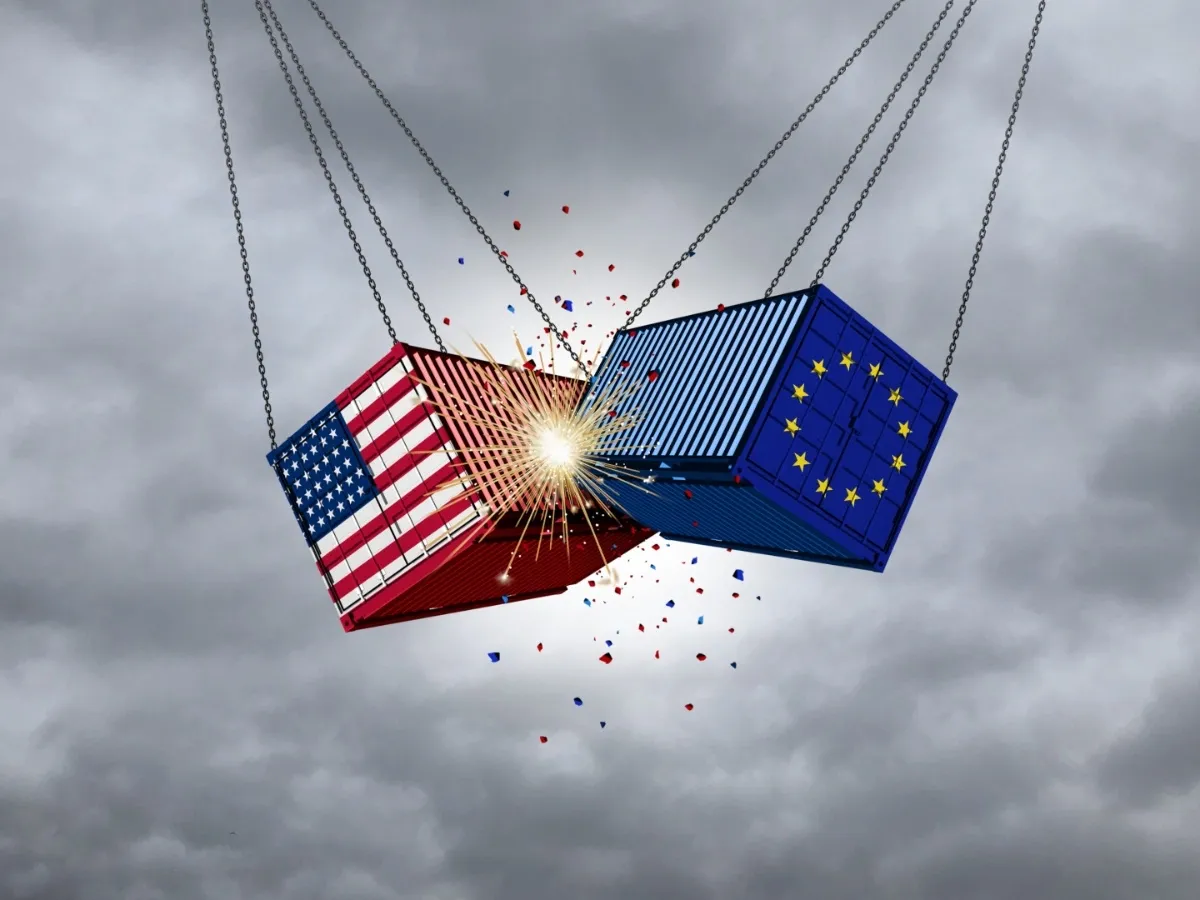
The ACI, adopted in 2023, allows the EU to formally assess economic coercion and, if dialogue fails, impose countermeasures.
European leaders are weighing a powerful and rarely used trade weapon after US President Donald Trump threatened sweeping tariffs on European allies unless Denmark agrees to the “complete and total purchase” of Greenland by the United States.
Trump announced that beginning February 1, 2026, the United States would impose a 10% tariff on goods from Denmark, Norway, Sweden, France, Germany, the United Kingdom, the Netherlands and Finland until a deal is reached to transfer Greenland to US ownership.
Writing on his Truth Social platform, he claimed Denmark had failed to address what he called the “Russian threat” to the Arctic island and said acquisition by the United States was inevitable.
The US President has also framed Greenland as strategically essential to US missile defense plans, particularly the proposed Golden Dome system — a next-generation shield against ballistic, cruise and hypersonic missile threats.
Trump’s remarks, coupled with his plan to impose 10% tariffs on a swath of European countries from February 1, 2026, have triggered a sharp response in Europe, including calls to activate the European Union’s so-called “trade bazooka.”
What is the EU’s ‘trade bazooka’?
The “trade bazooka” is the informal name for the Anti-Coercion Instrument (ACI), a regulation adopted by the European Union in 2023.
The ACI is designed to deter and counter economic coercion.
EU officials stress it is meant to stop coercion before retaliation becomes necessary. But if pressure persists, the instrument gives Brussels a legal pathway to respond.
How does the instrument work?
Under the regulation, the EU can first formally determine whether a third country’s actions amount to economic coercion. This decision is made by the EU Council, acting on a proposal from the European Commission.
If coercion is confirmed, the EU can seek dialogue and de-escalation. But if that fails, the ACI allows the bloc to deploy retaliatory measures, which may include restrictions on access to EU markets, tariffs or quotas on selected goods, limits on public procurement access, export controls or investment restrictions, and changes to rules of origin for certain products.
The instrument also provides a framework for seeking reparations for economic harm caused by coercive measures.
The regulation lays out indicative timelines to enhance predictability, effectiveness and deterrence.
It provides around four months for the Commission to examine alleged coercion, eight to ten weeks for EU governments to approve a formal determination, and up to six months for the Commission to design and adopt response measures.
British Prime Minister Keir Starmer said Greenland’s status was not open to coercion.
“Our position on Greenland is very clear — it is part of the Kingdom of Denmark, and its future is a matter for the Greenlanders and the Danes,” Starmer said in a statement from Downing Street.
He said that imposing tariffs on allies for pursuing NATO’s collective security was “completely wrong” and said Britain would raise the issue directly with Washington.
French President Emmanuel Macron called Trump’s tariff threat “unacceptable,” saying Europe “will not be swayed by any intimidation.”
Swedish Prime Minister Ulf Kristersson said European allies would not be “blackmailed,” while European Commission President Ursula von der Leyen warned that tariffs would undermine transatlantic relations and risk “a dangerous downward spiral.” She stressed that territorial integrity and sovereignty are core principles of international law.
In a joint statement, Denmark, Finland, France, Germany, the Netherlands, Norway, Sweden and the United Kingdom said they stood in “full solidarity” with Denmark and the people of Greenland. The countries said recent Arctic military exercises were defensive and posed no threat, and warned that tariff threats would damage NATO unity.
About The Author
Next Story