
Business News
US proposes 25% tariffs on Indian imports, offers 17% under trade deal; India rejects excess capacity charge

5 min read | Updated on November 26, 2026, 08:39 IST

SUMMARY
Under the proposed USTR tariffs, Indian imports face a 17% tariff if a trade deal is finalised, offering a calculated 1% edge over Cambodia, Bangladesh, Indonesia, Malaysia, and Thailand (18 per cent deal rate) and a three per cent edge over Vietnam and China (20% deal rate).
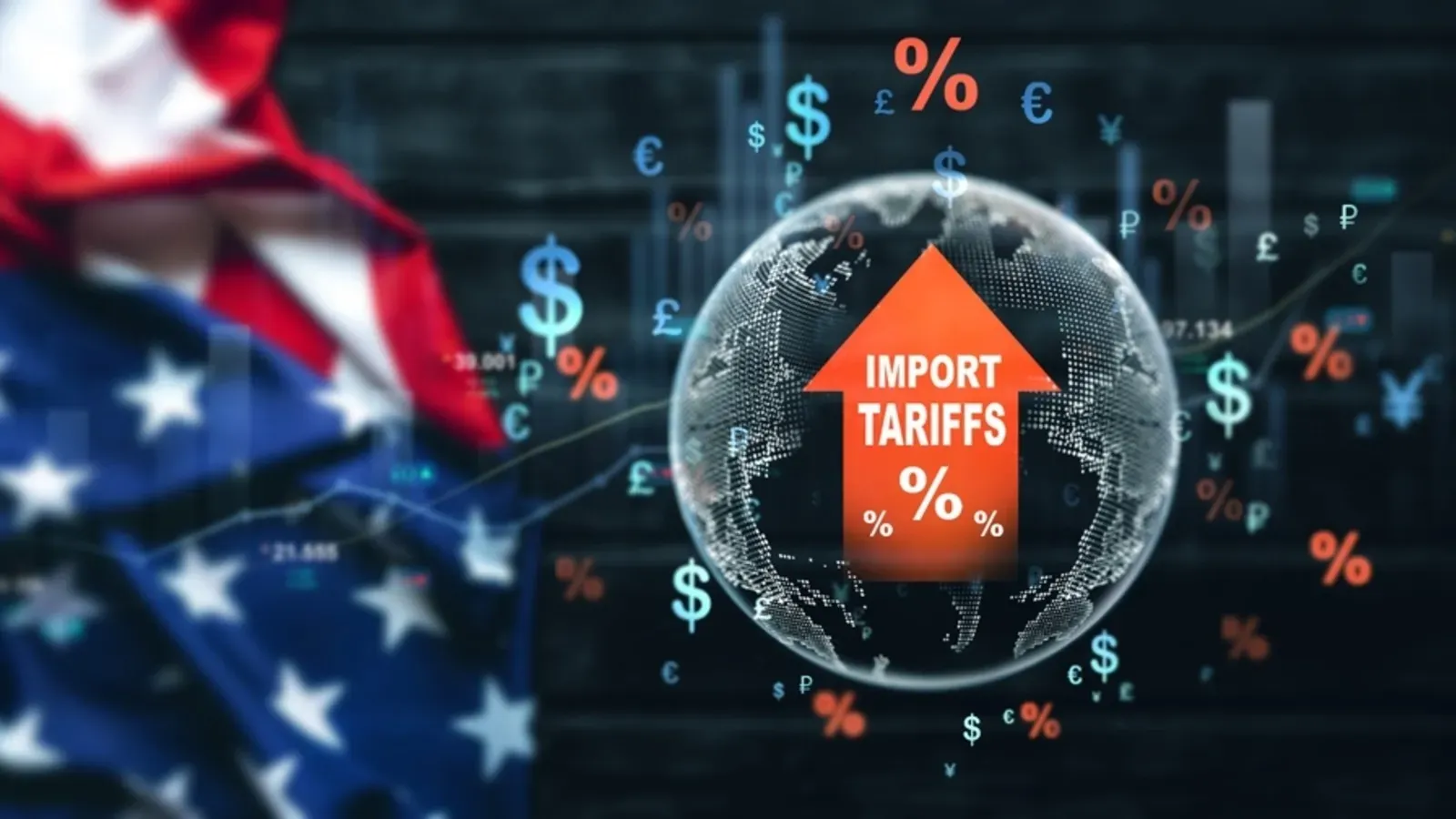
India and the US are negotiating an interim bilateral trade agreement after the framework they finalised in February went back to the discussion board. | Image: Shutterstock
The US on Wednesday proposed 25% tariffs on imports from India, with a provision to cap them at 17% if the two nations agree to a bilateral trade agreement, giving it a slight edge over Asian competitors.
The proposed tariffs followed investigations by the US Trade Representative into 16 economic jurisdictions – China, the European Union, Switzerland, Indonesia, Malaysia, Singapore, Cambodia, Korea, Vietnam, Taiwan, Bangladesh, Japan, Thailand, Norway, Mexico and India – relating to structural excess capacity and production in manufacturing sectors.
Under the proposed USTR tariffs, Indian imports face a 17% tariff if a trade deal is finalised, offering a calculated 1% edge over Cambodia, Bangladesh, Indonesia, Malaysia, and Thailand (18 per cent deal rate) and a three per cent edge over Vietnam and China (20% deal rate).
On Wednesday, the USTR unveiled tariff proposals targeting 14 economic jurisdictions with two distinct rates – a higher one proposed as part of the Sec 301 probe and a lower “deal rate” if the countries agree to a trade deal with the US.
The Trade Representative has not made determinations with respect to Mexico or Norway at this time.
“In effect, it’ll look more like a top-up. When it all nets out, it really will just top up a few percentage points,” Greer said.
India, in its negotiations with the US on the trade deal, has been insisting on a competitive advantage over its Asian rivals – a demand that Washington has addressed in the tariff proposals. However, it was not immediately clear whether the 1% point differential addresses the concerns flagged by India.
The EU, Japan, South Korea, Taiwan and Switzerland face 15% tariff rates, inclusive of standard import duties. Vietnam would face tariffs of 20% if the trade deal is finalised.
“For decades, many of our trading partners have adopted industrial strategies built on targeting manufacturing, wage and labour suppression, financial and other support, non-market economy inputs, and other market-distorting practices that tilt the trade balance in their favour while eroding America's manufacturing base,” Greer said.
The USTR has decided to schedule public hearings on its proposals on January 25 and sought written comments from interested persons by January 5 as part of the final regulatory requirements before the tariffs come into effect.
The USTR says the tariffs target what it calls “overcapacity” – excess industrial production, often supported by government subsidies, that allows cheaper goods to flood global markets and undercut US producers.
“India generates trade surpluses in sectors such as pharmaceuticals, steel, and ICT goods, revealing dependencies on Indian manufacturing in certain key sectors," the USTR said in its report on 'India's Acts, Policies, and Practices Relating to Structural Excess Capacity and Production in Manufacturing Sectors'.
The Office of the USTR has been analysing for several months whether 16 jurisdictions have policies that favour surplus production, a practice that drives down prices and harms US industry.
The investigation began last March, after the Supreme Court overturned the indiscriminate trade levies imposed by the Trump administration invoking the International Emergency Economic Powers Act (IEEPA).
After that reversal, the USTR opened two probes based on Article 301: one directed at 60 jurisdictions (about a hundred countries) for violating export regulations on forced labour; and the other against 16 jurisdictions for promoting surplus production.
India and the US are negotiating an interim bilateral trade agreement after the framework they finalised in February went back to the discussion board, with the Supreme Court striking down the IEEPA tariffs imposed last year.
India is seeking lower tariffs for its goods in the US market than its competitors such as Bangladesh, Vietnam and Cambodia.
India rejects excess capacity charge
The government said the country is committed to working closely with the US for an early conclusion of a bilateral trade deal, while rejecting Washington's allegation of having structural excess manufacturing capacity.
In a statement, the Commerce Ministry said that India has taken note of the Notice of Determination and Request for Comments issued by the United States Trade Representative (USTR) in the Section 301 Investigation concerning Acts, Policies, and Practices of 14 economies, including India, relating to Structural Excess Capacity and Production in Manufacturing Sectors. The notice is currently under examination.
"India engaged constructively throughout this investigation. In response to the Notice of Initiation and in subsequent proceedings, the Department of Commerce stated that India does not have structural excess capacity in any sector," the statement said.
It added that New Delhi and Washington are engaged in negotiations for a bilateral trade agreement, and it has been India's position that any trade-related concerns should be addressed within the framework of these negotiations.
"Government of India remains committed to working closely with the United States towards the early conclusion of the India-US Bilateral Trade Agreement, as announced on 2nd February 2026, and in accordance with the Joint Statement issued on 7th February 2026," it said.
Related News
About The Author
Next Story

