Business News
US judge rejects business lobby challenge to Trump’s $100,000 H-1B visa fee
.png)
3 min read | Updated on December 24, 2025, 09:45 IST


SUMMARY
A US federal judge has rejected a legal challenge by the US Chamber of Commerce against President Donald Trump’s decision to impose a $100,000 fee on new H-1B visas.
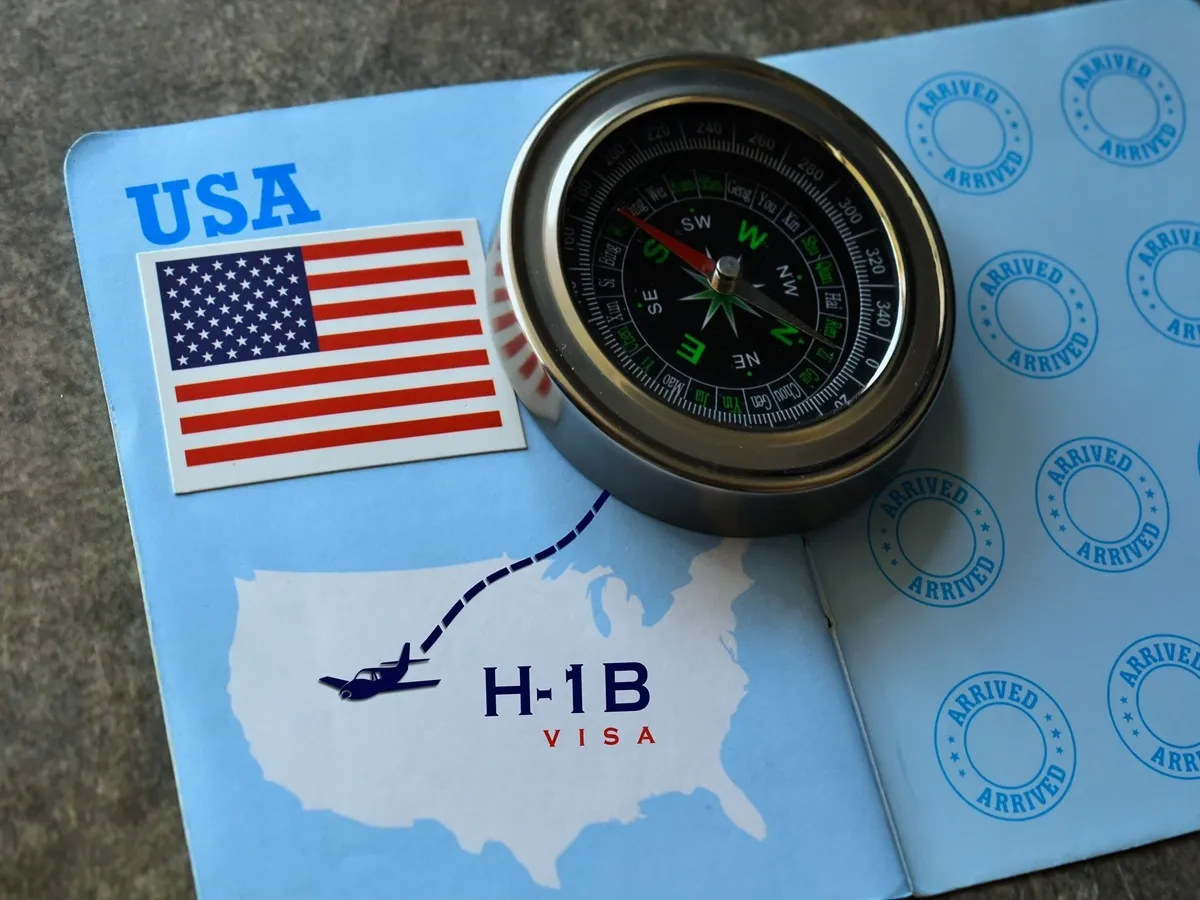
Indians account for nearly 71% of all H-1B approvals, making them the largest affected group. Image: Shutterstock
A federal judge in the United States on Tuesday rejected a legal challenge by the country’s largest business lobby against President Donald Trump’s decision to impose a $100,000 fee on new H-1B visas for highly skilled foreign workers.
US District Judge Beryl Howell dismissed arguments by the US Chamber of Commerce that the steep fee conflicts with federal immigration law and would force companies, hospitals and other employers to cut jobs and services.
“The parties’ vigorous debate over the ultimate wisdom of this political judgment is not within the province of the courts,” Howell wrote in her ruling. “So long as the actions dictated by the policy decision and articulated in the Proclamation fit within the confines of the law, the Proclamation must be upheld.”
Howell, an appointee of former Democratic president Barack Obama, also rejected claims that the fee unlawfully rewrites the H-1B visa programme established by Congress.
The H-1B programme allows US employers to hire foreign professionals in speciality occupations such as technology, engineering and healthcare. It provides for 65,000 visas annually, along with an additional 20,000 visas for applicants holding advanced degrees, generally valid for three to six years.
In September, Trump signed a proclamation sharply raising H-1B visa fees and tightening entry norms for high-skilled foreign workers. Earlier, employers typically paid between USD 2,000 and USD 5,000 in fees, depending on various factors.
The Chamber, in its lawsuit, argued that the sharp hike would force companies to choose between dramatically higher labour costs and hiring fewer skilled foreign workers. Separate lawsuits have also been filed by a group of Democratic-led states and a coalition of employers, non-profits and religious organisations.
H-1B lottery system changed
The ruling came on the same day the Trump administration finalised sweeping changes to how the coveted H-1B visas are allocated, replacing the long-standing random lottery with a wage-based system favouring higher-paid and higher-skilled workers.
The Department of Homeland Security said the new rule would introduce a weighted selection process, giving employers offering higher salaries a better chance of securing visas. The changes will take effect on February 27, 2026, ahead of the fiscal year 2027 H-1B cap registration season.
Under the final rule, when applications exceed the annual cap, the US Citizenship and Immigration Services will conduct selections based largely on wage levels linked to a job’s occupation and location. Jobs paid at the highest government-defined wage level will receive four entries in the selection pool, mid-tier wages two or three entries, and the lowest-paid qualifying jobs just one.
While each foreign worker will still count only once toward the annual cap, higher-paying positions will have a significantly greater chance of being selected.
“The existing random selection process was exploited and abused by US employers who were primarily seeking to import foreign workers at lower wages than they would pay American workers,” USCIS spokesperson Matthew Tragesser said. “The new weighted selection will better serve Congress’ intent for the H-1B program and strengthen America’s competitiveness.”
Related News
About The Author
Next Story