Business News
Severe air pollution, fog disrupt flight schedules in Delhi; IndiGo, Air India, SpiceJet alert passengers
.png)
3 min read | Updated on December 15, 2025, 08:41 IST


SUMMARY
Flight operations at Delhi’s Indira Gandhi International Airport were disrupted on Monday due to dense fog and low visibility, prompting travel advisories from IndiGo, SpiceJet and Air India.
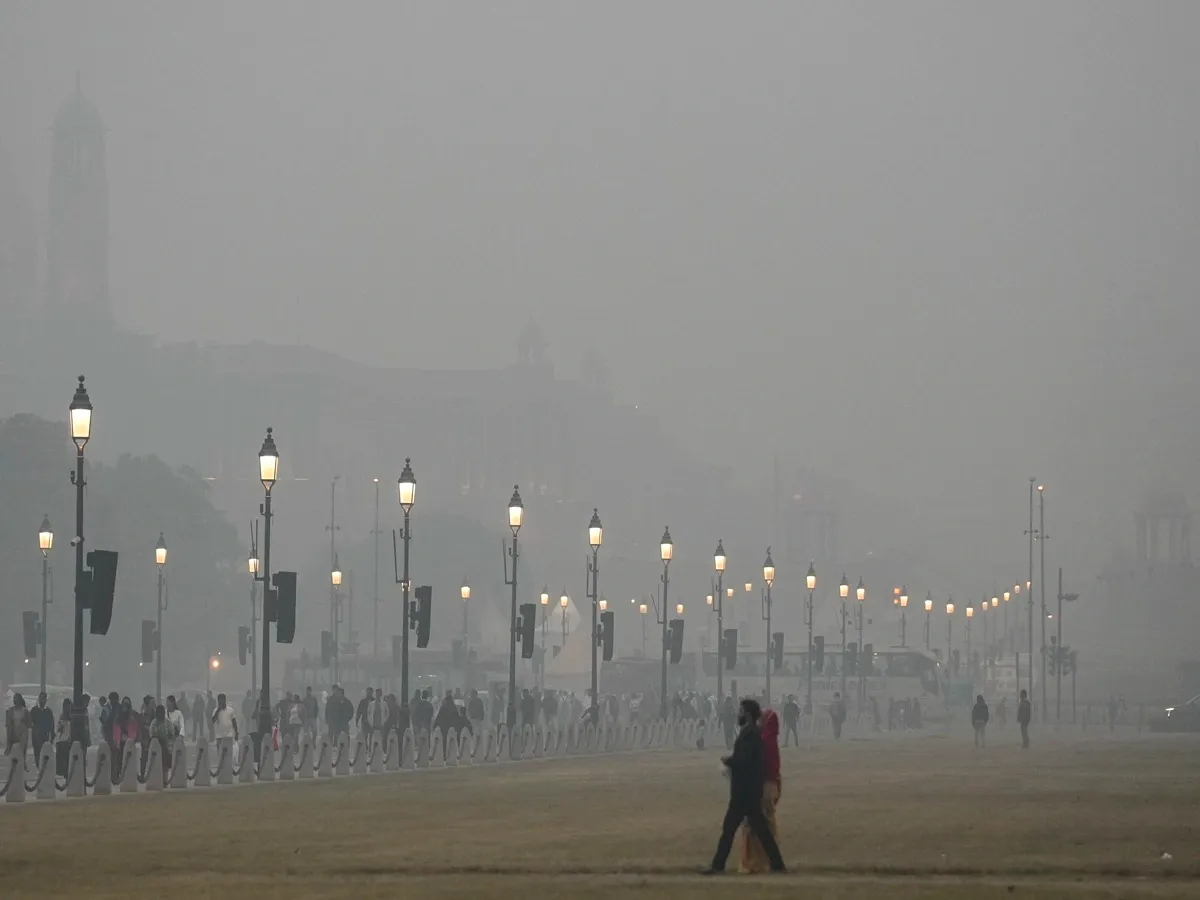
New Delhi: Visitors take a stroll as smog engulfs the Raisina Hills as seen from the Kartavya Path Lawns amid low visibility, in New Delhi, Saturday, Dec. 13, 2025. Image: PTI
Flight operations at Delhi airport were impacted on Monday due to low visibility and dense fog, prompting airlines including IndiGo, SpiceJet and Air India to issue travel advisories, as the national capital reeled under severe air pollution and smoggy conditions.
IndiGo said Delhi was witnessing its first spell of winter fog, leading to reduced visibility around the airport and longer departure times for some flights. The airline advised passengers to allow extra time to reach the airport, warning that road traffic could also be slower due to fog.
In a subsequent update, IndiGo said low visibility and fog over Delhi would impact flight schedules and urged passengers to check their flight status through its website or app.
“Low visibility and fog over #Delhi will impact flight schedules. We're keeping a close watch on the weather and doing our best to get you where you need to be, safely and smoothly,” it said.
SpiceJet, in a post on X, said poor visibility in Delhi could affect all departures and arrivals, along with their consequential flights, and asked passengers to regularly check their flight status.
Air India also issued a travel advisory, saying dense fog and poor visibility were impacting flight operations in Delhi and parts of northern India, and requested passengers to verify their flight status before heading to the airport.
Delhi's 'severe' AQI
The weather-related disruptions come as Delhi recorded its most polluted day this winter on Sunday, with the Air Quality Index (AQI) climbing to 461, the second-worst December air quality day on record.
According to data from the Central Pollution Control Board (CPCB), the Wazirpur air quality monitoring station touched the maximum AQI value of 500 during the day, beyond which data is not registered. By 4 pm, 38 of Delhi’s 39 active monitoring stations reported ‘severe’ air quality levels, with only Shadipur remaining in the ‘very poor’ category.
Rohini also recorded an AQI of 500, while Ashok Vihar, Jahangirpuri and Mundka logged readings of 499.
Dense smog enveloped the city, with the AQI rising from 432 a day earlier to set a record since the AQI monitoring system was introduced in April 2015. The only instance of higher pollution in December was on December 21, 2017, when the average AQI stood at 469.
While wind speeds are expected to increase after noon on Monday, forecasts indicate that any improvement in air quality is likely to be gradual.
As per CPCB standards, an AQI between 401 and 500 is categorised as ‘severe’.
The Commission for Air Quality Management (CAQM) on Saturday invoked the strictest curbs under Stage IV of the Graded Response Action Plan (GRAP), including a ban on all construction and demolition activities across Delhi-NCR.
Earlier on Saturday, the GRAP Sub-Committee had enforced Stage III measures across the entire NCR with immediate effect as pollution levels continued to worsen amid unfavourable meteorological conditions.
By signing up you agree to Upstox’s Terms & Conditions

About The Author
Next Story