Business News
Sabka Bima Sabki Raksha Bill 2025 tabled in Lok Sabha: What's new in insurance amendment bill and what it leaves out
.png)
5 min read | Updated on December 16, 2025, 14:19 IST


SUMMARY
The government has tabled the Sabka Bima Sabki Raksha (Amendment of Insurance Laws) Bill, 2025 in the Lok Sabha, proposing to allow up to 100% foreign direct investment in the insurance sector as part of its goal of “Insurance for All by 2047”.
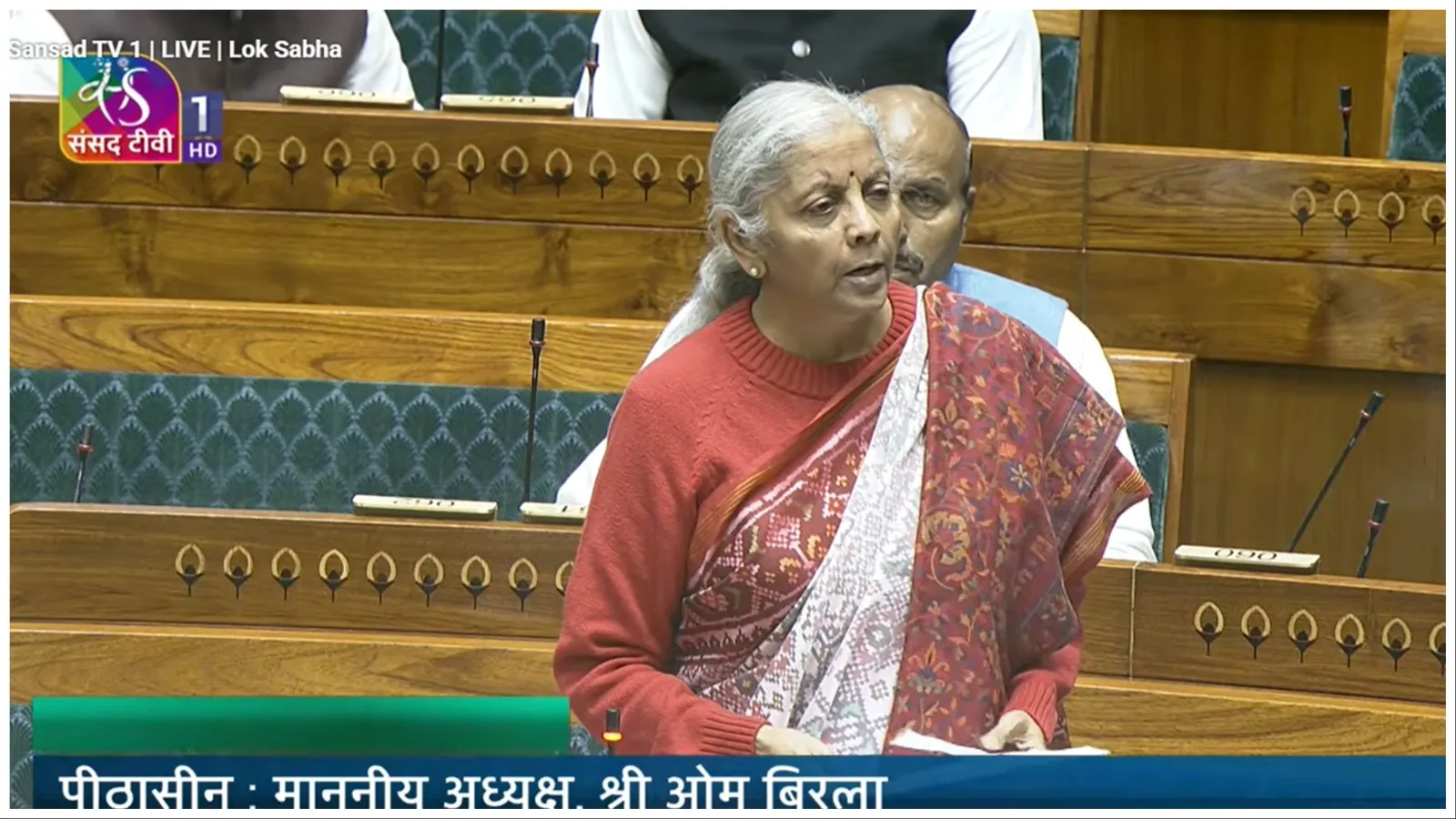
Union Finance Minister Nirmala Sitharaman tabled Sabka Bima Sabki Raksha Bill 2025 in Lok Sabha on Tuesday, December 16, 2025. (Image: screengrab/Sansad TV)
In a step toward the government's goal of “Insurance for All by 2047”, Union Finance Minister Nirmala Sitharaman on Tuesday tabled much-awaited legislation in Lok Sabha that would allow up to 100% FDI in the insurance sector.
The Sabka Bima Sabki Raksha (Amendment of Insurance Laws) Bill, 2025, was cleared by the Union cabinet last week.
What does the Bill propose?
The bill seeks to amend the Insurance Act, 1938, the Life Insurance Corporation Act, 1956, and the Insurance Regulatory and Development Authority Act, 1999.
Its centrepiece is a proposal to raise the foreign direct investment (FDI) cap in insurance companies from 74% to 100%, allowing full foreign ownership.
India currently has about 70 insurers, compared with nearly 10,000 globally, and the government hopes the change will draw in global players and long-term capital.
The bill, however, mandates that at least one top executive (the chairperson, managing director or chief executive) must be an Indian citizen, even if the insurer is fully foreign-owned.
It also paves the way for the merger of a non-insurance company with an insurance company.
Since the sector was first opened to foreign investment, India has attracted about ₹82,000 crore in FDI into insurance.
"Opening up insurance to 100% foreign investment comes at the right time, especially with the goal of insurance for all by 2047. The sector needs long-term capital and global experience to reach deeper into under-insured segments and handle more complex risks," said Saharsha Keshkar, Head of Strategy and International Business, EDME Insurance Brokers Ltd.
"Done right, this move can help insurers build better products, improve service quality, and scale distribution beyond the metros. For customers, it should translate into wider choice and more reliable protection, while keeping strong regulation firmly in place," Keshkar added.
Hanut Mehta, CEO and co-founder at BimaPay Finsure, said the introduction of the Insurance Amendment Bill is a structural step that can meaningfully reshape India’s insurance ecosystem.
"Higher foreign participation is likely to bring in long-term capital, global underwriting expertise, and improved product innovation, all of which can support deeper insurance penetration across segments," Mehta said.
"As insurers gain access to larger balance sheets and global best practices, we can expect greater product diversification, higher ticket-size policies, and increased focus on corporate and MSME insurance. This naturally raises the need for flexible premium payment solutions, especially for businesses that may want comprehensive coverage without facing upfront cash flow pressure," he added.
Why is the govt pushing this now?
Sitharaman announced the plan to lift the FDI cap in her annual budget earlier this year as part of what she called “new-generation” financial sector reforms.
“This enhanced limit will be available for those companies which invest the entire premium in India. The current guardrails and conditionalities associated with foreign investment will be reviewed and simplified,” the minister had said.
The government argues that deeper foreign participation will help improve insurance penetration, which remains low in India compared with global averages, and bring in technology, underwriting expertise and risk-management practices needed to protect households and businesses.
What else is in the Bill?
The bill proposes cutting the minimum net owned funds requirement for foreign reinsurers (includes equity capital, free reserves, balance in share premium account and capital reserves representing surplus) to ₹1,000 crore from ₹5,000 crore.
The move is aimed at attracting more global reinsurance firms and reducing reliance on the state-owned General Insurance Corporation of India.
The Insurance Regulatory and Development Authority of India (IRDAI) would gain enhanced enforcement powers, including the ability to order the disgorgement of wrongful gains by insurers or intermediaries, authority similar to that exercised by the Securities and Exchange Board of India (SEBI).
The bill also proposes a one-time registration system for insurance intermediaries, raising the threshold for regulatory approval of equity transfers from 1% to 5%, and a formalised process for IRDAI’s rule-making and clearer criteria for penalties.
State-owned Life Insurance Corporation of India (LIC), the country’s largest insurer, would be allowed to open new zonal offices without prior government approval and restructure its overseas operations in line with local laws abroad.
The Bill provides for the establishment of the Policyholders' Education and Protection Fund to protect policyholders' interests.
With regard to the term of office of the Chairperson and other whole-time members, the Bill provides for a five-year term or until they attain the age of 65 years, whichever is earlier, it said.
At present, the upper age limit for whole-time members is 62 years, while for the Chairman it is 65 years.
What’s missing?
The bill also does not lower minimum capital requirements for new insurers, a reform that many believe could have encouraged smaller, specialised or regional players to enter underserved markets, according to the report.
Other proposals left out include allowing insurers to distribute non-insurance financial products, permitting agents to sell policies of multiple insurers, and enabling large corporations to set up captive insurance units.
About The Author
Next Story