Business News
Railway Budget 2026: What Indian Railways got in 2025, and expectations this year
.png)
4 min read | Updated on January 22, 2026, 15:04 IST


SUMMARY
Railway Budget 2026: The government last year prioritised safety, electrification, capacity expansion and new train services, including Vande Bharat, Amrit Bharat and Namo Bharat trains.
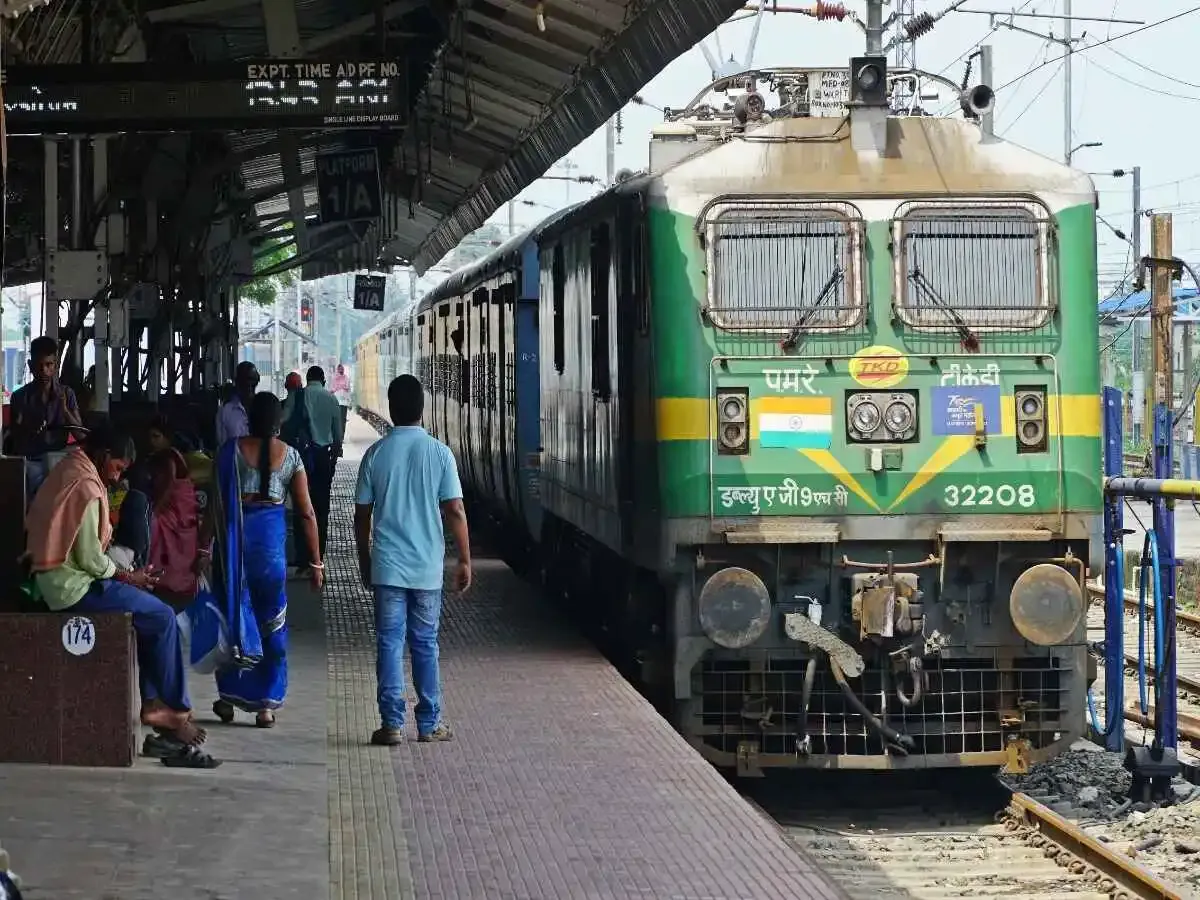
Indian Railways has utilised over 80% of its capital expenditure in the first nine months of the current financial year.
As Finance Minister Nirmala Sitharaman prepares to present the Railway Budget as part of Union Budget 2026-27, expectations this year are centred on higher outlays, faster project execution and greater private sector participation.
In Budget 2025-26, the capital expenditure target for Indian Railways was kept unchanged at ₹2.52 lakh crore. The government had earlier raised the budgetary allocation to the Railways by about 5% year-on-year.
After the last year’s Budget presentation, Railway Minister Ashwini Vaishnaw said network expansion will proceed at an accelerated pace, with a budget of ₹32,235.24 crore in FY 2025-26.
He said ₹4,550 crore had been earmarked for gauge conversion, while rolling stock expenditure had been capped at ₹57,693 crore.
According to an official readout, “a major push is also being made for the doubling of tracks, with a marked budget of ₹32,000 crore in FY 2025-26.”
Safety had emerged as a key focus area with an allocation of ₹1,16,514 crore for related initiatives, including track renewal, signalling and telecom upgrades, and construction of new railway points and crossings.
Over the coming years, the Railways plans to build 1,000 Road Over Bridges (RoBs) and Road Under Bridges (RuBs).
The Railways announced plans to introduce 50 Namo Bharat trains for short-distance inter-city routes, 100 non-AC Amrit Bharat trains and 200 Vande Bharat trains to expand the semi-high-speed network.
To address crowding, 17,500 non-AC general coaches are to be manufactured, while conventional ICF coaches will be replaced with safer LHB coaches over the next five years.
The government recently flagged off the first Vande Sleeper train and plans to manufacture a total of 50 such trains during 2025–27.
As of end-December 2025, Railways had utilised ₹2,03,138 crore, or 80.54% of the gross budgetary support of ₹2,52,200 crore for 2025-26, a 6.54 percentage point rise over the year-ago period, according to the Railways Ministry.
“The results of consistent capital expenditure over the last decade are evident in 164 Vande Bharat train services, 30 Amrit Bharat train services, the implementation of the Kavach automatic train protection system, and over 99% electrification of the broad-gauge network,” the ministry said.
What’s expected in Railway Budget 2026
Consulting firm PwC said investment support for railway projects “shall be further enhanced” in the upcoming Budget, as the government looks to address congestion, improve asset utilisation and modernise the network.
PwC said the Budget is expected to place greater emphasis on capital recycling through monetisation models such as multi-operator regimes, toll-operate-transfer (TOT) of freight lines, infrastructure investment trusts (InvITs) and real estate investment trusts (REITs), in order to unlock value from existing railway assets.
The firm said the Railways could also step up efforts to attract private investment of ₹20,000–25,000 crore in areas such as freight corridors, passenger and freight terminals, and logistics infrastructure.
Another key expectation is greater focus on decongesting high-density passenger and freight routes through capacity augmentation.
Experts also expect increased allocation for upgrading tracks and signalling systems to match the semi-high-speed potential of Vande Bharat trains.
PwC said investments in wagons and adoption of new technologies could help raise operating speeds on Dedicated Freight Corridors, where trains have a design speed of 100 km per hour but currently operate at lower average speeds.
Safety and technology upgrades are also expected to figure prominently, with higher outlays for advanced versions of the Kavach automatic train protection system, expansion of 160 km per hour and above semi-high-speed corridors, and strengthening of maintenance and crew availability.
The firm added that the Budget could announce incentives to boost domestic manufacturing of railway components and rolling stock through production-linked incentive (PLI) schemes, export promotion measures and EXIM support.
Improving passenger experience through better multi-modal integration, including seamless transport and ticketing systems, and development of new freight and semi-high-speed corridors through a mix of government funding and private investment are also among the key expectations from Railway Budget 2026-27.
Related News
About The Author
Next Story